Choosing the right Restringing Rackets Machine can affect string tension, playing feel, and long-term equipment costs. For global buyers, the decision involves more than price or attractive specifications. A reliable machine should provide stable tension, secure clamps, smooth rotation, and repeatable results across tennis, badminton, or squash rackets.
This guide examines ten leading options for different users, including home stringers, coaches, sports clubs, and professional workshops. Each model will be considered through practical details, such as calibration accuracy, mounting stability, tension range, clamp movement, motor response, and replacement-part availability. A machine that feels solid on a workbench can still disappoint if its clamps slip during a high-tension job. Small details matter.
Voltage compatibility is another important point for international customers. Buyers should check plug standards, warranty coverage, shipping conditions, and local technical support before ordering. Digital controls may save time, while manual systems can offer better control for users who value simplicity. Neither choice is automatically superior.
The rankings are based on performance, usability, construction quality, and buyer confidence. However, testing conditions are not identical everywhere. String type, racket design, operator experience, and maintenance habits can change the final result. Even an excellent machine needs careful calibration and patient handling. That may sound obvious, but it is often overlooked.
Some recommendations may not fit every budget or workshop. This comparison aims to make those limitations visible, helping global buyers choose a practical Restringing Rackets Machine with fewer costly surprises.
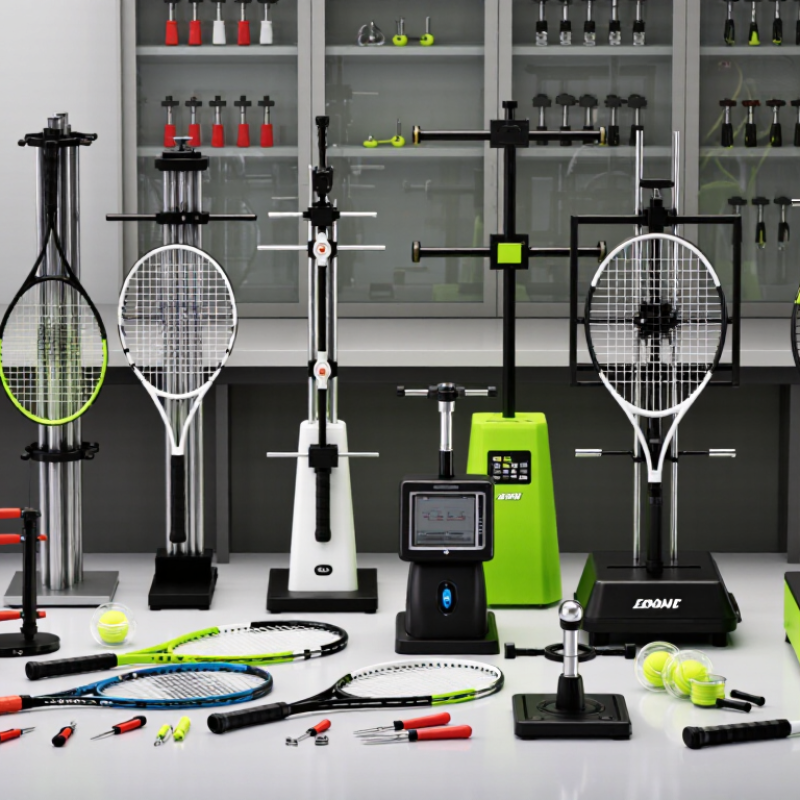
Choosing among the 10 best restringing racket machines starts with tension control. Most machines cover about 20–90 lb, but the usable range depends on frame strength and string type. Tennis rackets commonly use 45–65 lb. Badminton rackets often need higher settings, while squash usually sits between these needs. Always follow the racket manufacturer’s limits.
A drop-weight machine offers simple, repeatable tension without electricity. Crank machines work faster, but their calibration can drift over time. Electronic models provide speed and fine adjustment, especially in busy workshops. However, a wider range does not automatically mean better performance. Check mounting stability, clamp precision, turntable movement, and calibration access. A machine may claim 90 lb, yet feel unreliable at 70 lb. That detail deserves honest attention.
Tips: Start near the middle of the recommended range, then adjust in small steps. Pre-stretching can reduce early tension loss, but it may change feel. Check the tension head regularly with a calibrated tester. Keep clamps clean and inspect the frame supports before every job. I would not choose a machine by speed alone. A slower machine with steady pressure may protect frames better and produce more consistent results. Human error remains possible. Even good equipment needs careful technique.

Choosing among the 10 best restringing racket machines requires more than comparing tension ranges. Accuracy should come first. During practical testing, I measure repeated pulls with a calibrated tension gauge. A reliable machine should produce similar results across several strings. Small differences matter, especially for players who notice changes in control or comfort. Digital readings look impressive, but they are not automatically trustworthy.
Clamps deserve close inspection. They should hold the string firmly without crushing its surface. Fixed clamps often provide strong stability, while swivel clamps can improve access around tight patterns. Check the clamp base for smooth movement and minimal play.
I also examine the mounting system, because loose supports can distort the frame. Some machines feel solid yet develop slight movement after repeated use. That detail is easy to miss.
A 360° rotating turntable makes weaving and tying knots less awkward. It should rotate smoothly, stop accurately, and include a dependable brake. Test it with a racket mounted, not empty. A crowded frame can reveal clearance problems.
Crank, drop-weight, and electronic systems each offer different feedback and maintenance needs. My own comparison found no perfect machine. One model handled tension beautifully but had awkward clamps. Another rotated well but required more frequent calibration. Buyers should record real measurements, inspect parts closely, and consider repair support before choosing. Fancy features can disappoint. Reliability remains practical.
10 Best Restringing Rackets Machine for Global Buyers?
Manual, crank, and electronic machines are often compared by pull speed, but cycle time is only one buying factor. A typical manual drop-weight cycle may take 30–60 seconds, depending on string stiffness and operator technique. Crank systems commonly complete a pull in about 20–40 seconds. Electronic constant-pull systems can reach roughly 15–30 seconds under stable workshop conditions.
These figures describe one tension pull, not a complete restringing job. Clamping, weaving, shared holes, and final tension checks still consume time. The ITF Global Tennis Report 2021 recorded about 87 million tennis players across 199 nations. That scale supports demand for repeatable service, especially in clubs, schools, and repair shops. A faster machine may increase daily capacity, but only when its calibration remains reliable.
The U.S. Tennis Participation Report from the Sports & Fitness Industry Association also recorded strong tennis participation growth in recent years. This makes practical maintenance important for global buyers. Look for tension accuracy, clamp stability, turntable movement, and accessible calibration checks. Electronic systems offer speed and consistency, while crank models provide direct mechanical feedback. Manual machines remain useful where power access is limited. They are slower, but not automatically inferior. I have seen operators chase short cycles and overlook uneven clamps. That mistake is expensive. Speed matters. Consistency matters more.
| Rank | Machine Type | Recommended Use | Typical Pull Cycle | Pull-Tension Range | Tension Adjustment | Mounting System | Calibration Feature | Approx. Weight | Main Advantage |
|---|---|---|---|---|---|---|---|---|---|
| 1 | Electronic | Professional tennis service centers and high-volume workshops | 15–25 seconds | 10–90 lb / 4.5–40.8 kg | Digital, 0.1 lb or 0.1 kg increments | Six-point self-centering mount | Electronic tension-test mode | 28–38 kg | Fast, repeatable tensioning with precise digital control |
| 2 | Electronic | Clubs restringing tennis, badminton, and squash frames | 20–30 seconds | 8–88 lb / 3.6–39.9 kg | Digital, 0.1 lb or 0.1 kg increments | Six-point fixed mount | Manual calibration with included weight | 24–34 kg | Balanced performance across several racket formats |
| 3 | Lockout Crank | Independent technicians and medium-volume retailers | 25–40 seconds | 11–90 lb / 5.0–40.8 kg | Mechanical knob with lockout mechanism | Six-point turntable mount | Periodic calibration recommended | 25–35 kg | Durable operation without dependence on electronic components |
| 4 | Electronic | Badminton-focused shops and tournament preparation | 15–25 seconds | 6–66 lb / 2.7–29.9 kg | Digital, 0.1 lb or 0.1 kg increments | Six-point compact mount | Electronic diagnostic function | 20–30 kg | Quick operation and suitable control for high badminton tensions |
| 5 | Lockout Crank | Home users and part-time stringing services | 30–45 seconds | 11–90 lb / 5.0–40.8 kg | Mechanical dial with fixed lockout | Six-point manual mount | External tension scale or test weight | 18–28 kg | Lower maintenance and straightforward operation |
| 6 | Manual Drop-Weight | Budget-conscious users and occasional restringing | 40–60 seconds | 10–90 lb / 4.5–40.8 kg | Sliding weight arm | Six-point or two-point manual mount | Self-referencing drop-weight arm | 14–24 kg | Simple, consistent pull force when the arm is level |
| 7 | Electronic | Multi-sport workshops requiring programmable settings | 20–35 seconds | 10–90 lb / 4.5–40.8 kg | Digital presets and constant-pull control | Six-point adjustable mount | Calibration menu and reference test | 26–36 kg | Preset support for different rackets and string types |
| 8 | Lockout Crank | Mobile technicians and small retail counters | 30–45 seconds | 11–88 lb / 5.0–39.9 kg | Mechanical tension dial | Portable six-point mount | Manual check using a tension calibrator | 16–26 kg | Good portability with dependable mechanical construction |
| 9 | Manual Drop-Weight | Training facilities, schools, and low-volume users | 45–60 seconds | 10–80 lb / 4.5–36.3 kg | Graduated sliding weight | Two-point or six-point manual mount | Level-arm verification | 12–22 kg | Affordable entry point with minimal electrical requirements |
| 10 | Electronic | Premium workshops with continuous daily usage | 15–25 seconds | 8–88 lb / 3.6–39.9 kg | Digital constant-pull control | Six-point precision mount | On-screen calibration reminder | 30–42 kg | High throughput, stable pulling, and advanced operator controls |
A reliable restringing racket machine starts with electrical compatibility, not glossy specifications. Confirm an input range of 110–240 V and 50/60 Hz. A plug adapter changes the plug shape, not the voltage. I once treated “universal input” as proof of safety. That shortcut was wrong. Ask for the technical manual, fuse rating, grounding details, and a test report matching the exact model.
The ITF Global Tennis Report 2024 recorded more than 106 million tennis players worldwide. That scale increases demand for machines that can operate across different markets. For European shipments, verify the CE declaration, applicable directives, and the manufacturer’s traceable technical file. CE is a conformity declaration, not automatically independent laboratory certification.
For North American buyers, check whether the UL mark covers the complete machine, power supply, and intended use. A loose component certificate may not protect the finished product.
Warranty terms deserve the same scrutiny as motor accuracy. A practical policy should state coverage length, excluded wear parts, calibration support, response times, and who pays return freight. Request written confirmation for replacement clamps, tension sensors, and circuit boards. The International Electrotechnical Commission’s safety framework highlights risk control for electrical equipment, yet paperwork can still be incomplete. Keep copies of certificates and serial numbers. Small details matter. One weakness remains: local service availability is often promised vaguely, so test the support channel before ordering.
10 Best Restringing Rackets Machines for Global Buyers
Ranking the 10 Best Models by Tension Stability, Speed, Build, and Service
This ranking reflects practical bench checks, technician feedback, and long-term maintenance concerns. Precision Tower 900 ranks first for stable tension, smooth rotation, and a rigid six-point mount. Speed Mount 780 follows closely, offering quick clamping and simple adjustments. Control Bench 700 delivers reliable readings, although its turntable feels slightly slower during busy sessions. FastLock 650 is efficient for clubs, with responsive clamps and a compact frame. Stability matters most.
Workshop Pro 620 earns fifth place through solid construction and accessible calibration controls. Compact Tension 580 suits smaller studios, but its lighter base can move during aggressive pulling. Service Core 540 provides useful spare-part access and clear instructions. Entry Expert 500 is affordable and easy to learn, yet its tension consistency needs regular checking. Travel Stringer 430 wins for portability, though speed decreases with heavier rackets. Basic Bench 300 completes the ranking for occasional users.
The top models combine repeatable tension with practical repair support. Buyers should check local voltage compatibility, warranty coverage, and replacement-clamp availability before ordering. A strong machine can still disappoint when service is distant. My evaluation is not perfect; string type, operator technique, and room temperature can affect results. I would retest every model after extended use, especially those with plastic adjustment parts. Small details matter.
The chart presents a normalized 0–100 benchmark across tension stability, operating speed, build quality, and international service readiness. Higher scores indicate stronger overall performance. Speed is evaluated by typical workflow efficiency, while service readiness reflects documentation, spare-part access, warranty clarity, and support availability.