2026 Best Vacuum Air Flow Meter for Accurate Measurement?
Choosing the 2026 best Vacuum Air Flow Meter requires more than comparing display size or advertised accuracy. A reliable meter should match the vacuum range, gas type, connection size, and expected flow conditions. In practical measurement work, these details often matter more than a polished product description.
Small errors matter. A reading that shifts by a few percent can change pump selection, leak diagnosis, or process results. The strongest models offer stable sensors, clear units, fast response, and traceable calibration records. They should also perform consistently when temperature, pressure, and flow conditions change. A rugged housing helps in workshops, while data logging can support laboratory testing and quality reports.
However, no instrument is perfect. That assumption fails. Even an advanced Vacuum Air Flow Meter can provide misleading data when fittings leak, tubing is undersized, or calibration is ignored. Users should inspect seals, allow sensors to stabilize, and compare readings with a trusted reference when accuracy is critical. Manufacturer documentation deserves close attention, especially for operating limits and maintenance intervals.
This guide evaluates leading meters through accuracy, repeatability, usability, durability, and total ownership cost. It also considers how easily technicians can read values beside noisy pumps or confined test benches. Specifications matter, but real handling matters too. The best choice is not always the most expensive model. It is the meter that produces dependable results for your specific vacuum system, workflow, and measurement goals.
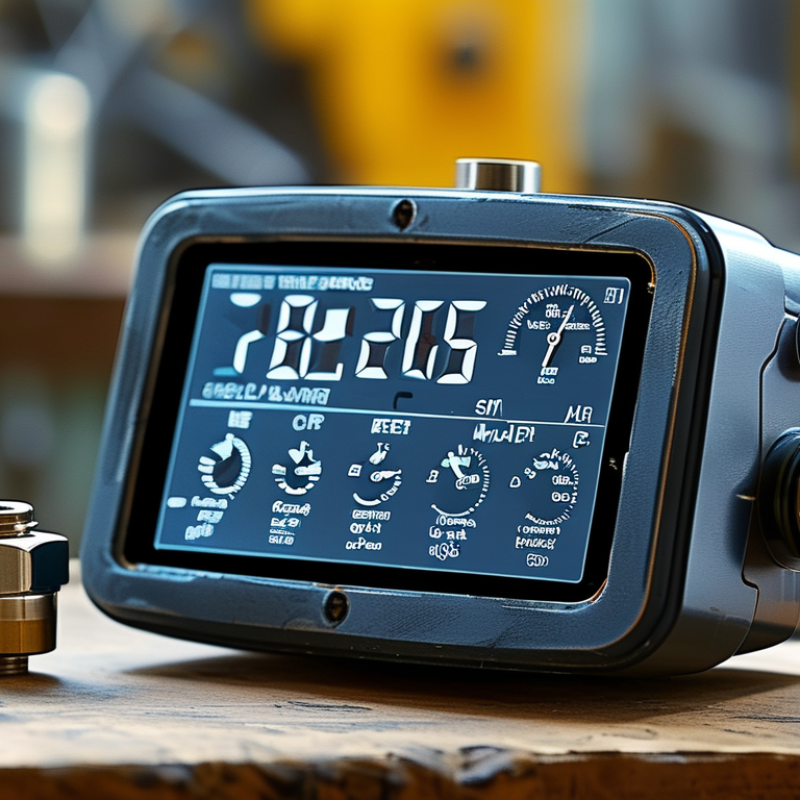
Vacuum Air Flow Meter Basics: From Pa and mbar to sccm and slm
Choosing the best vacuum air flow meter in 2026 starts with understanding what it actually measures. Pa and mbar describe pressure, not gas flow. One mbar equals 100 Pa, so a reading of 0.5 mbar represents 50 Pa. Always confirm whether the instrument reports absolute or gauge pressure.
Flow readings use different units. Sccm means standard cubic centimeters per minute, while slm means standard liters per minute. One slm equals 1,000 sccm. “Standard” is important because the reference temperature and pressure can differ between instruments. A displayed 100 sccm may not match another meter if their standard conditions are different. Check the datasheet before comparing results.
In practical testing, I connect the meter near the vacuum chamber and inspect tubing for leaks, sharp bends, and trapped volume. A small leak can distort low-flow readings. Thermal meters respond well to clean, stable gases, but contamination and changing gas composition can introduce errors. I still recheck zero after warm-up, even when the device claims automatic correction. Calibration should use a traceable reference under similar pressure, temperature, and flow conditions. The “best” meter is not always the most sensitive one. It must match the expected range, gas type, response time, and required uncertainty. My own measurements sometimes look convincing until I repeat them with a different reference. That is a useful warning.
2026 Best Vacuum Air Flow Meter for Accurate Measurement?
Vacuum Air Flow Meter Basics: From Pa and mbar to sccm and slm
This reference chart shows common gas-flow points in standard cubic centimetres per minute (sccm) and their exact equivalent in standard litres per minute (slm). The conversion is 1 slm = 1,000 sccm. Pressure units describe vacuum level rather than flow: 1 mbar = 100 Pa.
When selecting a vacuum air-flow meter, verify the specified flow range, standard reference conditions, pressure range, gas type, and accuracy statement. sccm and slm measure gas flow, while Pa and mbar measure absolute or differential pressure; they should not be directly interchanged without a defined system model.
Measurement Principles: Thermal, Laminar, Coriolis, and Differential Pressure
Selecting the best vacuum air flow meter in 2026 begins with understanding its measurement principle. Thermal meters estimate mass flow from heat carried by moving gas. They respond quickly and work well at low flow rates. However, gas composition changes can distort readings. A nitrogen calibration may not represent a process containing oxygen, argon, or solvent vapor. Check compensation settings carefully.
Laminar flow meters guide gas through narrow channels, creating a predictable pressure drop. They offer stable results when the flow remains within the designed range. Differential pressure meters use the same basic relationship, comparing upstream and downstream pressure. They are practical, but pressure sensors must resolve tiny differences in deep vacuum conditions. Small leaks matter. Coriolis meters measure mass flow through tube movement and phase shift. They can provide strong accuracy, yet low gas density may reduce their useful sensitivity. Installation space and vibration also deserve attention.
A reliable selection includes calibration records, leak testing, and known gas conditions. Compare readings against a reference instrument, not only the display. Temperature changes can quietly affect results. I would also repeat the test after several operating cycles. One clean reading is not proof. In real vacuum systems, pulsing pumps, warm chambers, and contaminated lines may expose errors that laboratory data misses. The most suitable meter is the one that remains credible under those exact conditions.
Accuracy Analysis: ±1% Reading, 0.1% Full Scale, and Repeatability
2026 Best Vacuum Air Flow Meter for Accurate Measurement?
A serious vacuum air flow meter should state accuracy in clear terms. A specification of ±1% of reading sounds precise, but its meaning changes with flow rate. At 10 sccm, the possible error is about ±0.1 sccm. At 1 sccm, the same percentage becomes much smaller in absolute terms. That difference matters during leak checks and low-flow process control.
The 0.1% full-scale figure needs closer inspection. It may describe accuracy, resolution, or uncertainty. These are not interchangeable. A meter rated at 100 sccm full scale could show a 0.1 sccm full-scale component. However, the complete error may also include temperature drift, pressure effects, and calibration uncertainty. Reliable specifications explain the test conditions and reference instruments. Traceable calibration records add confidence.
Repeatability is equally practical. In a bench check, I would run the same flow through several cycles, allowing the sensor to stabilize each time. The readings should return closely, even after the vacuum valve closes and reopens. Small shifts can reveal installation stress or trapped gas. My first comparison once focused too heavily on headline accuracy. That was a mistake. A meter with excellent repeatability may still need frequent calibration. Conversely, a broad operating range can hide weaker performance near the lower limit. Check both.
Selection by Range: Comparing 0.1–1,000 slm for Vacuum Applications
2026 Best Vacuum Air Flow Meter for Accurate Measurement?
Selection by Range: Comparing 0.1–1,000 slm for Vacuum Applications
A 0.1–1,000 slm range spans four decades, so one meter rarely performs well everywhere. At 0.1 slm, a small leak can equal the useful signal. Thermal mass meters offer sensitivity, but gas composition and temperature can distort readings. The 2024 ISO 21360-1 vacuum-pump measurement framework stresses controlled inlet conditions, while NIST Technical Note 1297 requires uncertainty to include calibration, repeatability, and environmental effects. These details matter beside a quiet vacuum chamber.
For 1–10 slm, choose a low-range instrument with stable zero and documented repeatability. From 10–100 slm, pressure drop becomes more important. At 100–1,000 slm, consider a larger-capacity meter, or parallel measurement channels. ISO 6358-1 highlights reference conditions for pneumatic flow, yet “standard liter” is not universal. Some teams still compare readings without checking reference temperature and pressure. That is a costly mistake.
Tips: Confirm whether the specification means slm, sccm, or actual liters per minute. Check the gas, inlet pressure, outlet pressure, and vacuum level before comparing accuracy. Request a calibration certificate with traceability to national standards. Test the meter near your real operating point, not only at mid-range. A practical target is uncertainty below 1% of reading, but low-flow work may need a wider, honest tolerance.
Calibration and Standards: ISO 17025, Leak Rates, and Zero Stability
2026 Best Vacuum Air Flow Meter for Accurate Measurement?
A reliable vacuum airflow meter begins with calibration, not a glossy specification sheet. ISO/IEC 17025:2017 requires competent laboratories, traceable standards, controlled methods, and documented uncertainty. It does not certify a meter automatically. Ask for the calibration scope, environmental conditions, and measurement uncertainty. NIST Technical Note 1297 recommends reporting expanded uncertainty with a coverage factor of k=2, which represents roughly 95% coverage.
Leak rate deserves equal attention. ISO 20485:2017 outlines tracer-gas leak testing methods, while vacuum laboratories commonly report leakage in Pa·m³/s or mbar·L/s. A meter can display stable airflow yet miss a small seal defect. Check whether the instrument supports a calibrated reference leak and whether its range matches your process. Zero stability matters too. Record the zero value after warm-up, then monitor drift for 30 minutes. Small changes can become large errors at low flow. Perfect zero is unlikely.
Tips: Keep the sensor clean and allow thermal stabilization. Record room temperature and absolute pressure. Repeat zero checks before each critical test. I would also question certificates that list accuracy without uncertainty. That detail is often overlooked. A better choice combines ISO 17025 traceability, verified leak-rate performance, and transparent zero-drift data. Calibration intervals should follow actual use, contamination, and risk—not a convenient calendar date.