2026 Top Industrial Monitor Trends and Buyer Concerns?
The Industrial Monitor market is evolving rapidly. According to a recent report by Grand View Research, the sector is projected to grow at a CAGR of 6.5% from 2023 to 2030. This growth is driven by an increasing demand for high-performance displays in industrial settings. As companies seek to enhance productivity, the right industrial monitor becomes crucial.
Industry experts, like Dr. Emily Carter, emphasize the importance of reliable technology. She states, "Investing in quality industrial monitors can significantly reduce downtime." Companies need to address specific buyer concerns. These include durability, resolution, and compatibility with existing systems. The shift towards more advanced automation further complicates these choices.
In this competitive landscape, understanding trends is vital. Factors like touchscreen capabilities, connectivity options, and ergonomic designs are gaining traction. Yet, many organizations struggle with evaluating their needs. Balancing innovation with practical applications remains a challenge.
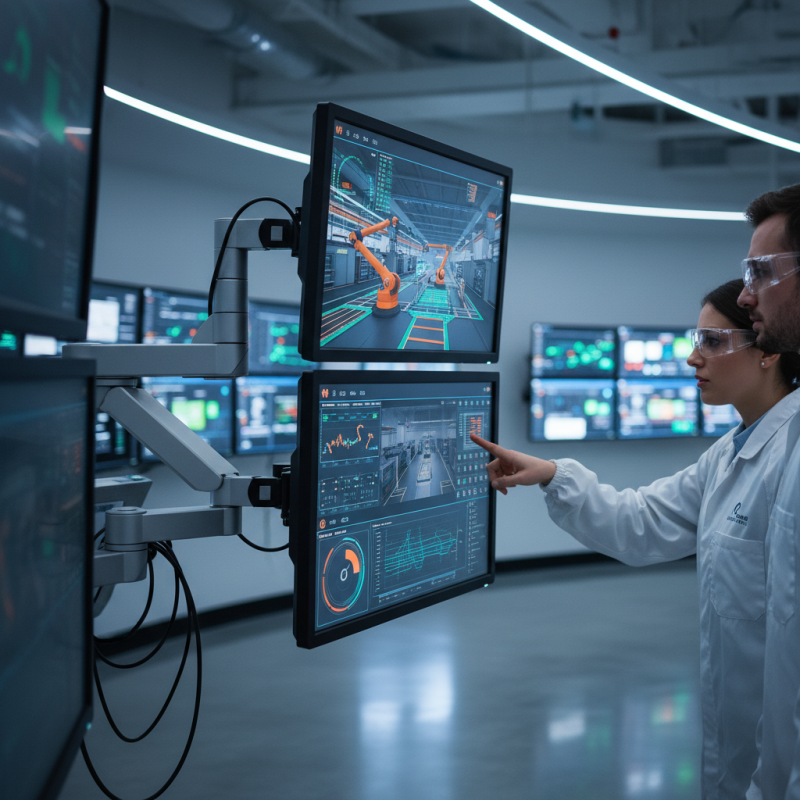
Top Features to Look for in 2026 Industrial Monitors
When considering industrial monitors in 2026, several key features stand out. Durability is paramount; monitors must withstand harsh conditions, such as vibrations and dust. Look for models with rugged enclosures. These can survive factory environments, reducing the risk of downtime. Display clarity is another critical aspect. High-resolution screens enhance visibility in busy workplaces, ensuring that operators can read data quickly.
Another feature to prioritize is connectivity. Modern industrial monitors should support various input options, including HDMI and USB-C. This flexibility allows for simple integration with existing systems. Additionally, energy efficiency is vital. Monitors that consume less power help reduce overall operational costs. Employers should assess the average energy consumption of potential monitors.
Lastly, user-friendly interfaces are essential for ease of use. Intuitive controls and touch capabilities can significantly improve workflow efficiency. While advanced features can add complexity, it’s crucial that they don’t become a hindrance. Manufacturers should strike a balance between technology and usability, ensuring operators can focus on their tasks without constant adjustments. These considerations can guide informed purchases in the evolving industrial monitor landscape.
2026 Top Industrial Monitor Trends and Buyer Concerns
| Feature | Importance Level | Buyer Concerns | Expected Innovations |
| Display Resolution | High | Cost vs. Quality | 4K and Beyond |
| Touchscreen Capability | Medium | Durability | Improved Touch Sensitivity |
| Brightness Levels | High | Visibility in Sunlight | Adaptive Brightness Technologies |
| Connectivity Options | Medium | Compatibility | Wi-Fi and 5G Capabilities |
| Environmental Resistance | High | Longevity in Harsh Conditions | Enhanced Sealing and Materials |
Emerging Technologies Influencing Industrial Monitor Design
Emerging technologies are reshaping industrial monitor design. As industries increasingly adopt automation, the need for advanced display solutions rises. According to a recent market analysis from Research and Markets, the industrial monitor market is projected to grow at a CAGR of 6.5% between 2022 and 2026. This growth is largely driven by innovations in display technology.
One notable advancement is the integration of IoT capabilities in industrial monitors. These devices now connect seamlessly with enterprise systems, enhancing data visualization and real-time decision-making. However, this hyper-connectivity raises cybersecurity concerns. Recent surveys indicate that 40% of organizations worry about data breaches when utilizing smart devices in their operations. Manufacturers must address these vulnerabilities to build trust.
Another critical trend is the shift towards ruggedized displays. In harsh environments, traditional monitors often fail, leading to downtime and increased costs. A study by MarketsandMarkets highlights that nearly 30% of industrial accidents stem from equipment malfunction. Thus, investing in durable, high-performance monitors is essential. Despite the progress, challenges remain. Companies must balance cost with the need for advanced features while ensuring reliability in demanding settings.
2026 Top Industrial Monitor Trends and Buyer Concerns
This chart illustrates the key trends and buyer concerns in the industrial monitor market for 2026, highlighting features that influence purchasing decisions such as resolution, response time, durability, connectivity, and price. The data represents the percentage of emphasis buyers place on each factor.
Key Buying Considerations for Industrial Monitors in 2026
As we approach 2026, the trends in industrial monitors reveal significant shifts. A report by MarketsandMarkets indicates that the industrial display market is projected to reach USD 10 billion by 2026, driven by automation and IoT integration. Buyers must prioritize durability and screen clarity. Monitors in harsh environments require enhanced protection against dust and moisture. This is crucial for industries like manufacturing and logistics, which rely on continuous operation.
Additionally, the aspect ratio and resolution are pivotal. A 2022 survey by TechResearch shows that 72% of users prefer widescreen displays for increased productivity. High resolution improves detail, making tasks easier and faster. However, buyers should reflect on their specific needs. Overspending on features that won’t be used can lead to inefficiencies. Understanding ergonomic considerations is equally important. Monitors must be adjustable to prevent user fatigue during prolonged use.
Connectivity options are also a concern. The rise of remote access technology demands versatile connection capabilities. A recent study indicates that 65% of companies value multiple input options in their purchasing decisions. Yet, it is essential to weigh these factors carefully against budget constraints. Balancing advanced features with cost efficiency requires thoughtful consideration. Buyers need to analyze all aspects to make informed decisions.
Market Trends Impacting the Future of Industrial Monitors
The landscape of industrial monitors is evolving rapidly. Key market trends are shaping the future, with advancements in technology leading the way. Companies are increasingly focused on improving efficiency and productivity. This shift is driving demand for high-resolution displays and enhanced connectivity features. Employers want monitors that can integrate seamlessly with other devices, ensuring smoother operations on the shop floor.
User experience plays a critical role in this evolution. Industrial settings often involve harsh environments. Monitors must withstand dust, moisture, and extreme temperatures. Buyers are concerned about durability and maintenance. They seek products that promise longevity with less downtime. Additionally, usability considerations are paramount. Touchscreen interfaces are becoming more popular, enabling intuitive interactions.
However, not all trends are beneficial. Some advancements come with higher costs. Businesses need to weigh the benefits against their budgets. Accessibility remains a concern, as some companies struggle to adapt to new technologies. This creates a gap between manufacturers and users. The conversation around balancing innovation with practical application is essential. Buyers need to keep their specific needs in mind as they navigate this changing landscape.
User Preferences: What Buyers Value Most in Industrial Monitors
In today's industrial landscape, buyers are increasingly prioritizing certain features in monitors. High resolution, durable design, and touch capability top the list of user preferences for industrial monitors. Buyers seek screens that can withstand harsh conditions while delivering precise visuals. A clear display can greatly improve operations, reducing errors and enhancing productivity.
When choosing an industrial monitor, consider the environment. Will it be exposed to dust, moisture, or extreme temperatures? Finding the right specifications is essential. A rugged design ensures longevity. Invest in features like anti-glare and anti-scratch coatings for better performance.
An essential tip is to check for compatibility with existing systems. Not all monitors integrate smoothly with older equipment. Always verify the input options. Lastly, prioritize user-friendliness. Monitors should be easy to navigate, especially for operators who may not be technically adept. Finding the balance between advanced features and simplicity is key.