
2026 Top Heat Resistant Coil Types for Global Buyers

Choosing a Heat Resistant Coil in 2026 means matching the metal to the job, not chasing the highest temperature on a brochure. A coil beside a furnace door faces different conditions from one used in an exhaust system or industrial heater. Heat, oxidation, cycling, load, and atmosphere all matter. Small details matter.

Buyers commonly compare stainless steel and nickel-based alloy families, but the right choice depends on actual service conditions. Check the stated operating temperature, oxidation resistance, forming needs, and available thicknesses. A thin strip may suit a compact heating element, while a heavier coil may be needed for a formed component. These examples are not interchangeable. Supplier data and test conditions should be reviewed carefully.

This guide introduces coil types relevant to global buyers and explains the trade-offs behind their use. It also highlights questions worth asking suppliers: Is the material traceable? Are test certificates available? Can the producer maintain consistent chemistry and dimensions across orders? Requirements can differ by industry and destination, so confirm applicable specifications with qualified engineers and purchasing teams. A catalogue is only a starting point. Even experienced buyers can overlook temperature cycling or local operating conditions. That is an easy mistake to make. Compare documented performance with the real installation, then request samples or technical review when uncertainty remains. No single alloy fits every application, and the best choice may involve a compromise between service life, fabrication, availability, and cost.
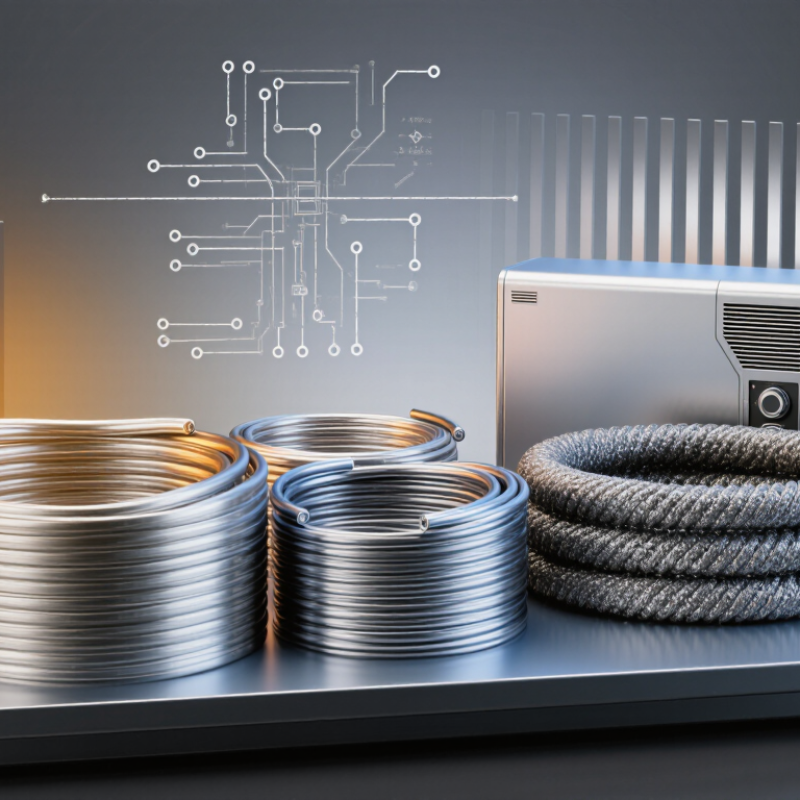
2026 Top Heat Resistant Coil Types for Global Buyers

What Heat-Resistant Coils Are and How They Withstand High Temperatures

Heat-resistant coils are electrical elements designed to generate heat while retaining useful strength and electrical resistance at elevated temperatures. They commonly use nickel-chromium or iron-chromium-aluminium alloys. Their exact performance depends on composition, wire diameter, coil shape, and operating conditions. The phrase “heat-resistant” does not mean a coil can tolerate every temperature indefinitely.

When current passes through the wire, electrical resistance converts energy into heat. Alloying elements help slow oxidation and reduce damage from repeated heating and cooling. A thin protective oxide layer can form on some alloys, helping shield the metal beneath. This is useful in ovens, furnaces, and industrial air-heating equipment. The surrounding atmosphere matters, too. Moisture, contaminants, and poor ventilation can shorten service life.

Good selection starts with the actual operating temperature, not just a catalogue maximum. Engineers also consider peak temperature, heating cycles, coil spacing, and support materials. A coil running in still air may behave differently from one exposed to moving air or process gases. That detail is easy to overlook. A temperature rating alone is not enough. In practice, uneven winding or loose supports can create hot spots, even when the alloy is suitable. Careful inspection and controlled testing help confirm performance in the intended equipment.


Which Alloy Families Define the Main Heat-Resistant Coil Types

Heat-resistant coil types are usually grouped by their alloy families, not by a single maximum-temperature number. Austenitic stainless steels, such as 309 and 310 grades, offer useful oxidation resistance in furnace parts and exhaust systems. Their chromium and nickel content helps them retain strength during repeated heating, though performance depends on the atmosphere and service cycle. The details matter.

Nickel-chromium alloys suit hotter or more corrosive conditions, while iron-chromium-aluminum alloys form a protective alumina layer in oxidizing environments. Nickel-base superalloys may be selected when heat, stress, and creep resistance all matter. These families are not interchangeable. A coil that handles dry air may perform poorly in sulfur-bearing gas, and thin strip can distort sooner than a heavier section. I have seen temperature alone dominate a purchase discussion; that is an easy point to miss.

Tips: Check the actual operating temperature, atmosphere, coil thickness, forming method, and expected cycling before choosing an alloy. Ask for test data under comparable conditions. A datasheet is useful, but it cannot reproduce every installation. An imperfect match may still work, yet it deserves a trial piece and a close inspection for scale, cracking, or shape change.

2026 Top Heat Resistant Coil Types for Global Buyers — Which Alloy Families Define the Main Heat-Resistant Coil Types

A practical comparison of common heat-resistant coil alloy families, typical grade examples, and their principal selection considerations.

Alloy family Common grade examples Indicative composition features (wt.%) Typical heat-resistant coil role Key advantages Selection considerations
Ferritic stainless steel
Chromium stainless
Type 409; Type 430 409: approximately 10.5–11.75% Cr, titanium stabilized.
430: approximately 16–18% Cr, low carbon.
Lower-cost sheet and coil for moderate-temperature exhaust components, appliance parts, and heat shields, depending on grade and service conditions. Generally magnetic; useful oxidation resistance for many moderate-heat applications; often lower nickel content than austenitic grades. Not a substitute for high-nickel heat-resistant grades in severe thermal cycling or high-temperature service. Formability, weldability, and corrosion resistance differ by grade.
Austenitic stainless steel
General-purpose heat resistance
304 / 304H; 321; 347 Typically about 18% Cr and 8–12% Ni, with grade-specific additions. 321 is titanium stabilized; 347 is stabilized with niobium (columbium). Coil for fabricated parts exposed to elevated temperatures, including ducts, furnace components, and equipment where oxidation resistance and fabrication are both important. Good formability and weldability in many product forms. Stabilized grades can be preferred where sensitization after welding or elevated-temperature exposure is a concern. Temperature capability depends on load, atmosphere, section thickness, and thermal cycling. Standard 304 is not equivalent to a dedicated high-chromium heat-resistant grade.
High-chromium, nickel-bearing stainless steel
Heat-resistant austenitic
309S; 310S 309S: approximately 22–24% Cr and 12–15% Ni.
310S: approximately 24–26% Cr and 19–22% Ni.
Common coil choices for furnace parts, radiant tubes, burner components, and other applications requiring improved oxidation resistance at elevated temperatures. Higher chromium and nickel levels than common 300-series grades support resistance to scaling in many hot-air environments. Actual service limits are atmosphere- and design-dependent. Sulfur-bearing gases, carburizing conditions, cyclic heating, and mechanical loading can change performance significantly.
Nickel-chromium-iron alloy
Nickel alloy
Alloy 600 Nickel is typically at least 72%; chromium approximately 14–17%; iron commonly 6–10%. Coil and strip for selected furnace, heat-treatment, and chemical-process components requiring heat and corrosion resistance. Offers useful resistance in a range of oxidizing and some reducing environments, subject to the specific service chemistry. Not universally resistant to every hot gas or molten environment. Evaluate temperature, atmosphere, stress, and corrosion mechanisms together.
Aluminum-bearing nickel-chromium alloy
High-temperature oxidation resistance
Alloy 601 Nickel is the balance; chromium approximately 21–25%; aluminum approximately 1.0–1.7%. Coil or strip for high-temperature equipment such as furnace fixtures and components exposed to demanding oxidizing conditions. Aluminum addition supports formation of a protective oxide scale; selected grades are used where oxidation resistance is a priority. Fabrication condition, surface finish, thermal cycling, and atmosphere affect performance. Confirm suitability against the relevant product specification and operating conditions.
Nickel-chromium-molybdenum-niobium alloy
Corrosion-focused nickel alloy
Alloy 625 Nickel is at least 58%; chromium approximately 20–23%; molybdenum 8–10%; niobium plus tantalum approximately 3.15–4.15%. Coil and strip for demanding corrosion-service components and selected elevated-temperature applications where strength and corrosion resistance are both important. Provides strong resistance to many corrosive environments and good strength; its value is often greatest where corrosion performance is also required. It is not automatically the best choice for every high-temperature oxidation application. Compare the specific environment, required mechanical properties, and cost.
Electric-resistance heating alloys
Heating-element strip
FeCrAl-family alloys; NiCr-family alloys Composition varies by grade. FeCrAl grades are based on iron, chromium, and aluminum; NiCr grades are based mainly on nickel and chromium. Thin strip or coil intended for electrical resistance heating elements, subject to the product’s electrical and thermal design requirements. Designed for resistivity and oxidation behavior appropriate to heating-element service; available in forms suited to element manufacturing. Choose by element temperature, electrical resistivity, atmosphere, geometry, and cycle life. Heating-element alloys are not interchangeable with ordinary stainless coil.

Buyer note: Composition figures are indicative ranges for commonly specified grades, not a substitute for the applicable material standard or mill test certificate. There is no single maximum service temperature that applies to every coil: operating limits depend on atmosphere, loading, thermal cycling, product form, fabrication, and the governing specification.

How Coil Design and Manufacturing Shape High-Temperature Performance

2026 Top Heat Resistant Coil Types for Global Buyers

How Coil Design and Manufacturing Shape High-Temperature Performance

High-temperature coil performance depends on more than alloy choice. FeCrAl coils generally suit higher temperatures in oxidizing air, while nickel-chromium coils offer good oxidation resistance and flexibility. Actual limits vary by grade, atmosphere, and coil geometry. The U.S. Department of Energy’s 2015 Quadrennial Technology Review reports that process heating accounts for about 51% of energy use in U.S. manufacturing. That makes efficient, durable coil design an operational priority.

Wire diameter, winding pitch, and watt density shape heat distribution. Tight turns can create local hot spots; uneven winding can shorten service life. Controlled forming, stress relief, and resistance checks help produce consistent coils. Thermal-cycle testing can reveal weaknesses before installation. A neat design on paper can still disappoint in a humid or corrosive operating environment.

Tips: Match the alloy to the real atmosphere, not just the target temperature. Check clearances, supports, and electrical insulation after assembly. Small details matter.

Where Different Heat-Resistant Coil Types Are Used

Heat-resistant coils serve very different jobs, even when their temperature ratings look similar. Type 309 and 310 stainless-steel coils are common choices for furnace fixtures, radiant tubes, and heat-treatment baskets. Their chromium-rich chemistry helps resist scaling during repeated heating. In a bright annealing line, a coil may face hot air and frequent temperature changes; in a cement kiln, dust and sulfur compounds can change the decision. Temperature alone is not enough.

For hotter or more corrosive service, nickel-chromium-iron alloy coils are used in carburizing furnaces, industrial burners, and thermal-processing equipment. Their value is often better resistance to oxidation and thermal cycling, not simply a higher maximum temperature. Ferritic heat-resistant grades can suit furnace parts exposed to sulfur-bearing gases, but forming and welding requirements need careful review. Small details matter: a tight coil bend may run hotter than the surrounding furnace wall.

The U.S. Department of Energy’s 2018 Manufacturing Energy and Carbon Footprints report, using 2014 data, found process heating accounted for about 51% of manufacturing energy use. That scale helps explain why coil selection affects both maintenance and operating costs. Still, it is not a universal selection rule. Atmosphere, load, start-stop frequency, and coil geometry should be checked against actual operating records. A specification can look perfect on paper and still miss the plant’s real conditions.

How Global Buyers Compare Grades, Standards, and Supply Requirements

Global buyers comparing heat-resistant coil should start with service conditions, not a grade name alone. 310S is often selected for oxidation resistance at elevated temperatures, while 309S suits some furnace and thermal-processing parts. 253MA may fit applications where strength and oxidation resistance must be balanced. Actual performance depends on atmosphere, load, cycle time, and coil thickness. Temperature alone is not enough.

Tips: Request the exact grade, product-form standard, thickness tolerance, coil width, surface condition, and heat number traceability. Compare certificates, not just quotations. ASTM A240, EN 10095, and JIS G 4305 cover different products and requirements; confirm the applicable standard and edition with the supplier. Details matter.

For supply planning, specify whether you need slit or full-width coil, the inner diameter, maximum coil weight, packaging, and delivery port. Ask for mill test certificates and confirm whether independent inspection is needed. Check lead time against production capacity, especially for less common grades. A neat grade table can still mislead; furnace conditions rarely stay neat, and grade equivalents are not always interchangeable. Verify chemistry, mechanical properties, and dimensions before approving the order.

Start WhatsApp Chat Start WhatsApp Chat
Valves

Valves

Water Meters

MS Forged Pipe Fittings

Fittings

Water Meters

Valves

DI Grooved Fittings (UL/FM)

Water Meters

DI Screwed Fittings (UL/FM)

Fittings

Composite Pipes & Fittings

Site Credits : Seigospace