Best Bed Fan in 2026 Which Type Should You Choose?
Warm bedding can feel stuffy, even when the bedroom itself seems cool. A Bed Fan sends air beneath the covers, where warmth often collects around your legs and feet. The effect is more focused than running a large room fan. Small difference. Better comfort for some sleepers.
Choosing the right type depends on your bed, sleep habits, and tolerance for noise. Under-sheet models use a hose or airflow channel to direct air beneath bedding. They can suit people who want targeted cooling, but hose placement and sheet fit matter. A bedside or clip-on fan is easier to reposition. Its airflow may be less focused, and it can disturb a partner or blow directly across your face. Fit matters. So does sound.
This guide compares the main Bed Fan styles and explains what to check before buying. Look for adjustable airflow, accessible controls, stable placement, and parts that are simple to clean. Check the hose length and bed compatibility, too; a setup that works on one frame may not suit another. Product descriptions can make airflow sound impressive, but comfort is personal. A quiet setting may be enough, while stronger airflow could feel distracting. There is no single winner for every bedroom. The useful choice is the one that fits your bedding, room layout, and nightly routine without adding more fuss than comfort.
How Bed Fans Work and What They Are Designed to Cool
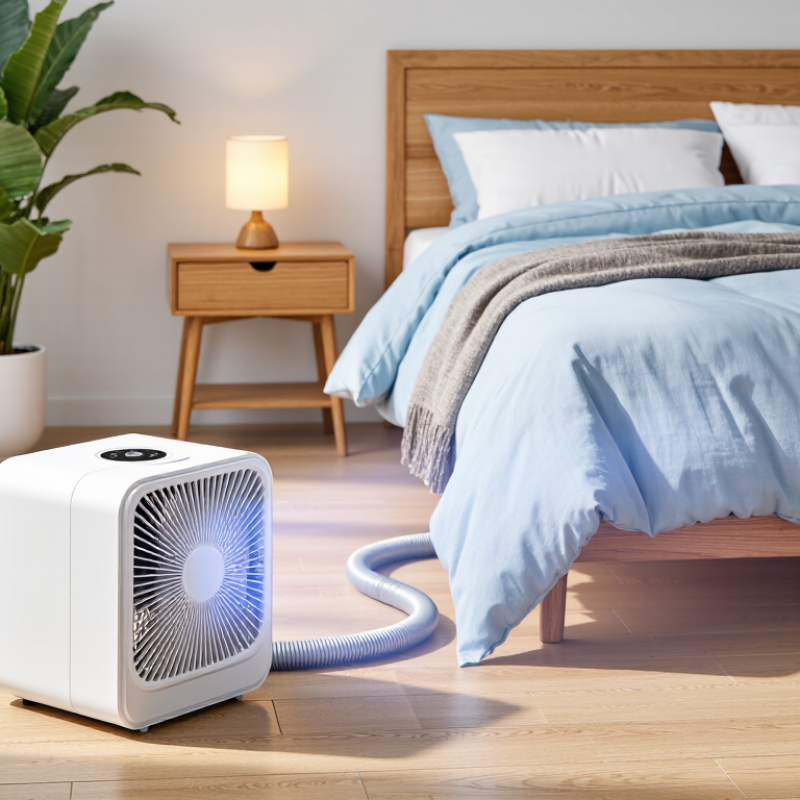
A bed fan moves air through the small space beneath or across your bedding. Many models sit near the mattress edge and direct a gentle stream under the covers. Others aim airflow over the sleeper. The goal is to reduce trapped warmth around your body, not to cool the entire bedroom. Think of it as a personal breeze, not an air conditioner.
That airflow can help heat and moisture escape from the bedding. You may notice the difference most around your legs and torso, where sheets can feel warm and close. A bed fan does not lower room temperature, and its effect depends on the room, bedding, and your comfort. On a humid night, the breeze may feel less refreshing. It is not magic.
Fit matters. Check whether the unit works with your bed frame and leaves a clear path for air. Start with a low setting; stronger airflow can rustle sheets or feel too cool near your feet. Some sleepers prefer direct airflow, while others find it distracting. I would not assume one design suits everyone. If overheating continues despite a cooler sleep setup, consider other causes and seek professional advice when appropriate.
The Main Types of Bed Fans Available in 2026
The main bed-fan types differ in where they move air. Under-sheet systems sit beside or beneath the bed and send air through a narrow channel between the mattress and bedding. They can cool the sleeper without blowing directly at the face. Check that the hose or outlet fits your bed layout; a tight sheet can restrict airflow. Small details matter.
Bedside fans, including clip-on and oscillating models, aim air at the upper body. They are easy to reposition, but the breeze may feel too direct at night. Ceiling fans circulate air across a larger area and suit people who prefer gentle, room-wide movement. The U.S. Department of Energy’s Energy Saver guidance says ceiling fans may let occupants raise the thermostat by about 4°F without reducing comfort. That is not a bed-fan performance guarantee: fans cool people, not rooms.
Some products combine a fan with a mattress pad or ducted air channel. Before choosing one, check noise levels, cleaning access, and whether its airflow reaches your shoulders or only your feet. ASHRAE Standard 55-2023 treats air speed as one factor in thermal comfort, alongside temperature, humidity, clothing, and activity. A number on a package cannot predict how a particular sleeper will feel. I would compare airflow direction in your actual bed setup, not just fan size.
Best Bed Fan in 2026: Which Type Should You Choose?
The main bed fan types differ by where the fan sits and where it directs airflow. This chart compares typical design features, not cooling performance; specific models may vary.
Choose an under-bedding system to direct air beneath the covers, a mattress-surface fan for airflow across the bed, a bedside fan for room-side airflow, or a bed-mounted fan when you want a frame-attached option.
Key Features to Compare Across Bed Fan Types
When comparing bed fan types, look at how air reaches you. Under-sheet systems send airflow through a fitted layer, while bedside units direct air through a flexible tube. The first can feel more evenly distributed; the second lets you aim air toward your feet or torso. Neither suits every sleeper. Check whether the airflow can be adjusted in small steps, not just switched between low and high. Small details matter. A control you can reach in the dark may be more useful than extra settings.
Noise and setup deserve equal attention. Listen for humming or rattling at the lowest setting, since that is often where subtle sounds stand out at night. Check how the unit sits beside the bed and whether its hose or cable crosses a walking path. A washable air layer can simplify upkeep, but confirm the care instructions before buying. I would not assume stronger airflow means better sleep; some people dislike a steady breeze on their skin. If you share a bed, consider whether the system cools one side or affects both. Measurements in a showroom cannot fully predict comfort at home.
How Room Size, Sleep Habits, and Climate Affect Your Choice
A bed fan should match the space around your bed, not just the size of your bedroom. In a compact room, a focused airflow pattern may cool your sheets without stirring dust across the whole space. Measure the gap between your mattress, wall, and bedside furniture before choosing a unit. A wider room may need stronger airflow or a fan that reaches beyond the bed’s edge. Bigger is not always better.
Your sleep habits matter just as much. If you wake easily, check noise descriptions and, when possible, listen to the fan at its lowest setting in a quiet room. A soft hum can disappear under a blanket, while a clicking motor may feel surprisingly loud at 3 a.m. People who sleep with a partner should consider adjustable airflow, since one person may feel chilly while the other still feels warm. I used to assume more airflow meant better sleep; that is not always true.
Climate changes what a bed fan can realistically do. In dry, warm weather, moving air can help sweat evaporate and feel refreshing. In humid conditions, the same airflow may feel less effective because moisture evaporates slowly. A fan does not lower room temperature, so check your room thermometer before expecting it to solve persistent heat. If your room stays hot overnight, combine airflow with breathable bedding and shade that limits daytime heat.