
What Are the Best China Fence Posts for Global Buyers?

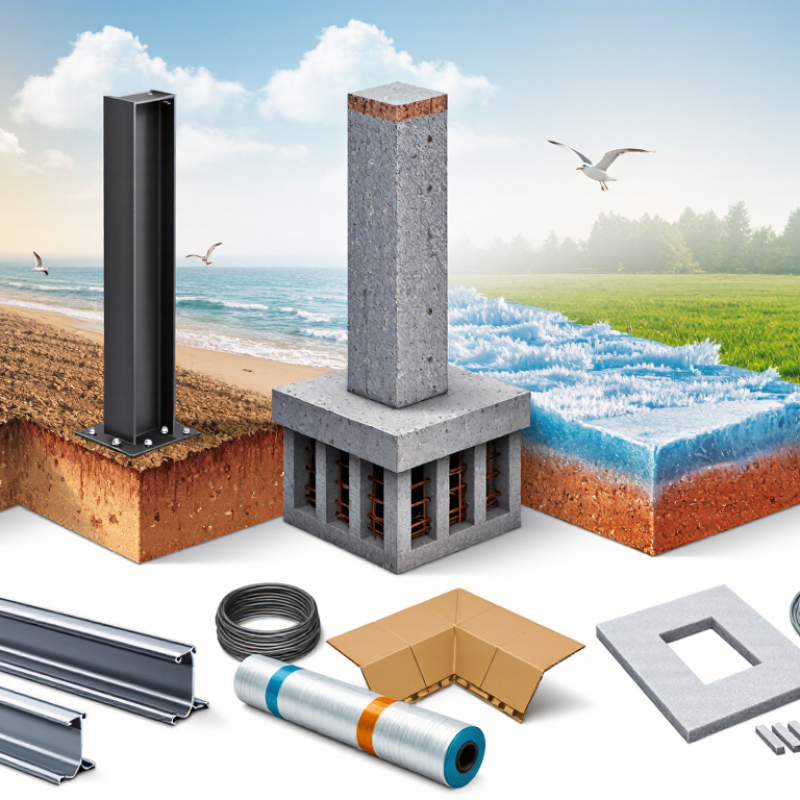
Choosing the best China Fence Posts requires more than comparing factory prices. Global buyers must examine soil conditions, weather exposure, coating quality, dimensions, and delivery reliability. A post that performs well in dry farmland may fail quickly in coastal air or frozen ground.

“Good fence posts begin with the site, not the catalogue,” says Li Wei, a senior fence-system engineer with more than 20 years of manufacturing and installation experience. His point matters. Buyers should request steel grade details, wall thickness, zinc coating measurements, weld inspection records, and load-testing information. Photographs help, but documented test results provide stronger evidence.

Material selection changes the entire project. Hot-dip galvanized steel posts suit many agricultural and security applications. Powder-coated surfaces can improve appearance and add another protective layer. Concrete posts offer strength, yet their weight may increase freight costs and handling risks. Timber posts remain practical in some markets, although moisture treatment and local pest conditions need careful review.

Small details matter.

Ask about post length, outside diameter, hole placement, base design, and compatible rails. Confirm packaging before shipment. Thin separators, reinforced corners, and moisture-resistant wrapping can prevent scratches and deformation during long transport. One honest limitation deserves attention: no universal “best” post exists. Even a well-made product can underperform when installed in unsuitable soil or without proper drainage.

A reliable supplier should communicate clearly, provide samples, explain tolerances, and accept reasonable inspection procedures. Global buyers should compare total ownership cost, not only the factory quotation. The cheapest Fence Posts may become the most expensive choice after replacement, labor, and delayed projects are counted.
What Are the Best China Fence Posts for Global Buyers?

Types of China Fence Posts Available to Global Buyers

China fence posts come in several practical forms for global buyers. Galvanized steel posts are widely used for farm fencing, security mesh, and boundary systems. Their zinc coating helps resist rain, soil moisture, and surface rust. Coating thickness still matters. A cheap-looking finish may hide weak protection.

PVC-coated steel posts add another barrier against corrosion and provide a cleaner appearance. They suit gardens, residential boundaries, and areas near humid coastlines. Concrete posts offer high weight and strong resistance to fire, insects, and impact. However, they require more labor during unloading and installation. Wooden posts remain useful for rural projects, especially when buyers prefer a natural appearance. Their service life depends heavily on treatment, drainage, and soil conditions.

Buyers can also select T-posts, Y-posts, U-posts, and round steel posts. T-posts work well with wire fencing and are easy to drive into firm ground. U-posts are lighter and often suit temporary or low-load fencing. Aluminum posts resist corrosion and reduce transport weight, but they may bend under heavy impact. This choice is not always clear. In my sourcing experience, the best comparison includes wall thickness, post weight, coating test results, hole spacing, and packing quality. Ask for samples before placing a large order. Check whether the actual post matches the drawing. Small differences can create installation problems. Local wind, soil, frost, and fencing requirements should guide the final specification.


Key Materials and Manufacturing Standards

For global buyers, the best China fence posts begin with the material, not the lowest quotation. Steel posts suit long spans, livestock fencing, and heavy wind loads.

The World Steel Association’s World Steel in Figures 2024 reports that China produced about 1,005 million tonnes of crude steel in 2023. This capacity supports broad sourcing, but production volume does not guarantee reliable posts.

Hot-dip galvanized steel is a practical choice for humid fields and coastal projects. ISO 1461 specifies coating requirements for fabricated iron and steel products, while ASTM A123/A123M offers another widely recognized benchmark. Ask suppliers for coating thickness records, steel-grade certificates, weld inspection results, and dimensional checks.

A post with a clean weld and consistent zinc layer feels different in the hand. Small defects often become large maintenance costs. Not always.

Aluminum posts resist corrosion and reduce handling weight, but they usually cost more and may require stronger profiles. Reinforced concrete posts offer rigidity, although transport damage and installation effort deserve attention.

Timber remains useful for rural fencing. The FAO’s Global Forest Resources Assessment 2020 estimated global planted forests at 294 million hectares, yet responsible buyers should still request species identification, moisture data, and treatment documentation.

ISO 9001-based factory controls can improve traceability, but certification alone is not proof of product performance. I would still test sample posts before approving a full shipment.

How to Evaluate Strength, Durability, and Weather Resistance

For global buyers, evaluating China-made fence posts starts with measurable strength, not attractive photos. Ask for steel grade, wall thickness, post diameter, and tested load figures. A post with thicker walls usually resists bending, but design and weld quality also matter. Request test reports from an identifiable laboratory, plus production dates and sample numbers. Photos help. Hands-on checks reveal loose welds, sharp edges, uneven galvanizing, or poorly placed drainage holes.

Durability depends on surface protection and the soil around the post. Hot-dip galvanizing should show documented coating thickness, not only a silver appearance. For coastal sites, ask about salt-spray testing and added corrosion protection. In cold regions, impact performance and low-temperature behavior deserve attention. Powder coating can improve appearance, yet scratches may expose steel beneath the finish. That detail is often overlooked. Request samples before placing a large order. Install one outdoors for several weeks, if the schedule allows.

Weather resistance also depends on water flow, wind exposure, ultraviolet light, and installation accuracy. A strong post can fail when concrete traps water around its base. Check whether dimensions match local panels, gates, fasteners, and foundation methods. Clear packaging, inspection records, and traceable corrective actions indicate a more reliable supplier. Still, paperwork is not proof. I would compare two batches, because one approved sample may hide uneven factory control. Ask difficult questions. A small difference in coating or steel thickness can become visible after one harsh winter.

What Are the Best China Fence Posts for Global Buyers?

Typical outdoor service-life ranges by fence-post material

Hot-dip galvanized steel provides a strong balance of load capacity, durability, and corrosion resistance. Concrete generally offers the longest service life but requires careful handling and installation. Aluminum is lightweight and corrosion-resistant, while pressure-treated wood typically requires more maintenance. Actual performance depends on coating thickness, soil conditions, drainage, wind load, installation quality, and local climate.

Choosing the Right Fence Post for Different Applications

What Are the Best China Fence Posts for Global Buyers?

Choosing the right fence post starts with the application, not the lowest quotation. Grand View Research’s 2024 fencing-market analysis projects steady industry growth through 2030. That growth reflects demand from housing, agriculture, roads, and industrial sites. For chain-link security fences, galvanized steel posts offer strong pull-out resistance and simple installation. Rural fencing often needs thicker walls and wider spacing. Coastal projects need better corrosion protection. ISO 9223 classifies coastal air as potentially highly corrosive, especially near saltwater and heavy humidity.

For temporary construction fencing, lightweight tubular posts can reduce labor and transport costs. Permanent boundaries usually require hot-dip galvanized posts, concrete footings, and verified wall thickness. Decorative fences may use powder-coated steel, but the coating cannot hide poor welds or thin metal. World Steel Association data recorded about 1.89 billion tonnes of crude steel production in 2023. Material availability is broad, yet quality still varies between factories. A cheaper post may become an expensive replacement.

Tips: Ask for mill certificates, coating-thickness records, and load-test results. Confirm post length, outside diameter, wall thickness, and base-plate dimensions. Request samples before ordering containers. Check packaging against salt exposure during ocean transport. Compare total installed cost, not only the factory price. A small mistake here can spread across thousands of posts.

What Are the Best China Fence Posts for Global Buyers? - Choosing the Right Fence Post for Different Applications

Post Material / Finish Typical Applications Typical Sizes Key Performance Expected Service Life* Main Advantages Important Buying Checks
Hot-Dip Galvanized Steel Chain-link fencing, livestock fencing, perimeter security, highways and construction sites Common outside diameters: 38–76 mm
Wall thickness: 1.5–3.5 mm
High structural strength; suitable for moderate to heavy wind and impact loads Approximately 15–40 years, depending on zinc coating and environment Strong, recyclable, widely available and suitable for permanent installations Zinc coating mass or thickness, steel grade, tube wall thickness, weld quality and drainage design
Galvanized Steel with Powder Coating Residential fencing, commercial properties, schools, parks and decorative metal fencing Common outside diameters: 40–100 mm
Wall thickness: 1.5–4.0 mm
Good strength with an additional decorative and protective surface layer Approximately 10–30 years, influenced by pretreatment, coating thickness and UV exposure Available in many colors; improved appearance and resistance to abrasion and weathering Surface pretreatment, powder thickness, adhesion, color stability and repair method for scratches
Aluminum Decorative fencing, coastal properties, gardens, balconies and lightweight temporary barriers Common outside diameters: 32–76 mm
Wall thickness: 1.5–3.0 mm
Lightweight with good natural corrosion resistance; lower strength than structural steel Approximately 20–40 years in suitable conditions Easy to handle, resistant to rusting and suitable for humid or coastal locations Alloy and temper, profile stiffness, fastener compatibility and protection against galvanic corrosion
uPVC / Vinyl Privacy fencing, residential gardens, pool surrounds and low-maintenance landscaping Common post sizes: 80 × 80 mm to 150 × 150 mm
Wall thickness: commonly 2–5 mm
Good moisture resistance; limited resistance to high impact, heat and strong wind without reinforcement Approximately 15–30 years, depending on UV stabilizers and climate Does not rust or rot; low maintenance and easy to clean UV resistance, impact strength, thermal expansion, internal reinforcement and temperature rating
Precast Concrete High-security boundaries, agricultural fencing, infrastructure projects and permanent heavy-duty installations Common section sizes: 100 × 100 mm to 150 × 150 mm
Typical lengths: 1.8–3.0 m
High compression strength and excellent resistance to fire, rot and termites Approximately 30–60 years or more with suitable concrete quality and drainage Very durable, rigid and resistant to biological attack Concrete strength class, reinforcement, freeze-thaw resistance, lifting points and transport damage
Pressure-Treated Wood Rural fencing, farms, landscaping, horse paddocks and traditional timber boundaries Common cross-sections: 75 × 75 mm to 150 × 150 mm
Typical lengths: 1.8–3.6 m
Good impact absorption and simple field installation; performance varies by wood species and treatment Approximately 10–25 years in ground-contact use when properly treated Natural appearance, easy to cut and suitable for irregular terrain Treatment penetration and retention, ground-contact rating, moisture content, end sealing and local regulations
FRP / Fiberglass Composite Chemical plants, wastewater facilities, coastal sites, utilities and electrically sensitive areas Common outside diameters: 40–100 mm
Wall thickness: 3–8 mm
High corrosion resistance, low electrical conductivity and good strength-to-weight ratio Approximately 20–40 years, depending on resin system, UV exposure and load conditions Lightweight, nonconductive and suitable for aggressive chemical environments Resin type, UV protection, fiber orientation, fire rating, connection details and load calculations
Selection Note: The most suitable fence post depends on wind load, fence height, soil condition, corrosion exposure, impact requirements, installation method and local building regulations. Service-life figures are typical planning ranges, not guarantees, and should be verified through project-specific design and testing.

Ordering, Quality Control, and International Shipping Considerations

For global buyers, the best China fence posts are not always the cheapest option.
Selection should match soil, wind, moisture, and installation methods. Galvanized steel posts suit many outdoor projects, while concrete or treated wood may perform better in specific conditions.

Share drawings, post lengths, wall thickness, hole positions, and surface requirements before requesting quotations. Small omissions can cause costly production changes.

Quality control should begin with a pre-production sample. Check dimensions, straightness, weld penetration, coating thickness, and hole alignment. Ask for material certificates and batch records.

An independent inspection can verify quantity and packaging before shipment. Do not rely only on photographs. They can hide uneven coatings or damaged edges.

I have seen buyers specify salt-spray hours without defining real site conditions. That test alone does not predict field performance.

International shipping needs equal attention. Confirm the HS code, export documents, packing method, container loading plan, and agreed Incoterm.

Posts should be bundled securely, separated from sharp metal, and protected from moisture during ocean transit. Mark each bundle with size, quantity, and production batch.

Allow time for inspection, customs clearance, and inland delivery. A lower factory price may lose its advantage after oversized packing, port charges, or rework.

Recheck the landed cost.

Start WhatsApp Chat Start WhatsApp Chat
Valves

Valves

Water Meters

MS Forged Pipe Fittings

Fittings

Water Meters

Valves

DI Grooved Fittings (UL/FM)

Water Meters

DI Screwed Fittings (UL/FM)

Fittings

Composite Pipes & Fittings

Site Credits : Seigospace