
10 Best China Generator Factory Suppliers for Global Buyers

Reliable backup power matters where grid interruptions can halt production, spoil temperature-sensitive goods, or leave a construction site idle. The International Energy Agency’s Electricity 2025 report states that global electricity demand rose by 4.3% in 2024. That figure is not a generator-sales forecast, but it signals the growing pressure on power systems and the value of dependable backup planning. The details matter.

For global buyers, a China generator factory may offer a wide choice of diesel, gas, and portable generator sets, alongside options for customization and export support. Yet a polished catalog cannot prove how a unit performs under sustained load. Buyers should compare rated and standby output, fuel consumption, alternator and engine brands, noise levels, control systems, and documented test procedures. Ask for recent inspection records, clear warranty terms, spare-parts availability, and realistic production timelines. A useful supplier answers specific questions with traceable documents, not just broad assurances.

This guide introduces 10 China generator suppliers and highlights practical points for evaluating their products and service. Verify specifications against your actual operating conditions, including ambient temperature, altitude, required runtime, and local maintenance capacity. Small checks help.

No supplier is perfect. Even reputable factories may differ in communication, lead times, or after-sales coverage across regions. Treat company profiles as a starting point, request current quotations and technical files, and independently confirm critical claims before placing an order. That extra effort can prevent an expensive mismatch between a generator’s brochure and the job site.
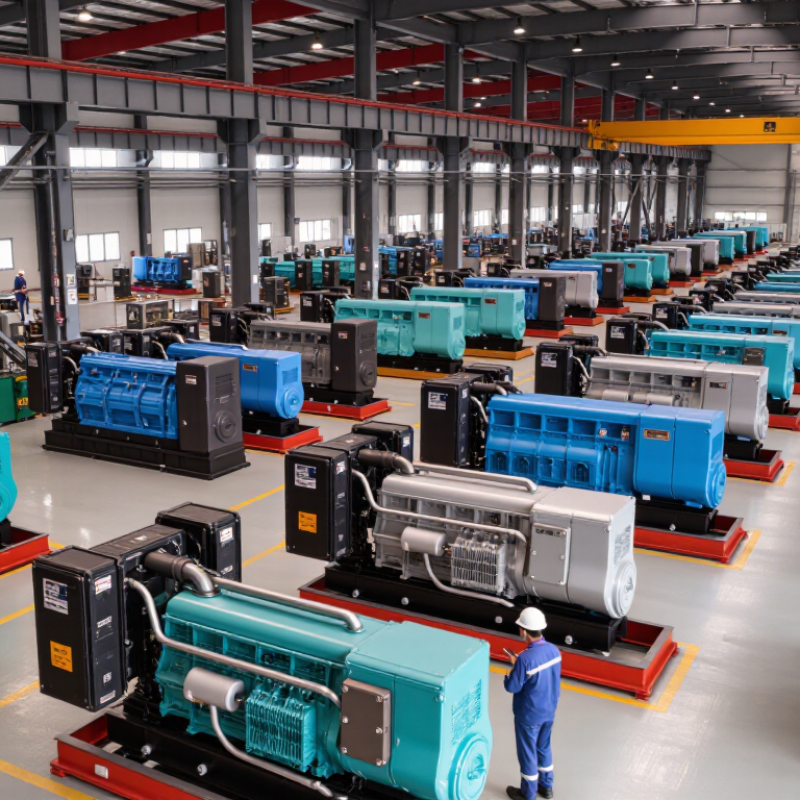
10 Best China Generator Factory Suppliers for Global Buyers

China’s Generator Manufacturing Industry and Its Global Market Role

China’s generator manufacturing industry plays a significant role in supplying power equipment to global markets. Its production network covers engines, alternators, control systems, and complete generator sets. This broad base can help buyers compare output ratings, fuel options, and enclosure designs in one sourcing region.

Factories serve construction sites, hospitals, farms, and backup-power projects. Export experience has encouraged many manufacturers to offer customized voltage, frequency, and documentation. Still, capacity varies widely. A polished catalog does not prove stable performance, and delivery schedules can shift when key components are delayed. Buyers should assess test procedures, quality records, spare-parts support, and communication before placing large orders. Ask for load-test data and clarify what the quoted rating means. Small details matter.

Tips: Match the generator’s rated output to the actual load, including startup surges. Request a factory test report, sample maintenance schedule, and written warranty terms. Check whether local technicians can access replacement filters and other routine parts. One point is often missed: the lowest purchase price may not reflect long-term service costs. Compare the full operating picture, not just the equipment.


How to Evaluate Chinese Generator Factory Suppliers

When evaluating Chinese generator factory suppliers, treat a polished catalog as a starting point, not proof of production capability. Ask which components are made in-house and which come from external vendors. This distinction can affect lead times, traceability, and replacement-part availability. Request a live production-floor video or an independent factory inspection. Look for organized assembly stations, component labels, and documented quality checks. Details matter. A supplier should also explain how it handles design changes and production delays, not only promise fast delivery.

Review test records for the exact generator configuration you plan to buy. A useful report identifies rated output, voltage, frequency, fuel type, and load-test duration. Ask how the factory checks performance under changing loads, and whether it keeps serial-number records for finished units. Verify relevant quality certificates with the issuing body, and confirm that certificate scope matches the products being offered. A document alone is not enough. Compare warranty terms, spare-parts lists, response times, and technical support in writing. If answers stay vague, consider that a practical risk. Price still matters, of course, but the cheapest quotation may exclude testing, packaging, or support. I would not treat one unanswered question as proof of poor quality; repeated gaps deserve a closer look.

10 Best China Generator Factory Suppliers for Global Buyers - How to Evaluate Chinese Generator Factory Suppliers
Evaluation Criterion What to Assess Evidence to Request or Verify Suggested Weight
Manufacturing Capability Confirm that the supplier manufactures or controls the production of the generator sets it offers, rather than acting only as a trading intermediary. Request a live or third-party factory audit, production-process details, facility address, and evidence linking the quoted product to the production site. 18%
Product Range and Application Fit Check whether the available power range, voltage, frequency, fuel type, enclosure, and control options suit the intended application and destination market. Compare a detailed datasheet and configuration against the project specification. Confirm whether the set is intended for standby, prime, or continuous operation. 15%
Technical Ratings and Performance Ensure power ratings, operating conditions, and performance claims are clearly defined. Standby and prime ratings are different duty ratings and should not be compared as if they were interchangeable. Request rating definitions, applicable test conditions, fuel-consumption data, emissions information where applicable, and an agreed performance-test procedure. 12%
Factory Testing and Inspection Assess whether each unit receives documented inspection and testing before shipment, with checks appropriate to the order and specification. Request sample factory acceptance test records, inspection checklists, serial-number traceability, and the option for buyer or independent inspection. 12%
Quality Management and Traceability Review the supplier’s quality-control process for incoming components, assembly, final inspection, nonconformities, and corrective actions. Verify any claimed management-system certificate with the issuing certification body, including its scope, validity, and covered site. 10%
Regulatory and Market Compliance Identify the safety, emissions, electrical, and import requirements that apply in the destination country; requirements vary by product configuration and market. Request relevant test reports and conformity documents for the exact offered configuration, and verify their applicability with the destination-market authority or an accredited testing body. 8%
Customization and Engineering Support Evaluate the supplier’s ability to meet project-specific requirements such as enclosure design, control functions, alternator selection, fuel system, and site conditions. Ask for a written technical proposal, drawings, a deviations list, and confirmation of who approves design changes before production. 8%
Supply Chain and Delivery Planning Check component sourcing, production scheduling, packaging, and the supplier’s process for communicating delays or material substitutions. Request a production schedule, packaging specification, shipment plan, and written approval process for changes to specified components. 7%
Warranty, Spare Parts, and After-Sales Support Review warranty coverage, exclusions, claim procedures, technical-support availability, and access to recommended spare parts. Obtain the warranty terms in writing, a parts list with identification details, and a clear procedure for troubleshooting and warranty claims. 5%
Export Experience and Commercial Clarity Assess whether the supplier can support the required export documents, shipping terms, payment milestones, and communication needs. Request a complete quotation stating scope, exclusions, delivery basis, lead-time assumptions, packing, documentation, and payment terms. 5%

Profiles of Ten Leading China Generator Factory Suppliers

Profiles of ten leading China generator factory suppliers are most useful when they show what each factory actually builds. This comparison covers suppliers focused on diesel, natural gas, compact standby units, and high-capacity industrial sets. Other profiles highlight low-noise enclosures, mobile trailer units, containerized systems, marine applications, custom control panels, and made-to-order configurations. These are different capabilities, not a ranking by sales claims. Details matter.

A reliable profile should explain rated output, engine and alternator options, fuel use, testing procedures, and available service support. Ask for proof. Factory test records, clear warranty terms, and references for comparable projects help buyers assess claims. Check whether the quoted output suits the intended load and operating hours. A polished catalog alone is not enough. One weakness in supplier comparisons is that published specifications can omit conditions such as ambient temperature or altitude. Buyers should clarify these points in writing and confirm spare-parts availability before ordering. The best fit may be less impressive on paper, but more transparent about limits.

Generator Capacity: Converting kVA to kW

Generator sets are commonly rated in kVA. At a power factor of 0.8, estimated real power in kW equals kVA × 0.8. Use the generator’s datasheet to confirm its actual rating and power factor.

Comparing Supplier Products, Certifications, and Export Capabilities

When comparing China generator factory suppliers, look beyond headline power ratings. Ask for continuous and standby output, fuel consumption, voltage options, noise levels, and operating limits. A 100 kVA label alone tells little. Request recent load-test records and check that the quoted control panel, breaker, and enclosure match the actual configuration. Small differences matter.

Certifications should be checked against the exact generator model and intended destination. Confirm the certificate’s scope, issuing organization, and validity rather than relying on a logo in a catalogue. Requirements can vary by market and equipment type. Paper can look convincing. Ask for supporting test reports, and clarify whether the documents cover the factory’s current production model.

Export capability is also practical, not just a claim about past shipments. Ask how the unit will be protected against moisture and impact, what packing dimensions and weights to expect, and which spare parts can ship with the order. Clear answers about lead times, manuals, warranty handling, and remote troubleshooting help reduce costly delays. I would not treat a polished catalogue as proof; a less polished supplier may answer technical questions better, though that alone is not enough. Request references or inspection options where practical, and compare responses in writing.

Key Considerations for Sourcing Generators from China

For global buyers, generator sourcing starts with the duty cycle, not the catalogue. Define required output in kW and kVA, starting loads, operating hours, and acceptable noise levels. The IEA’s Electricity 2024 report says global electricity demand is forecast to grow by an average of 3.4% annually from 2024 to 2026. That outlook makes reliable backup planning important, but it does not determine the right set for your site.

Ask suppliers for fuel-consumption figures at 25%, 50%, 75%, and full load. Request a witnessed load-bank test, plus records showing the tested unit’s configuration and serial number. Check whether certificates match the actual engine, alternator, controller, and emissions specification—not just a similar model. Small details matter. Confirm spare-parts availability, warranty coverage, commissioning support, and how quickly technical questions receive a useful answer.

Factory photos can help, but they cannot prove production quality. One uncomfortable truth: a polished brochure often tells you less than a test report. Compare quotations using the same output rating, ambient temperature, altitude, and standby or prime-power definition. Clarify packaging, inspection timing, shipping terms, and who handles damage claims before paying a deposit.

Test under load. If a supplier avoids clear answers, pause; a lower price may become an expensive lesson.

Start WhatsApp Chat Start WhatsApp Chat
Valves

Valves

Water Meters

MS Forged Pipe Fittings

Fittings

Water Meters

Valves

DI Grooved Fittings (UL/FM)

Water Meters

DI Screwed Fittings (UL/FM)

Fittings

Composite Pipes & Fittings

Site Credits : Seigospace