What Is the Best Hand Crank Coffee Grinder for Camping?
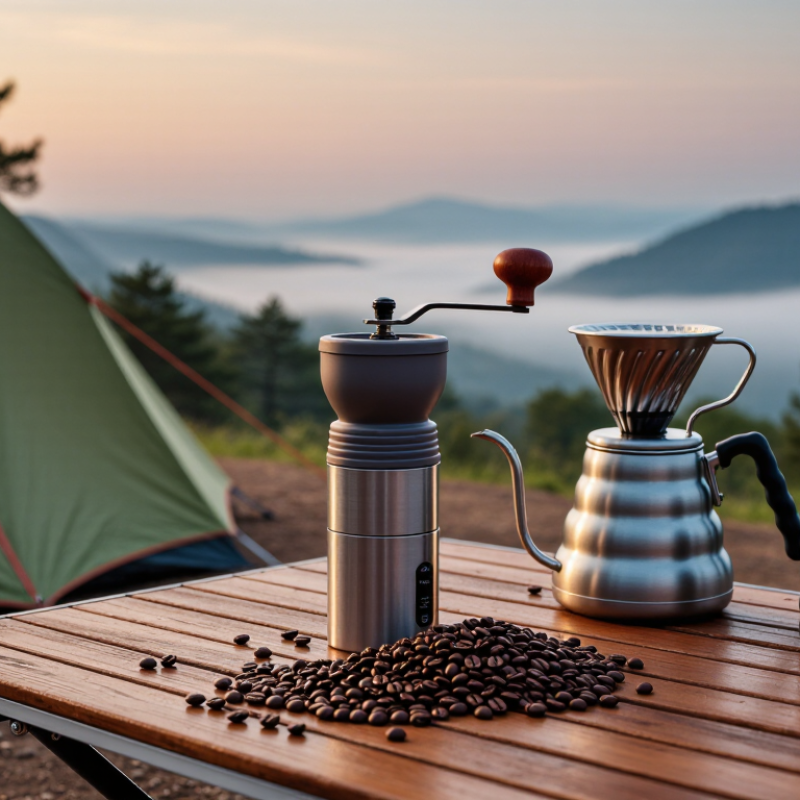
Choosing a Hand Crank Coffee Grinder For Camping means balancing grind quality with weight, durability, and ease of use. At a cold campsite, a compact grinder should fit beside your stove, not take over your pack. A steady handle and secure grip matter when your fingers are chilly. So does a grind adjustment that is clear enough to use before sunrise. Small details count.
This guide looks at the features that make a manual grinder practical outdoors, including burr design, capacity, portability, and cleaning. Burr grinders can produce more consistent grounds than basic blade-style options, which helps when dialing in coffee for a pour-over or press. Still, a larger capacity may add weight, and a tiny grinder can mean several batches for a group. There is no perfect choice for every trip. A little grit happens. We’ll consider how different designs suit solo hikers, car campers, and weekend groups, while separating useful specifications from claims that are hard to verify. The best pick is the one you can pack, adjust, and operate comfortably—not simply the one with the most features. Sometimes the simplest setup wins.
How Hand-Crank Coffee Grinders Work at Camp
What Is the Best Hand Crank Coffee Grinder for Camping?
How Hand-Crank Coffee Grinders Work at Camp
A hand-crank grinder converts your arm’s rotation into burr movement. As the handle turns, one burr rotates against another, breaking beans into grounds. Adjusting the burr gap changes the grind size: a wider gap generally gives coarser grounds for a camp French press, while a narrower one suits pour-over. The mechanism is simple, but not effortless. Hard beans, a loose handle, or an unstable mug can make grinding awkward.
Grind size affects how quickly water extracts flavor, so consistent particles matter. The Specialty Coffee Association’s Golden Cup guidance specifies about 55 grams of coffee per liter of water, with a tolerance of ±10%, and brewing water at 92–96°C. These are useful starting points, not a guarantee of perfect coffee outdoors. Wind, cold water, and uneven pouring can change the cup. A compact grinder may also take longer than expected; that is worth considering before packing light.
Tips: Set the grind at home, then test a small brew. Keep the grinder away from grit, and brush out the burrs after use. Weighing beans helps, but a scoop works when every gram feels like extra camp gear. Inconsistent grounds happen. Adjust one step at a time.
What Is the Best Hand Crank Coffee Grinder for Camping?
How Hand-Crank Coffee Grinders Work at Camp
Example coffee doses offer a practical way to compare brew styles when choosing a hand grinder for camp. A single pour-over may need about 15 g, while a two-cup brew may need around 30 g. These are starting points; adjust to taste and check that the grinder can hold the amount you need.
Which Grinding Features Matter Most Outdoors
Outdoors, the best hand-crank grinder is the one you can adjust and use steadily, even on uneven ground. A clear, repeatable grind setting matters more than a long list of settings. Coarser grounds suit many immersion brews, while finer grounds work for some compact brewers. Check that the adjustment stays put during grinding. Tiny steps can be hard to feel with cold fingers. A folding handle saves space, but it should lock securely and turn without wobbling. That matters when your mug rests on a rock or camp table.
Look closely at the burrs, too. Durable metal burrs can handle regular travel, while a simple design is easier to brush clean. Grounds collect in seams. Annoying, but real. A removable catch cup helps, though it can loosen in a packed bag. Capacity is another trade-off: a small chamber weighs less, but may require multiple batches for two cups. Try turning the crank with one hand while keeping the grinder steady with the other. If it slips, a wider body or textured grip may help. I would not assume the lightest option is best; after a few rough mornings, stability can matter more than saving a little space.
How Burr Design and Build Affect Grinding Performance
For camping, burr design matters more than a polished housing. Two burrs crush beans into particles; their alignment and cutting geometry influence how evenly those particles are sized. A consistent grind helps water extract coffee more evenly, while excess fines can make a cup muddy or slow a pour-over. It is not magic. Even good burrs cannot fix stale beans or an uneven pour.
The Specialty Coffee Association’s brewing guidance places a typical brewed-coffee target at 18–22% extraction yield and 1.15–1.35% total dissolved solids. These are reference ranges, not guarantees of good taste. A 2020 study by Hendon and colleagues in Matter also showed that grind size and particle distribution affect espresso flow and extraction. For a campsite, look for burrs that stay aligned under hand pressure, plus a stable axle and a firm adjustment mechanism. A loose axle can let the burrs wobble, creating inconsistent grounds.
Build quality counts, too. A metal body and a securely seated handle can better tolerate a crowded pack, but they add weight. Check whether the adjustment clicks are easy to feel with cold fingers. That small detail matters. One honest limitation: hand grinders still take effort, especially for light-roasted beans. A compact model may grind well, yet feel tiring before breakfast.
How to Match Grinder Capacity to Your Camping Setup
Capacity should follow how many cups you make, not the biggest number on a product page. For one camper, a grinder holding 20–25 grams often covers a strong mug or two smaller brews. A typical pour-over uses about 15–18 grams per cup, though taste and brewing method change that. Measure your dose at home. Small test, big help.
For two people, plan roughly 30–40 grams per brew, then check whether the grinder can hold that amount in one load. Some compact models need two batches. That means more cranking beside a cold tent, and possibly grounds spilling onto a picnic table. Check both the bean hopper and grounds cup; advertised capacity may describe only one. A little awkward, but useful.
For a group, choose capacity around your largest shared brew, but weigh it against pack space and grinder weight. A 50-gram chamber may save time at camp, yet feel bulky on a short hike. Car campers can carry more; backpackers often value a smaller tool and grind twice. Keep beans in a sealed, dry pouch, and leave room for the handle to turn. Cold fingers make a tight lid or short crank less pleasant. Capacity alone will not fix that. Recheck your routine before buying.
How to Use and Maintain a Grinder on the Trail
At camp, set the grinder on a flat rock or a firm table before turning the handle. Keep it close to your mug so grounds do not scatter in the wind. Add only enough beans for the brew you plan to make; carrying extra grounds can leave stale coffee and a dusty burr chamber. Turn the handle steadily, without forcing it. If it catches, stop and check for a trapped bean.
Choose a slightly coarser grind for a simple pour-over, then adjust in small steps if the cup tastes weak or harsh. Keep notes on the grind setting and brew time; cold mornings can make small changes harder to judge. A small notebook helps. I’d avoid chasing a perfect cup when the water temperature and pouring are already uneven. That is easy to forget.
After brewing, tap loose grounds into a waste pouch, then brush the burrs and chamber with a small, dry brush. Avoid rinsing the grinder on the trail unless its instructions specifically allow water; moisture can cling inside and affect the next batch. Let damp parts air-dry fully before packing. At home, follow the grinder’s cleaning instructions and inspect the burrs for lodged debris. Don’t overtighten the adjustment ring. A little coffee dust will remain, and that’s not always worth a full teardown outdoors.