2026 Best Pipes and Fittings Suppliers for Global Buyers
The 2026 pipes and fittings market is becoming more demanding, not merely larger. Buyers now assess pressure ratings, corrosion resistance, traceability, delivery stability, and after-sales support. A polished catalogue is no longer enough.
The World Health Organization and UNICEF reported that 2.2 billion people lacked safely managed drinking water in 2022. This gap keeps investment flowing into water networks, industrial plants, irrigation systems, and building infrastructure. Grand View Research also estimates continued growth in the global plastic pipes market through 2030, supported by urban development and replacement projects. These figures show opportunity, but they do not guarantee supplier quality. Market forecasts can differ. Procurement decisions still require practical verification.
Dr. Peter Gleick, a leading water-policy expert, has stated, “Water is a human right, not a commodity.” His point matters to every supplier evaluation. A fitting that fails in a remote water station affects more than a project budget. It affects households, maintenance crews, and public trust. This guide reviews the 2026 best pipes and fittings suppliers for global buyers through a practical lens. It considers material standards, manufacturing experience, inspection systems, export capability, certifications, and response speed. Factory visits, sample checks, and reference calls remain valuable. They are sometimes skipped. That is a mistake. No supplier ranking is flawless, because project conditions vary by region, fluid, climate, and installation method. This outline therefore aims to support informed comparison, not replace engineering judgment.

What Defines a Reliable Pipe and Fittings Supplier in 2026
Reliable pipe and fittings supply in 2026 starts with evidence, not attractive catalogues. In practical sourcing, buyers should inspect traceability from steel heat number to final packing. Every fitting should carry clear markings, batch records, and inspection status. The World Bank’s 2023 Logistics Performance Index compares 139 economies across six logistics dimensions. Its framework highlights customs, infrastructure, shipment quality, and timeliness. These are procurement issues, not abstract statistics.
A capable supplier works to recognized technical standards and explains exceptions clearly. For pressure products, documented compliance with ASME, ASTM, EN, or equivalent requirements matters. The ISO Survey 2022 recorded 1,265,216 ISO 9001 certificates worldwide. That scale shows broad adoption, but certification alone cannot verify product quality. Ask for mill certificates, dimensional reports, hydrostatic results, and corrective-action records. Samples should match production batches.
Delivery reliability also needs measurable controls. Request on-time-in-full performance, safety-stock rules, and escalation contacts. The World Bank LPI treats timeliness as a separate performance dimension, reinforcing its commercial importance. Yet forecasts remain imperfect. A supplier may promise 30 days and face port congestion, alloy shortages, or inspection delays. Strong partners disclose these risks early and offer dated alternatives. That honesty is often more valuable than a flawless sales presentation. No supplier is perfect, and buyers should still challenge their assumptions.
Key Product Categories and Material Options for Global Buyers
2026 Best Pipes and Fittings Suppliers for Global Buyers
Key Product Categories and Material Options for Global Buyers
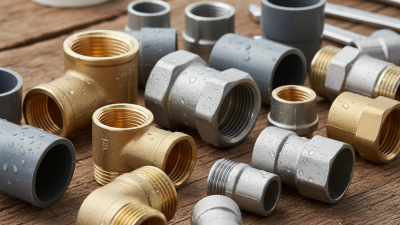
Global buyers should compare products by application, not appearance. Common categories include water supply pipes, drainage pipes, process piping, valves, elbows, tees, reducers, and flanges. Each item serves a different pressure, temperature, and connection requirement. A clean-looking fitting can still have poor thread accuracy. That mistake is expensive.
Plastic options include PVC, CPVC, HDPE, and PPR. PVC suits many cold-water and drainage systems. CPVC handles higher temperatures. HDPE offers flexibility and strong resistance to ground movement. PPR is often selected for hot and cold domestic water lines. Metal options include carbon steel, stainless steel, ductile iron, copper, and aluminum. Stainless steel performs well in corrosive environments, but its cost requires careful justification.
Material selection needs evidence. Request technical data sheets, dimensional drawings, pressure ratings, and batch test reports. Confirm wall thickness, connection standards, temperature limits, and chemical compatibility. A supplier should explain whether ratings apply to the pipe, fitting, or complete joint. That detail matters.
Not every “universal” fitting is truly universal. Thread standards may differ between markets. Gaskets may also react badly to certain fluids. Buyers should inspect sample pieces, verify certificates independently, and review packaging for moisture damage. A rushed comparison often ignores freight weight and replacement availability. That is a weakness worth correcting before purchase.
2026 Best Pipes and Fittings Suppliers for Global Buyers
Key Product Categories and Material Options for Global Buyers
How to read this chart: The comparison shows typical material density values in kg/m³, which can help global buyers estimate shipping weight, handling requirements, and material selection. Common product categories include pipes, elbows, tees, reducers, flanges, and valves. Values are representative reference figures; exact density depends on the grade, formulation, and manufacturing specification.
Supplier Qualification Criteria: Quality, Compliance, and Capacity
Global infrastructure demand makes supplier qualification more demanding. The Global Infrastructure Hub’s Global Infrastructure Outlook estimated about US$94 trillion in infrastructure investment needs through 2040. It also identified a potential US$15 trillion funding gap. For buyers, capacity must mean more than a large factory. Ask for monthly production data, equipment lists, workforce shifts, and recent delivery records. A supplier should explain how it handles peak orders without weakening inspection controls. Numbers can look impressive.
Quality begins with traceability. Require heat numbers, material certificates, dimensional reports, pressure-test records, and coating inspection results. Confirm that samples match shipped products. ISO’s 2023 Survey recorded more than 1.2 million ISO 9001 certificates worldwide. That figure shows broad adoption, but certification alone does not prove consistent pipe or fitting quality. Audit the actual process. Review calibration dates, nonconformance reports, corrective actions, and batch-release procedures. Compliance should match the destination market, contract specifications, and applicable standards. One overlooked detail can delay installation.
Tips: Build a supplier scorecard covering quality, compliance, capacity, and delivery risk. Request three recent project references with contact permission. Check whether test laboratories hold suitable accreditation. Review production samples before approving mass manufacturing. Keep one concern visible: forecasts are uncertain, and even a qualified supplier may face raw-material delays or equipment failure. A practical contract should define inspection points, replacement duties, documentation deadlines, and escalation contacts. Procurement teams sometimes overvalue a low price. That is a costly weakness.
Comparing Pricing, Lead Times, Customization, and Export Services
2026 Best Pipes and Fittings Suppliers for Global Buyers
Comparing Pricing, Lead Times, Customization, and Export Services
A competitive pipe quote should show material grade, wall thickness, testing, packing, and delivery terms. Unit price alone is misleading. A cheaper offer may exclude inspection, export packaging, or inland transport. Buyers should compare total landed cost, including freight, duties, insurance, and documentation fees. Prices can mislead.
Lead times need practical checking. Ask when production starts, not only when the order is confirmed. Standard fittings may ship within weeks, while large-diameter pipes can require several production stages. Request a schedule covering drawing approval, raw material allocation, inspection, packing, and vessel booking. A supplier that reports delays early is often more reliable than one promising an unrealistic date.
Customization should be measured carefully. Changes in length, coating, thread type, flange drilling, or labeling can affect tooling and minimum order quantities. Confirm tolerances through approved drawings before production. Export service also matters. Check whether the supplier can provide commercial invoices, packing lists, certificates of origin, mill test certificates, and inspection records. Moisture-resistant packing and clear bundle marks reduce problems at the destination.
I have seen buyers accept attractive prices before checking document quality. That decision created avoidable clearance delays. A stronger review uses samples, factory evidence, reference projects, and independent inspection where suitable. Still, no checklist removes every risk. Shipping schedules change, specifications get misunderstood, and small omissions become expensive.
How to Select the Best Supplier for Your International Project
2026 Best Pipes and Fittings Suppliers for Global Buyers
How to Select the Best Supplier for Your International Project
Selecting a pipe and fittings supplier requires more than comparing unit prices. Confirm material grades, pressure ratings, dimensions, and applicable ASTM, EN, or ISO requirements. Ask for heat numbers, mill test certificates, inspection records, and pressure-test results. Documentation matters. A reliable supplier should connect every batch to a production record and explain deviations without vague promises.
The 2024 UNCTAD Review of Maritime Transport states that shipping carries over 80% of global trade by volume. Therefore, logistics capability deserves the same attention as manufacturing quality. Review export experience, packing methods, container loading photos, and delivery performance. The World Bank Logistics Performance Index 2023 also highlights tracking and shipment timeliness as important supply-chain differentiators. Request a realistic lead-time range, not an optimistic date. Build contingency stock for critical project sections.
Audit the supplier’s quality system, preferably through an independent inspection or a documented ISO 9001 process. For laboratory results, verify testing competence under ISO/IEC 17025 where relevant. Check production capacity against your schedule, especially for large-diameter or customized fittings. A low quote can look clever, yet it may hide weaker coatings, missing certificates, or costly rework. I have seen procurement teams overvalue price and undervalue traceability. That mistake is easy to repeat. Evaluate three recent projects, contact references, and test one sample before approving bulk production.