
Squeezable Lip Gloss Tubes can look simple on a buying sheet: a soft tube, a cap, and an applicator. On a production line, small details matter. A stiff tube can frustrate users; a loose cap can leave sticky residue in a sample carton. Wholesale buyers need to compare more than unit price. Material, capacity, nozzle shape, decoration, and sample consistency all affect the final product.
Grand View Research estimated the global cosmetic packaging market at US$34.78 billion in 2023, underscoring the scale of competition for packaging suppliers and brands. That figure covers cosmetic packaging broadly, not lip gloss tubes alone. Buyers should treat it as market context, not a forecast for this specific product category. For practical evaluation, request samples and test squeeze pressure, closure fit, and print alignment under ordinary handling. Small tests help. They do not replace supplier checks.
A useful rule for this guide is: “Choose the tube that performs reliably in the hand, not just the one that photographs well.” This is editorial guidance, not a quotation attributed to an outside expert. No verifiable, topic-specific expert quotation was supplied, so assigning one would risk misleading buyers. The sections ahead compare tube styles, materials, customization, and wholesale considerations. Some trade-offs remain imperfect: a premium finish may raise cost, while a lighter tube may feel less substantial. That tension deserves a close look.
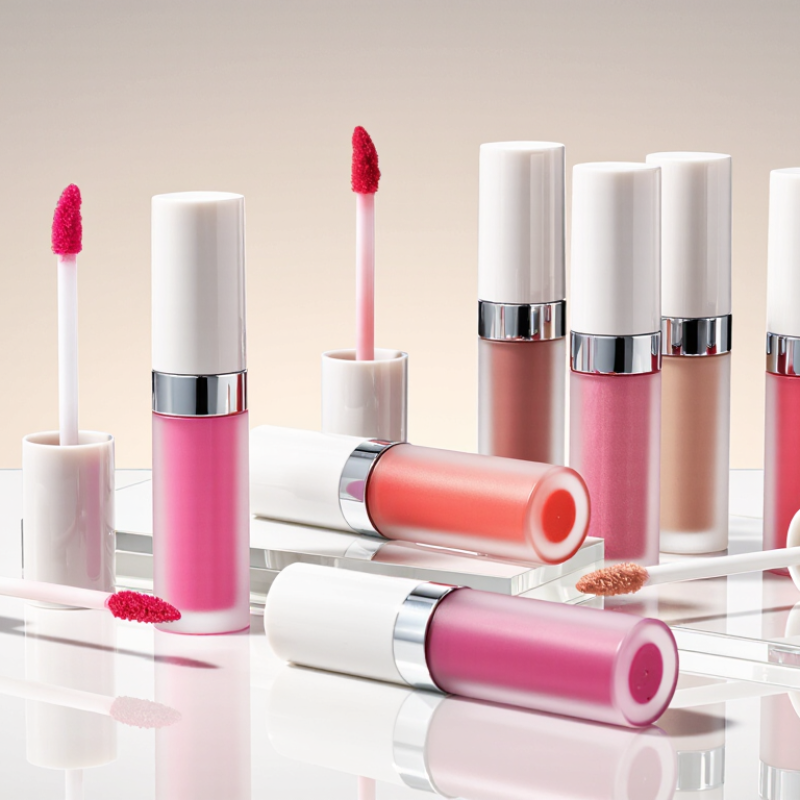
A squeezable lip gloss tube is a flexible package designed to release product when the user compresses its body. Its performance depends on more than softness. The tube wall must yield under finger pressure, then resist splitting near the shoulder and seal. A narrow opening or fitted applicator helps control the dose; too much pressure can still push out a messy bead. Feel matters. For wholesale buyers, sample the tube with the actual formula, not water. Gloss viscosity, oils, and pigments can affect flow, sealing, and material compatibility.
Grand View Research estimated the global cosmetic packaging market at USD 29.9 billion in 2023, with projected annual growth of 5.4% from 2024 to 2030. This market estimate signals the scale of packaging demand, but it does not determine whether a specific tube will perform well. Ask suppliers for wall-thickness tolerances, closure specifications, and production sample results. Test repeated squeezing, cap fit, leakage during storage, and how much gloss remains after use. Small details show up fast. A tube may feel satisfyingly soft in a hand test yet crease, leak, or dispense unevenly on a filling line. That trade-off deserves attention before placing a large order.

For wholesale buyers, a squeezable lip gloss tube is more than its printed surface. The tube wall controls how easily customers dispense product and how well the package resists dents during shipping. Softer polyethylene can squeeze smoothly, while a firmer multilayer structure may offer better shape retention. Neither option suits every formula. Test the actual gloss in the intended tube, especially if it contains oils or feels unusually thick.
Small details matter. The shoulder and neck guide product toward the opening, so a narrow passage can make dense gloss frustrating to use. A soft applicator tip gives direct control, while a slanted opening may spread product more evenly. Cap fit also matters: loose threads or a weak inner seal can lead to messy samples and returns. Check repeated opening and closing, not just a single leak test.
For a practical comparison, fill sample tubes and leave them upright, sideways, and in a warm room for several days. Then check for seepage, changes in odor, difficult squeezing, and gloss trapped near the shoulder. Test both. These checks are simple, but they can expose problems before a large order. One limitation: a short test cannot predict every storage condition, so record your observations and confirm performance with a longer trial.
For thin, high-shine lip gloss, a narrow nozzle tube gives buyers controlled dispensing and helps limit mess. A soft, flexible wall makes small amounts easier to squeeze onto the lips or an applicator. Choose a smooth opening that resists clogging, especially if the formula contains shimmer particles. Not always. Very fine tips can feel slow when gloss is thick.
Medium-viscosity gloss often suits a squeezable tube with a slanted applicator tip. The angled surface spreads product across the lips without requiring a separate wand. Look for a cap that closes securely and a tip with rounded edges; sharp or rough edges can feel uncomfortable. For richer formulas, a wider opening may reduce squeezing effort. Test the tube after filling, not only with an empty sample.
Thick, cushiony gloss may work better in a tube with a flocked wand and internal wiper. The wand picks up product and offers more precise placement, while the wiper helps manage excess. That matters for wholesale buyers comparing fill volume, application feel, and leakage during shipping. Ask suppliers to test the actual formula at different temperatures, since texture can change. A package that looks ideal on a specification sheet may still dispense unevenly. Small pilot runs can reveal that.
Wholesale buyers should compare more than unit price when sourcing squeezable lip gloss tubes. Grand View Research estimated the global cosmetic packaging market at USD 34.3 billion in 2023 and projected a 5.5% compound annual growth rate from 2024 to 2030. This broad market forecast signals active demand, but it does not guarantee a supplier can deliver consistent tube quality. Ask for written specifications, current production capacity, and sample lead times.
Check the details that affect filling and daily use: tube material, capacity, nozzle opening, wiper fit, cap closure, and decoration tolerance. A 10 ml tube may look right on a product sheet, yet a narrow opening can slow filling or make the gloss difficult to dispense. Request samples from the intended production line. Test squeeze force, leakage after storage, and compatibility with your actual formula. Results from an empty tube are not enough.
Compare suppliers using the same checklist. Record minimum order quantity, tooling charges, defect policy, inspection method, and delivery terms. Ask how batches are identified and how changes to materials are communicated. Small differences matter. A supplier’s sample may be excellent, while bulk output varies; buyers should confirm inspection criteria before placing an order. No checklist catches everything, so leave time for a production trial rather than relying only on promises.
Use this comparison as a planning guide for requesting quotes. Capacity, minimum order quantity, lead time, and available finishes vary by supplier, tooling, artwork, and order volume.
| Tube Format | Typical Capacity | Common Material | Applicator / Closure | Indicative MOQ | Indicative Production Lead Time | Customization Options | Best Suited For | Buyer Checks |
|---|---|---|---|---|---|---|---|---|
| Soft squeeze tube with angled tip | 5–15 ml | Typically PE tube body; tip and cap material depend on the design | Angled dispensing tip with screw cap | Often 5,000–10,000 units for custom production | Approximately 30–60 days after artwork and specifications are approved | Tube color, cap color, printing, labels, and selected tip shapes | Everyday gloss, balm-gloss hybrids, and direct-to-lip application | Check orifice size, cap fit, formula compatibility, and leakage under transport conditions. |
| Squeeze tube with doe-foot applicator | 5–10 ml | Soft PE or multilayer tube with a separate applicator assembly | Wiper insert, wand, doe-foot tip, and cap | Often 5,000–10,000 units; custom applicator parts may affect the MOQ | Approximately 35–65 days, depending on component availability | Applicator shape, wand length, tube decoration, and cap finish | Glosses that benefit from controlled pickup and precise application | Request applicator and wiper samples; test pickup, fit, and formula return into the tube. |
| Laminated squeeze tube | 5–20 ml | Plastic laminate, commonly with barrier layers selected for the formula | Tip or nozzle with a screw cap; component options vary | Often 10,000–20,000 units for custom printing | Approximately 40–70 days after final approval | Full-color print, tube diameter and length, shoulder, tip, and cap options | Projects requiring printed graphics or a specified barrier structure | Confirm the complete material structure and conduct compatibility and stability testing with the finished formula. |
| Small round PE tube with narrow nozzle | 3–10 ml | PE tube body with a plastic nozzle and cap | Narrow dispensing nozzle with screw cap | Often 5,000–10,000 units, depending on stock components and decoration | Approximately 25–50 days for standard components; custom parts may take longer | Tube and cap colors, printing, labels, and nozzle dimensions | Travel sizes, sample products, and targeted dispensing | Verify dispensing force and opening size using the actual formula, especially for thicker products. |
| Recyclable-design mono-material PE tube | 5–15 ml | Designed primarily with PE components; actual recyclability depends on the full package and local systems | PE-compatible tip or nozzle and cap, subject to the supplier's design | Often 10,000–20,000 units for custom specifications | Approximately 40–70 days after specification approval | Tube color, printing, closure selection, and selected recycled-content options | Brands seeking to simplify packaging material choices | Ask for a component-by-component material declaration and avoid broad recyclability claims without substantiation. |
Wholesale comparison tip: Request like-for-like quotations that specify capacity, tube diameter and length, material structure, applicator components, decoration, packaging, MOQ, sampling charges, and delivery terms. Lead times and MOQs above are indicative industry planning ranges, not guaranteed supplier offers.
Before placing a bulk order in 2026, check how the tube performs with your actual gloss formula. A thick formula may squeeze slowly, while a runny one can leak around the applicator. Ask for samples and fill several by hand. Check capacity, cap fit, nozzle control, and whether the tube stands upright on a counter. Also confirm the material and decoration options in writing.
Tips: Test filled samples for at least a week. Store some upright and others on their sides. Look for seepage, cracked seams, loose caps, and changes in color or feel.
Request a pre-production sample that matches the proposed materials, print, and closure. Confirm the order quantity, tolerances, lead time, packaging, and defect-handling process before approving production. Ask how cartons will protect tubes from crushing during transport. A specification sheet can look complete and still miss a small detail, such as a cap that is hard to open with glossy hands. I would not rely on photos alone; sample testing takes time, but rushing this check can leave you with thousands of inconvenient tubes.