
Best Universal Board TV in 2026 for Global Buyers?

Choosing the Best Universal Board Tv in 2026 is less about finding one board that fits every television and more about matching the right hardware to a specific screen. “Universal” can describe broad compatibility, but it does not guarantee a match. Buyers should check the panel model, connector layout, firmware, tuner requirements, and power specifications before ordering. A mismatch may leave the screen blank or prevent key functions from working.

TV display reviewer Vincent Teoh, founder of HDTVTest, has shown through his testing why a television should be judged as a complete image system, not by one specification alone. A practical summary of that lesson is: “Judge the whole system, not one number.” For a Universal Board Tv, that means checking how the board handles the panel, signal processing, and regional broadcast needs together. Small details matter. A connector can look identical yet use a different pinout. A menu may load, while the tuner lacks support for local broadcasts. Global buyers should also confirm language options, available firmware, and seller support in their region. Ask for the exact board revision and written compatibility confirmation before purchase. Keep the original board label and clear photos of the connectors nearby. They can make identification easier. No single option suits every setup, and compatibility claims deserve careful checking. This guide compares practical features and trade-offs to help readers make a more informed choice.
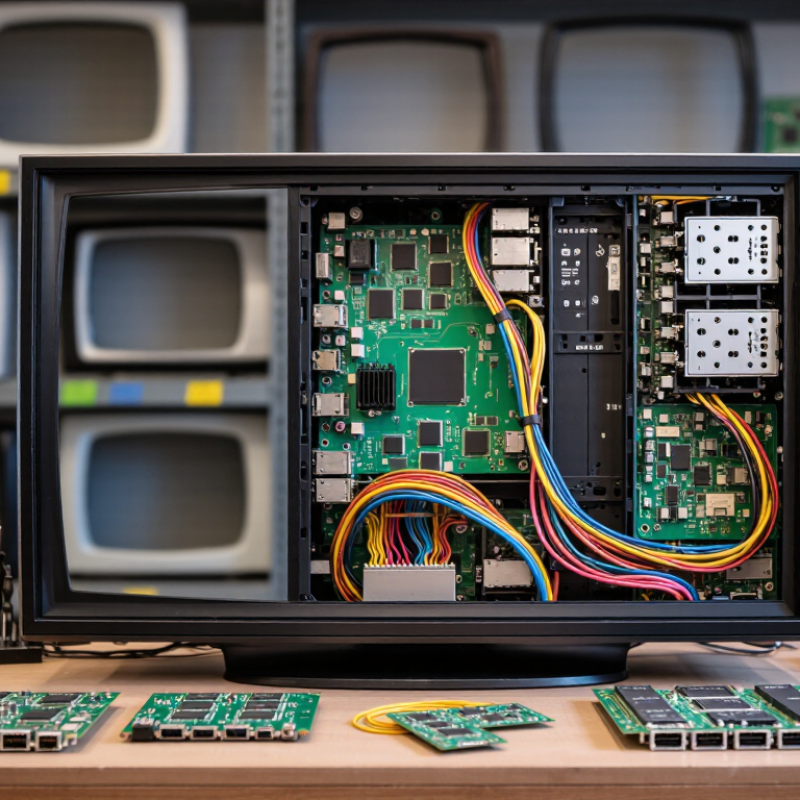
Best Universal Board TV in 2026 for Global Buyers?

What “Universal Board TV” Means and How It Works

A “universal board TV” usually refers to a replacement control board designed to work with several television models. It is not a board that fits every TV. The term is used loosely in repair listings, so the label alone tells you very little.

The board receives signals from connected devices, processes video and audio, and sends the image to the screen. Depending on the design, it may also manage the tuner, speakers, and remote-control inputs. A technician checks details such as the panel model, connector layout, screen resolution, and required voltage. Firmware settings matter too. A plug that fits is not proof of compatibility.

That matters.

For example, two screens may share the same size but use different internal connections. A mismatch can cause a blank picture, wrong colors, or no startup. Before buying, compare the TV’s model and panel codes with the board’s supported specifications, and ask how configuration is handled. Some listings are vague; I would not treat “universal” as a guarantee. Installation also involves delicate connectors and electrical components, so careful handling—or professional help—is sensible.


Key Features That Determine Board and Screen Compatibility

For global buyers, “universal” does not mean every board works with every screen. Check the screen’s native resolution, refresh rate, input ports, and touch interface against the board’s output. CTA defines 4K UHD as 3840 × 2160 pixels. VESA’s DisplayPort 2.1 specification allows bandwidth up to 80 Gbps; HDMI 2.1 specifies up to 48 Gbps. These are maximums, not guarantees. The board, cable, and display must all support the same signal. Small details matter.

Touch needs its own connection, often a USB cable alongside HDMI or DisplayPort. Confirm the board’s operating system supports the display’s touch protocol, and check the screen’s mounting pattern and weight before installation. A picture can appear while touch remains unresponsive. That mismatch is easy to overlook on a tidy specification sheet.

Tips: Test the exact board, screen, and cable combination before bulk ordering. Try the intended resolution and refresh rate, then test touch at the screen’s corners. Record the working settings. Even a short cable swap can change the result.

Best Universal Board TV in 2026 for Global Buyers?

Screen resolution is a useful first compatibility check. The chart compares the approximate number of active pixels in common TV formats.

Pixel counts are calculated from the listed resolutions. A compatible board must also match the panel’s interface (such as LVDS, eDP, or V-by-One HS), supported refresh rate and timing, supply voltage, and connector pinout. Confirm the panel datasheet and board specifications before purchase.

Standards and Regional Differences Global Buyers Should Check

A “universal” TV board is not automatically universal across countries. The tuner must match local broadcast standards: DVB-T2 is used across many markets, while ATSC 3.0 and ISDB-T are used in others. Confirm the exact tuner version and supported channel system before ordering. The word universal can be misleading.

Check the full set’s power requirements, not just the board. Mains voltage and frequency vary by market, and some televisions use region-specific power designs. Then compare the panel interface, connector pin count, resolution, timing, and firmware. A connector that looks right may still carry signals differently. Small details matter.

These checks can also reduce avoidable replacement waste. The Global E-waste Monitor 2024, produced by UNITAR and the ITU, reports that 62 million tonnes of e-waste were generated worldwide in 2022; only 22.3% was documented as formally collected and recycled. Ask suppliers for a board compatibility list covering panel codes, tuner standards, and firmware regions. Request photos of the connector labels, too. One limitation: published compatibility tables can be incomplete, so test a sample before placing a bulk order.

How to Compare Universal TV Boards for Performance and Reliability

A universal TV board should be compared by more than its advertised processor speed. Check the panel resolution, refresh rate, supported voltage, and connector pinout against the television’s original specifications. A plug that looks correct may still carry signals differently. Fit is not enough. Also confirm that the firmware supports the panel and its key functions, such as backlight control and audio output.

Reliability depends on heat, components, and serviceability. Look for clear documentation, stable power regulation, and a sensible thermal design. A board that runs hot inside a cramped cabinet may behave differently after hours of viewing. Ask about warranty coverage and replacement availability, too. These details are less exciting than a feature list, but they matter when a repair is needed. Specifications can be incomplete, so treat claims as a starting point, not proof.

Tips: Photograph every connector before removal, then compare pin labels and cable orientation. If possible, test the board with the intended panel and observe startup, picture stability, and temperature over time. Do not assume every “universal” board is universal for your model. That wording can be loose. A careful compatibility check takes longer, but it can prevent a costly mismatch.

Best Universal Board TV in 2026 for Global Buyers? — How to Compare Universal TV Boards for Performance and Reliability
Board category Typical panel connection Common resolution fit Typical video inputs Performance considerations Reliability considerations Best suited for
Basic LVDS controller LVDS; panel voltage and pinout must match the display panel Often HD or Full HD panels; exact support depends on the controller and panel timing Commonly HDMI and VGA; some versions include composite video Suitable for standard-definition through Full HD use when the panel timing is supported. Input selection and scaling features vary. Check the panel’s LVDS lane configuration, connector pinout, supply voltage, and firmware before powering it. Incorrect voltage or pin mapping can damage a panel. Repairs or conversions using compatible LVDS panels
HDMI-to-LVDS controller LVDS panel output, with HDMI as a primary source input Commonly HD or Full HD; resolution and refresh limits are model-specific Usually HDMI; additional inputs depend on the board Useful for connecting modern HDMI sources to supported LVDS displays. The board’s scaler and supported input timings determine picture results. Confirm that the board firmware is configured for the exact panel model, resolution, and timing—not merely the same connector type. Converting an older compatible panel into an HDMI display
eDP controller Embedded DisplayPort (eDP); cable, lane count, and panel voltage must match Commonly HD or Full HD; some controllers support higher resolutions Often HDMI; input options vary by design eDP is a digital panel interface. Supported resolution and refresh rate depend on the controller, panel, link configuration, and firmware. Verify the eDP pinout, connector orientation, lane configuration, and backlight requirements. Connector appearance alone does not establish compatibility. Compatible eDP panels and newer display assemblies
4K-capable controller Typically eDP or another specified high-resolution panel interface Up to 3840 × 2160 on supported board-and-panel combinations Input version and bandwidth are model-specific; HDMI 2.0 can carry 4K at up to 60 Hz under supported color and timing settings Confirm both the board’s input capability and its panel output capability. A 4K input label does not guarantee 4K output at every refresh rate or color format. Check thermal design, power requirements, firmware timing, and the complete signal path. Every connected component must support the target mode. High-resolution panels when the board documentation explicitly lists the exact mode
Smart-TV main board Panel interface is board-specific, commonly LVDS or eDP Determined by the board firmware and supported panel configuration Often HDMI plus network connectivity; port selection varies May provide built-in streaming or media features, but operating system, app availability, codecs, and network features vary by region and model. Confirm regional tuner standards, software support, language options, update policy, and panel-specific firmware. “Smart” does not mean universally compatible. Complete TV conversions where the board’s regional and panel specifications match
Multi-input universal controller LVDS or eDP, depending on the specific version Ranges from HD to higher resolutions; published specifications must be checked May include HDMI, VGA, composite, or other inputs More input options can improve source flexibility, but do not guarantee better scaling, picture quality, or refresh-rate support. Compare the exact hardware revision and firmware. Boards with similar names or layouts may have different pinouts and supported panels. Projects that need several legacy and modern video sources
Global buyer checklist: “Universal” does not mean compatible with every TV panel. Before purchase, match the panel model, interface (LVDS or eDP), pinout, resolution, timing, supply voltage, backlight type, and firmware. Also verify the board’s supported input modes and, for TV use, regional broadcast tuner standards. All ranges above are typical examples, not guaranteed specifications; consult the exact board and panel datasheets.

Choosing a Suitable Universal Board TV for Your Market and Use Case

Choosing a universal TV board starts with the screen, not the word “universal.” Match the panel’s resolution, refresh rate, connector type, voltage, and backlight requirements. A board that powers on may still show washed-out colors, flicker, or a blank image if its panel settings are wrong. Check the panel label and wiring diagram before ordering. Small details matter.

Market fit matters too. Omdia’s 2024 outlook placed global TV shipments at roughly 208 million units, a large market with varied screen sizes and configurations. For repair shops, confirm the board supports the exact panel and has replaceable firmware. For custom builds, check input ports, audio output, and remote-control compatibility. Ask suppliers for a tested sample or written compatibility list. “Universal” can be misleading.

Connectivity is another practical filter. The ITU’s Facts and Figures 2024 estimated that 5.5 billion people were online, or 68% of the global population. That still leaves very different connection conditions across markets. A hospitality display may need reliable wired inputs; a home TV may depend on wireless streaming. Confirm local tuner support and power requirements for the destination market. Datasheets can be incomplete, so verify critical details before placing a bulk order.

Start WhatsApp Chat Start WhatsApp Chat
Valves

Valves

Water Meters

MS Forged Pipe Fittings

Fittings

Water Meters

Valves

DI Grooved Fittings (UL/FM)

Water Meters

DI Screwed Fittings (UL/FM)

Fittings

Composite Pipes & Fittings

Site Credits : Seigospace