Best Water Totalizer Solutions for Accurate Usage Measurement?
In today's world, accurate measurement of water usage is crucial. Water totalizers play a vital role in this process. They offer precise tracking of water consumption in various settings. From residential homes to large industrial facilities, these devices provide reliable data.
Choosing the best water totalizer can be challenging. Various factors must be considered, such as size, flow rate, and installation ease. A device that fits one environment may not work in another. It's important to assess specific needs before making a decision.
While many solutions exist, the right choice can minimize errors. Some models promise high accuracy but may fall short in real-world applications. Exploring user reviews and expert recommendations can help. Remember, not all water totalizers provide the same level of service or reliability.
Understanding Water Totalizers: Definition and Functionality
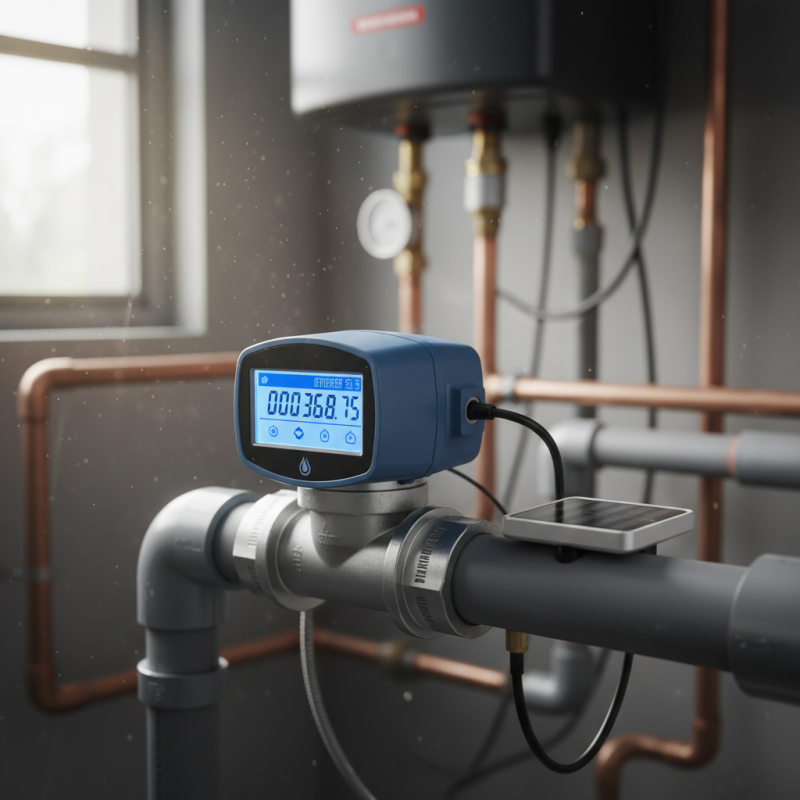
Water totalizers, also known as flow meters, play a crucial role in accurately measuring water usage. These devices track flow rates and total volumes with high precision. According to a recent industry report, accurate measurement can help save nearly 20% of water consumption in residential and commercial settings. This is particularly important as water scarcity becomes a pressing issue globally.
Understanding how water totalizers work is key to leveraging their benefits. They typically consist of sensors that capture flow data and transmit it for analysis. Some models offer real-time tracking, providing instant feedback on usage patterns. However, not all totalizers are created equal. Variations in temperature and pressure can affect readings. Additionally, ensuring proper calibration is essential for accurate results.
Despite their benefits, the technology isn't infallible. Installation errors or lack of maintenance can lead to inaccurate readings. A report shows that poorly installed totalizers can lead to discrepancies of up to 30%. Regular checks and adjustments can alleviate these issues, ensuring that the data reflects true water utilization.
Types of Water Totalizers: Mechanical vs. Digital Models
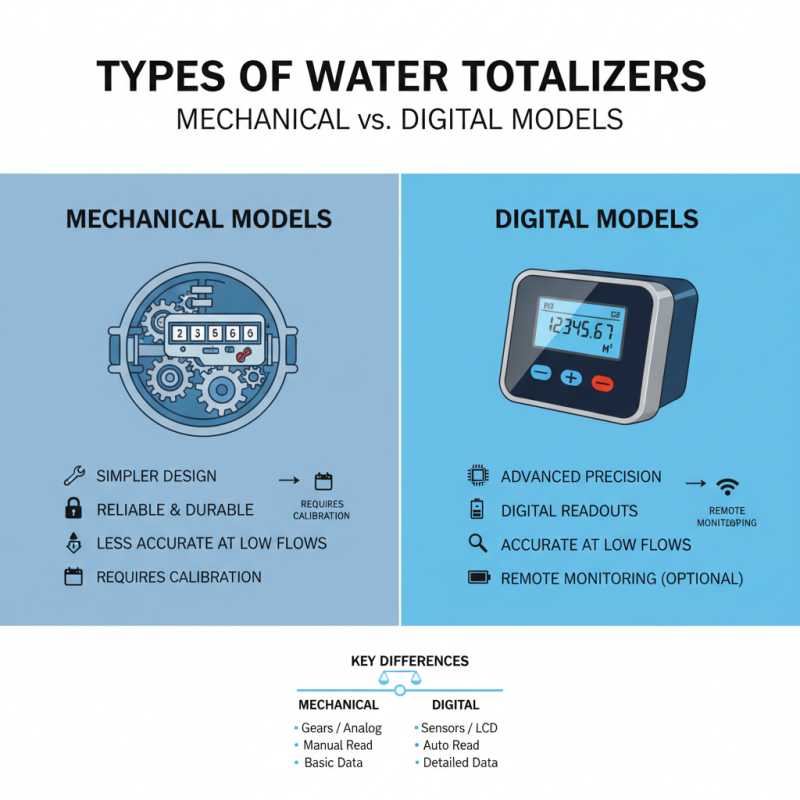
Water totalizers play a crucial role in effectively measuring water usage. In the market, two primary types stand out: mechanical and digital models. Mechanical totalizers are often favored for their simplicity and reliability. They utilize a gear system that directly translates water flow into measurable units. However, they may lack precision in low-flow situations and require regular calibration.
Digital water totalizers offer advanced features and improved accuracy. Many models provide real-time data and usage trends. According to a report by the American Water Works Association, digital systems can improve measurement accuracy by up to 15%. While they tend to be more expensive, the long-term cost savings in leak detection and monitoring can justify the initial investment.
Yet, users should be aware of potential downsides. Digital units depend on batteries or electrical sources, which can fail during outages. Mechanical models may provide inconsistent readings in varying conditions. Each option has its merits, and the best choice depends on specific usage needs and environmental factors. Understanding these differences is key to selecting the best solution for accurate water usage measurement.
Key Features to Consider for Accurate Water Usage Measurement
When selecting water totalizer solutions for accurate usage measurement, certain key features are essential. One prominent feature is calibration. Regular calibration ensures that measurements reflect true water usage. According to a 2022 industry report, inaccurate measurement can lead to a discrepancy of up to 25% in billing. This highlights the importance of precision in data capture.
Another crucial aspect is the type of sensor technology used. Ultrasonic sensors, for instance, are known for their high accuracy and minimal maintenance requirements. A recent survey indicated that 70% of organizations prefer non-intrusive sensors for their ease of installation. Also, the durability of materials used in construction impacts longevity. A failure in any part of this system can lead to significant operational costs.
Tips: Always check certification standards to ensure reliability. Consider solutions that offer advanced data analytics. These capabilities can help track trends and improve water conservation efforts. The right tools make a difference in sustainability outcomes. Achieving greater accuracy can sometimes reveal unexpected consumption issues, which require proactive management. Engaging with such findings may lead to healthier water usage practices.
Installation and Maintenance Best Practices for Water Totalizers
Water totalizers offer precise measurements for consumption tracking. Ensuring their accuracy relies heavily on proper installation and maintenance practices. A 2022 industry report noted that up to 20% of measurement errors arise from improper setups. Hence, it's vital to follow the manufacturer’s guidelines rigorously.
Regular maintenance checks can prevent malfunctions. For instance, inspecting seals and connections helps avoid leaks that can lead to significant inaccuracies. A recent study highlighted that nearly 15% of totalizers failed due to degraded components. Cleaning and calibration should be performed at least once a year, depending on usage and environmental conditions. This ensures consistent and accurate measurements.
Users must also consider their water flow characteristics. Some systems might not perform optimally under varying flow rates. Acknowledging these unique demands can help in selecting the right totalizer. Moreover, documenting maintenance activities creates a reliable history, which can highlight recurring issues. This reflective practice fosters a better understanding of operational needs and enhances overall reliability.
Best Water Totalizer Solutions for Accurate Usage Measurement
| Totalizer Type |
Measurement Method |
Accuracy (%) |
Installation Requirements |
Maintenance Frequency |
| Mechanical Totalizer |
Rotary Piston |
±2% |
Straight pipe section required |
Annually |
| Ultrasonic Totalizer |
Ultrasonic Waves |
±1% |
Minimal straight pipe section |
Every 6 months |
| Magnetic Totalizer |
Electromagnetic Flow Measurement |
±0.5% |
Requires conductive fluids |
Annually |
| Turbine Totalizer |
Turbine Rotation |
±1.5% |
Requires straight piping |
Quarterly |
Comparative Analysis of Leading Water Totalizer Brands and Models
Water totalizers play a crucial role in measuring water usage accurately. Many brands offer various models, each with unique features. When analyzing these options, it is essential to consider their accuracy, ease of installation, and long-term reliability. Experienced users often highlight the importance of real-time data display for convenience. Some models provide digital readouts, enhancing visibility and usability.
Comparatively, the build quality of water totalizers varies significantly. Some systems exhibit durability, while others may falter under extreme conditions. Experts often point out that the calibration process is another critical aspect. It affects the overall precision of measurements. A poorly calibrated device can lead to significant discrepancies over time. Users should prioritize models that allow for easy recalibration and maintenance.
Consumer reviews can offer valuable insights. However, not all feedback is reliable. It's essential to verify the source of such information. Some users may overstate benefits or overlook issues. Engaging with a broader community can provide a more balanced perspective. Thoughtful consideration of each option's strengths and weaknesses is vital before making a choice.
Water Totalizer Usage Measurement Comparison
This bar chart presents a comparative analysis of water totalizer usage measurements across different scenarios. The data reflects the total water usage in liters measured by various models over a month.