
Top 10 Biogas Purification Suppliers for Global Buyers

Biogas is increasingly treated as a usable energy resource, not merely a by-product of waste treatment. The International Energy Agency’s Outlook for Biogas and Biomethane (2020) estimates that sustainable biomethane potential could approach 1,000 billion cubic metres annually—about one-quarter of current global natural gas demand. Reaching that potential depends on reliable upgrading systems. Raw gas can contain carbon dioxide, hydrogen sulfide, water vapour, and other impurities. Their levels vary with feedstock and operating conditions.

The European Biogas Association’s Statistical Report 2024 puts European biomethane production at approximately 4.9 billion cubic metres in 2023. That growth makes supplier selection more consequential. A Bio Gas Purification system must match the gas composition, required methane quality, plant capacity, and destination use. Buyers should also examine methane recovery, energy consumption, maintenance intervals, monitoring tools, and the availability of local technical support. Numbers on a brochure are useful, but they do not prove performance at a specific site.

This Top 10 Biogas Purification Suppliers for Global Buyers guide offers a practical starting point for comparing established providers and their technologies. It considers engineering experience, project references, service coverage, and the clarity of performance data. Small details matter. A wet sample line, for example, can distort readings and complicate troubleshooting. No supplier ranking can replace a site assessment, and published results may not be directly comparable. That limitation deserves attention before a purchase decision.
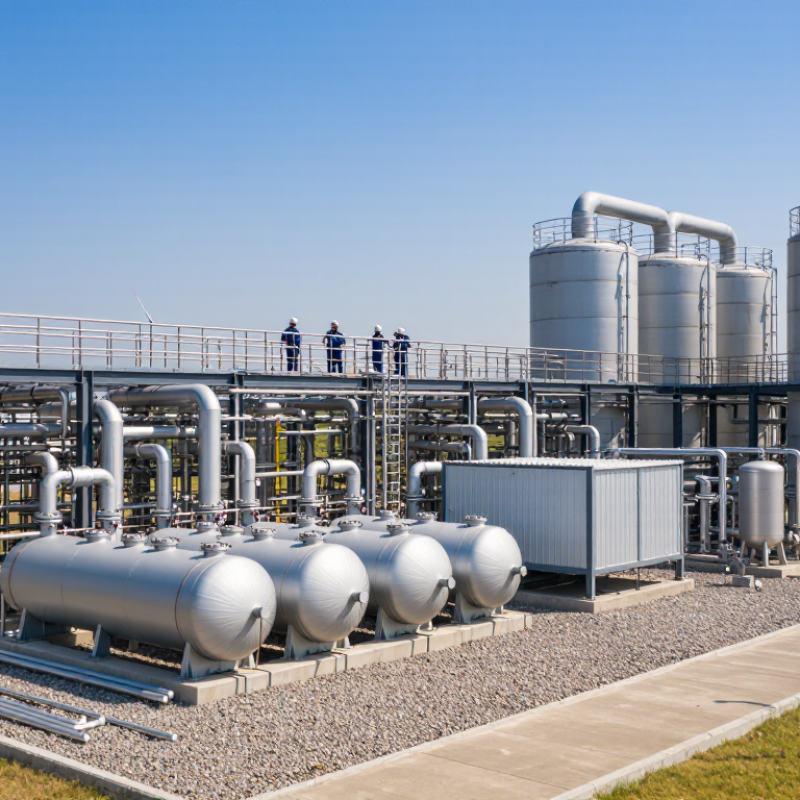
Top 10 Biogas Purification Suppliers for Global Buyers

Biogas Purification: Purpose, Process, and Applications

Biogas purification removes unwanted compounds so gas can be used efficiently and reliably. Raw biogas commonly contains methane, carbon dioxide, water vapor, and hydrogen sulfide. The exact mixture depends on feedstock, temperature, and digester operation. Small details matter. Moisture can corrode pipes, while hydrogen sulfide may damage engines and create an odor concern.

A typical system cools the gas to condense water, then uses filtration or adsorption to reduce contaminants. Carbon dioxide removal may rely on membranes, water scrubbing, or pressure swing adsorption. The right treatment train depends on gas flow, methane concentration, energy costs, and the required outlet quality. Operators should test both inlet and treated gas, not rely on equipment settings alone. That sounds obvious, yet it is easy to miss during routine checks. Purified biogas can fuel boilers and combined heat and power units, or be upgraded to biomethane for grid injection or vehicle use where infrastructure permits. Each application needs different specifications, so “clean enough” is not a universal target. A practical design also accounts for condensate drainage, filter replacement, and safe handling of separated gases. These needs can look minor on a diagram, but they shape long-term performance. A system that works on paper may still need adjustment after seasonal feedstock changes.


Key Criteria for Evaluating Biogas Purification Suppliers

A reliable biogas purification supplier should understand the gas entering your plant, not just the product leaving it. Ask how the proposed system handles changing methane, carbon dioxide, hydrogen sulfide, and moisture levels. Request design assumptions in writing, including expected methane recovery and treated-gas quality. A polished brochure is not a performance guarantee.

Look for operating data from projects with similar feedstock and capacity. Ask about energy use, media replacement, maintenance intervals, and how the system responds to sudden gas-quality changes. If possible, speak with an operator and inspect a working installation. Pay attention to practical details: access to filters, space for service work, and clear alarms at the control panel. Small things matter.

Compare lifecycle costs, not only purchase prices. A low-cost unit can require frequent service or consume more power than expected. Check the supplier’s commissioning plan, operator training, spare-parts availability, and response times for technical support. Safety documentation and clear process diagrams also show whether a supplier takes engineering seriously. No scorecard is perfect. One weakness I would not ignore is vague evidence: projected results without test conditions are difficult to verify. Ask direct questions, record the answers, and leave room to revise your assumptions.

Top 10 Biogas Purification Suppliers for Global Buyers

For global buyers, choosing a biogas purification supplier starts with the gas itself. Feedstock changes can shift hydrogen sulfide, moisture, and siloxane levels, sometimes within a single operating season. A capable supplier should explain how its process handles those changes, not just quote a standard removal rate. Ask for performance data tied to similar gas composition and flow. Small details matter. Check whether the proposed equipment includes sampling points, condensate management, and clear instructions for media replacement or maintenance. These features can affect daily operation as much as the main treatment unit.

A top-ten comparison is useful only when suppliers are assessed on consistent criteria. Review guaranteed outlet quality, methane recovery, energy demand, process flexibility, and the availability of commissioning support. Request references from installations with comparable scale and feedstock, then ask what required adjustment after startup. No selection method is perfect. A polished proposal may still leave uncertainty about long-term service response or spare-parts access. Global buyers should confirm response times, training arrangements, and documentation before signing. Local conditions also matter: climate, transport distance, and operator experience can influence the practical value of a technically sound system. Some buyers focus heavily on purchase price; that can be a costly shortcut.

Comparing Supplier Technologies and Service Capabilities

Biogas purification suppliers differ less by headline efficiency than by how well their systems handle real feedstock. Membrane separation is compact and modular, but performance can shift when gas composition or pressure fluctuates. Water scrubbing tolerates some variation, though it can require more water management. Pressure swing adsorption and amine systems offer other trade-offs in energy use, maintenance, and methane recovery. No single process wins everywhere. Fit matters.

Service capability deserves equal scrutiny. Ask suppliers to explain pretreatment needs for moisture, hydrogen sulfide, and siloxanes, then request operating data from feedstocks similar to yours. A polished efficiency figure means little without clear measurement boundaries. Check commissioning support, operator training, remote monitoring, spare-part access, and response times. Also compare methane slip and energy consumption at the actual plant scale, not only at design conditions. Small details matter.

The European Biogas Association’s Statistical Report 2023 recorded 1,322 biomethane plants and 4.2 billion cubic metres of production in Europe during 2022. That expanding fleet makes reliable service increasingly important, but the figures do not prove that every technology suits every site. A fair comparison should include uptime assumptions and guaranteed gas quality. One gap often remains: buyers may overlook how feedstock changes affect maintenance costs over several years. Ask for evidence, and leave room for uncertainty.

Top 10 Biogas Purification Suppliers for Global Buyers - Comparing Supplier Technologies and Service Capabilities
Supplier profile Primary technology Typical process scope Key strengths Service capabilities to compare Buyer considerations
1. Membrane-upgrading specialist Selective gas permeation through polymer membranes Feed-gas conditioning, compression, staged CO₂ separation, and product-gas handling Modular equipment; often suitable for automated operation and phased capacity additions Feed-gas assessment, membrane replacement planning, remote monitoring, and commissioning support Confirm pretreatment requirements, methane recovery guarantees, energy use, and membrane service life for the actual gas composition.
2. Pressure-swing adsorption (PSA) provider Adsorption and pressure changes to separate CO₂ from methane Gas conditioning, adsorption vessels, cyclic regeneration, and product-gas polishing as required Established separation approach; can be configured as a packaged process Adsorbent management, controls support, operator training, and maintenance planning Check sensitivity to moisture and contaminants, methane losses in off-gas, and the supplier’s stated operating envelope.
3. Water-scrubbing system supplier Physical absorption of CO₂ in water under pressure Gas compression, absorption, water circulation, and—depending on design—water regeneration or management Uses water as the principal absorbent and can remove multiple water-soluble components from the gas stream Water-treatment guidance, process optimization, commissioning, and plant maintenance Assess water availability and quality, wastewater or recirculation needs, compression demand, and methane slip.
4. Amine-based chemical-scrubbing provider Chemical absorption of CO₂ using an amine solution, followed by solvent regeneration Absorber, solvent circulation, regeneration, heat supply, and associated gas conditioning Can achieve deep CO₂ removal when designed and operated for the feed and product specification Solvent monitoring, operator training, process troubleshooting, and support for solvent replacement or reclaiming Compare heat demand, solvent management, corrosion control, emissions controls, and the availability of suitable utilities.
5. Organic-solvent physical-scrubbing provider Physical absorption of CO₂ in a circulating organic solvent Absorption, solvent regeneration or flashing, solvent circulation, and gas conditioning Separation performance depends on operating pressure, temperature, solvent properties, and feed composition Solvent quality monitoring, process support, maintenance, and operating-cost reviews Review solvent losses, regeneration requirements, materials compatibility, and the supplier’s experience with comparable feed gas.
6. Integrated H₂S and contaminant-treatment provider H₂S removal using an appropriately selected biological, adsorptive, or chemical treatment process Biogas cleanup upstream of, or integrated with, a separate methane-upgrading process Targets contaminants that can cause corrosion, odor, or damage to downstream equipment Contaminant testing, media or chemical management, monitoring systems, and maintenance support Verify removal performance against measured inlet concentrations and clarify whether CO₂ upgrading is included.
7. Dehydration and siloxane-treatment specialist Gas drying and contaminant removal using equipment selected for the site and feed gas Moisture control and, where required, siloxane or other trace-contaminant treatment before upgrading or end use Helps protect compressors, adsorbents, membranes, and other downstream equipment from specific contaminants Gas sampling, media changeout planning, filter servicing, and troubleshooting Request feed-gas analyses and define outlet limits for moisture and trace contaminants; these systems do not by themselves remove CO₂.
8. Containerized or packaged-plant integrator Preassembled upgrading technology, commonly selected from membrane, PSA, or scrubbing processes Packaged process equipment with controls and defined battery limits; site utilities and connections are project-specific Can simplify transport, installation, and project coordination where a standardized package fits the site Factory testing, installation supervision, commissioning, documentation, and operator training Confirm site-specific design limits, civil works, utility interfaces, local code compliance, and spare-parts availability.
9. Biomethane-to-grid project integrator Upgrading technology combined with gas quality measurement and grid-injection systems Upgrading, drying, pressure adjustment, quality monitoring, and grid-interface equipment as specified by the project Coordinates process and injection interfaces that must meet the relevant network operator’s requirements Engineering coordination, controls integration, commissioning support, and documentation for acceptance testing Grid specifications, permitting, metering, odorization, and connection responsibilities vary by jurisdiction and must be confirmed locally.
10. Biogas-to-bio-LNG project integrator Biogas upgrading followed by deep purification and methane liquefaction CO₂ removal, drying, trace-contaminant control, liquefaction, and product storage or loading interfaces Provides a route to liquefied biomethane where the project requires transport or storage as a liquid fuel Process integration, refrigeration-system support, safety reviews, commissioning, and maintenance planning Evaluate electricity demand, liquefaction scale, product specifications, storage and loading requirements, and applicable safety regulations.

Note: These are anonymized, technology-based supplier profiles for comparison, not named companies or a verified ranking of actual suppliers. Performance, costs, and service scope vary by project; request site-specific guarantees and references during procurement.

Global Procurement, Installation, and After-Sales Considerations

Global procurement begins with a clear picture of the gas and the site. Ask shortlisted suppliers to review recent feed-gas analyses, including methane, hydrogen sulfide, moisture, and flow-rate variations. Request performance data at expected operating conditions, not only at a polished design point. A low purchase price can hide costly exclusions, such as pretreatment equipment, control panels, or commissioning support.

Installation planning deserves equal attention. Confirm who handles foundations, electrical connections, pipework, and operator training. Share site drawings early, then check access routes for vessels and maintenance equipment. Small details matter. A narrow doorway can delay delivery, while an unclear utility boundary can cause disputes. That sounds tidy on paper. It often isn’t.

After-sales support should be specific and measurable. Ask about response times, remote diagnostics, local technician coverage, and spare-parts availability. Clarify which consumables need routine replacement and how long common parts take to arrive. Buyers should also agree on acceptance tests using defined gas-quality limits and documented operating conditions. No plan removes every risk; feed gas can fluctuate, and early performance may need adjustment. Keep commissioning records and train more than one operator, so routine checks do not depend on a single person.

Biogas Purification: Typical Gas Composition Ranges

A technical baseline for comparing supplier capabilities—not a ranking of individual suppliers.

Raw biogas commonly contains 50–70% methane and 30–50% carbon dioxide. Upgraded biomethane typically contains 95–99% methane and less than 2% carbon dioxide. Actual composition varies with feedstock and upgrading technology; buyers should confirm feed-gas assumptions, product specifications, and performance guarantees with each supplier.

Start WhatsApp Chat Start WhatsApp Chat
Valves

Valves

Water Meters

MS Forged Pipe Fittings

Fittings

Water Meters

Valves

DI Grooved Fittings (UL/FM)

Water Meters

DI Screwed Fittings (UL/FM)

Fittings

Composite Pipes & Fittings

Site Credits : Seigospace