China Top High Temp Heat Pump Manufacturers?

China’s High Temp Heat Pump industry is moving from niche engineering toward mainstream industrial decarbonisation. Manufacturing plants, food processors, and district heating networks increasingly need heat above conventional heat pump ranges. The real test is not a polished catalogue. It is stable performance beside a hot boiler room.

The International Energy Agency’s The Future of Heat Pumps reports that global heat pump sales grew by nearly 15% in 2021. The same report estimates that widespread adoption could reduce global carbon dioxide emissions by at least 500 million tonnes annually by 2030. These figures are encouraging, but they do not guarantee every supplier’s performance. A factory may claim 120°C output, yet actual efficiency can fall under heavy load, poor water quality, or cold outdoor conditions.

Fatih Birol, Executive Director of the IEA, said, “Heat pumps are an indispensable part of any plan to cut emissions and energy use from buildings.” His statement also applies to industrial heating, where electrification must replace fossil-fuel systems carefully. Buyers should examine measured COP values, refrigerant selection, compressor design, noise levels, control systems, and after-sales support. Certifications matter. So does field evidence.

China offers strong manufacturing depth, competitive pricing, and rapidly improving high-temperature technology. However, “best” depends on application. A brewery needs different engineering from a chemical plant. That detail is often overlooked. This guide compares leading Chinese manufacturers through technical capability, operating temperature, project experience, documentation, and service reliability. Claims deserve questions. Real installations deserve attention.

China Top High Temp Heat Pump Manufacturers?

High-Temperature Heat Pumps: Operating Above 80°C and Reaching 120°C

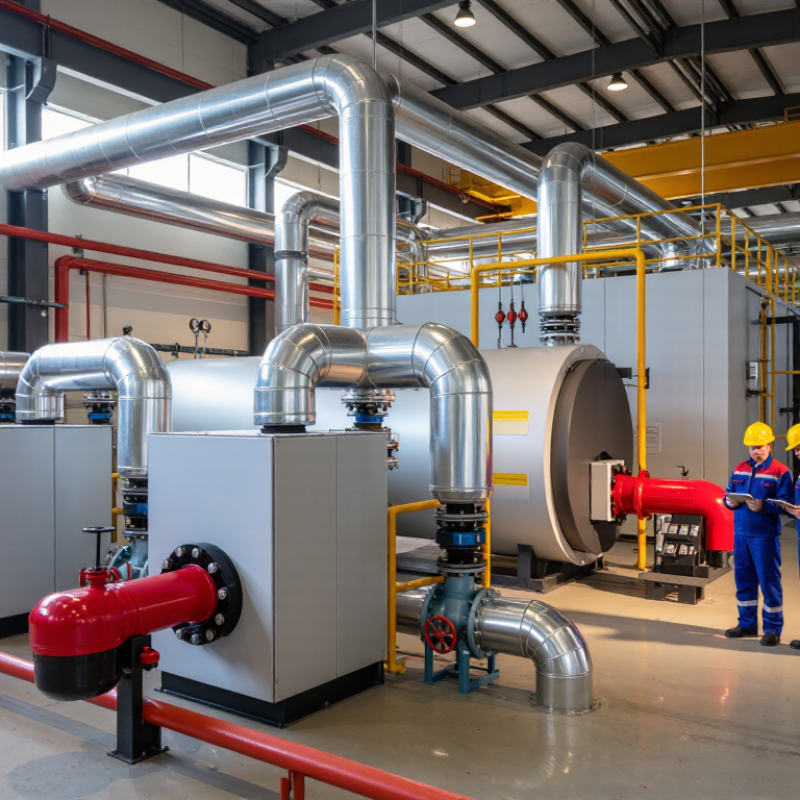
China’s high-temperature heat pump manufacturers are increasingly targeting industrial process heat.

These systems can deliver water above 80°C, with advanced designs reaching 120°C. The International Energy Agency reports that industrial heat pumps may provide heat up to about 140°C in suitable applications. Performance depends on the refrigerant, compressor, heat exchanger, and temperature lift.

At 120°C, efficiency usually falls.

This is basic thermodynamics, not a marketing flaw. The system may still reduce fuel use when waste heat is available. A 2024 European heat pump market report also highlights stronger demand for efficient heating technologies across commercial and industrial sectors. Buyers should request COP values at real conditions, such as 80°C outlet water and 20°C source temperature. Laboratory figures at mild conditions can mislead.

Tips:

Check EN 14511 test data, compressor operating limits, and outlet-temperature stability. Ask for noise, maintenance, defrost, and part-load results. Inspect the installation site carefully. A factory producing steam, drying products, or washing containers may need different designs. I would not select equipment from maximum temperature alone. A stable 95°C system can outperform a 120°C system with poor seasonal efficiency. Heat recovery mapping is often overlooked, yet it can reveal useful energy from cooling water, exhaust air, or warm process return lines. Trial operation matters. Real factories are rarely as clean as test laboratories.

China’s Leading Manufacturers by Capacity, COP, and Temperature Range

China’s high-temperature heat pump sector includes manufacturers serving factories, hospitals, food plants, and district heating projects. Their main differences appear in production capacity, COP performance, and operating temperature range. Large factories often offer standardized series, faster delivery, and stronger testing resources. Smaller specialists may provide more flexible engineering support.

Capacity should be judged beyond factory size. Check annual output, compressor sourcing, assembly lines, and service coverage. A reliable supplier can explain its test procedures and provide performance data at different ambient temperatures. In many industrial models, COP may exceed 3.0 under moderate conditions, but it usually falls as water temperature rises. At 80°C outlet water, performance can differ sharply from laboratory results.

Temperature range matters during real operation. Some systems deliver 70°C water, while advanced designs can reach 90°C or higher for selected processes. Ask whether the stated temperature is continuous, not only a short peak. Refrigerant choice, defrost control, heat exchanger design, and compressor staging all affect stability. Site measurements are essential. A factory may promise excellent COP, yet poor hydraulic design can reduce actual savings. I have found that published figures are useful, but not sufficient. The strongest evaluations combine factory inspection, witnessed testing, and a seasonal operating estimate. Even then, assumptions can be wrong.

China High-Temperature Heat Pump Manufacturers: Capacity, COP and Temperature Benchmarks

The chart compares common Chinese commercial and industrial high-temperature heat pump capacity classes using indicative market benchmark values. COP is shown at approximately 7°C source temperature and 55°C leaving-water temperature; actual performance varies with refrigerant, operating conditions, load profile, and system design. Maximum outlet temperature represents typical product capability bands rather than company-specific claims.

Key Technologies: CO₂, R290, and Two-Stage Compression Systems

China’s leading high-temperature heat pump manufacturers are moving beyond basic electric heating. Their key advantage lies in matching refrigerants with operating conditions. The IEA reports that global heat pump sales grew by 11% in 2022, showing stronger demand for efficient thermal equipment. However, sales volume alone proves little.

CO₂ Systems CO₂ systems suit hot-water production, food processing, and other applications needing outlet temperatures near 90°C. Their transcritical cycle can deliver strong temperature lifts, but high discharge pressure demands precise heat exchangers and reliable controls.

R290 R290 offers very low global warming potential and good thermodynamic efficiency. It also requires careful charge limits, ventilation, and certified safety design. Small details matter.

Two-stage compression can reduce pressure stress and improve performance in colder climates or high-lift applications. Field testing should examine seasonal COP, defrost behavior, noise, oil return, and performance above 80°C.

The European Heat Pump Association recorded about 2.6 million heat pumps sold in Europe during 2023, despite a market decline. That result suggests demand is resilient, but not automatic.

Some product claims still rely on laboratory points rather than annual operation. Buyers should request independent test data, component traceability, and service records.

“High temperature” is not a complete specification. Temperature stability, water-flow control, and maintenance access often decide real performance.

Industry Standards, Efficiency Ratings, and Industrial Heat Applications

China’s top high-temperature heat pump manufacturers are often judged by performance data, not marketing claims. Industrial buyers should check tests based on recognized standards, such as EN 14511, EN 14825, and relevant safety requirements under EN 378. These standards help compare heating capacity, power input, sound levels, and operating conditions. However, test results may differ from factory reality.

COP deserves careful attention. A unit producing 4.5 kW of heat from 1 kW of electricity achieves a COP of 4.5. That figure may apply at moderate water temperatures. At 90°C outlet water, the COP can fall sharply. Seasonal efficiency is more useful when demand changes across the year. Ask for performance tables at several source and sink temperatures. One number is not enough.

Industrial heat applications include food drying, textile washing, chemical preheating, and process-water heating. Refrigerant selection, compressor design, and heat exchanger materials affect reliability at high temperatures. Stainless steel piping may resist corrosion, but water quality still matters. Field assessments often find poor flow balancing and oversized pumps. These issues quietly reduce efficiency. Commissioning should record inlet temperatures, outlet temperatures, flow rates, and electricity use. Maintenance access also matters. A technically efficient system can underperform when filters are neglected or sensors drift. Manufacturers with transparent test methods and traceable data deserve closer attention, though every specification needs independent verification.

China Top High Temp Heat Pump Manufacturers? - Industry Standards, Efficiency Ratings, and Industrial Heat Applications

Evaluation Area Technical Dimension Common Industrial Benchmark Typical High-Temperature Heat Pump Data Industrial Application Relevance
Product Capability Maximum leaving-water temperature Application-dependent rating rather than a universal value 70–90 °C for many commercial high-temperature systems; advanced designs can reach approximately 100–120 °C under specified conditions Useful for hot-water production, process-water preheating, cleaning, drying, and low-temperature steam generation
Product Capability Heat-source temperature range Must be verified at the actual outdoor-air, water, wastewater, or exhaust-gas condition Air-source units commonly operate at approximately −20 to 45 °C outdoor air; water-source units generally provide more stable performance Determines winter capacity, defrost frequency, source-side design, and annual energy consumption
Efficiency Coefficient of Performance (COP) COP should always be compared at identical entering and leaving temperatures Indicative heating COP is commonly about 2.0–5.0; high-temperature operation normally produces a lower COP than 35–55 °C heating Shows the ratio of useful heat output to electrical input at a defined test point
Efficiency Seasonal performance Use SCOP or seasonal energy performance where climate and load variation are important Seasonal performance is often lower than rated COP because of part-load operation, defrosting, pumps, fans, and changing source temperatures More suitable than a single COP for estimating annual operating cost
Efficiency Heating capacity stability Capacity must be checked at the lowest design source temperature and the required supply temperature Air-source capacity and COP generally decline as outdoor temperature falls and hot-water temperature rises Important for selecting auxiliary heaters, thermal storage, and the required number of modules
System Design Heat-pump configuration Single-stage, cascade, two-stage, economized, and transcritical designs are used for different temperature lifts Cascade and two-stage systems are commonly considered when a large temperature lift or supply temperature above 80 °C is required Configuration affects compressor discharge temperature, efficiency, reliability, and maintenance requirements
Refrigerant Common refrigerant options Selection must consider pressure, flammability, global-warming potential, temperature glide, and local safety requirements R290, R744, R717, R1234ze(E), and R1336mzz(Z) are used or evaluated in different high-temperature applications; suitability is system-specific Influences attainable temperature, component selection, installation requirements, and environmental compliance
Industrial Integration Waste-heat recovery temperature lift Best results generally occur when the heat source is stable and the required temperature lift is moderate Wastewater, cooling-water return, exhaust air, and process-water streams can be upgraded to useful hot water or process heat Can reduce boiler fuel consumption while recovering heat that would otherwise be rejected
Industrial Application Typical process-temperature bands Application temperature should be matched to the heat-pump technology and required duty cycle Approximately 50–70 °C for hot-water preheating; 70–90 °C for washing and sanitation; 90–120 °C for selected process-heating duties Common sectors include food processing, textiles, chemicals, pharmaceuticals, electronics, and district-energy systems
Industrial Application Domestic and commercial hot-water production Storage temperature, circulation temperature, and anti-legionella procedures must be designed separately High-temperature heat pumps can supply hot water commonly in the 60–85 °C range, depending on the unit and operating condition Applicable to hotels, hospitals, campuses, sports facilities, and central hot-water systems
Standards Performance testing Compare products using declared test conditions and a recognized testing method Relevant international references include ISO 13256 for water-source heat pumps, EN 14511 for rating and testing, and EN 14825 for part-load and seasonal performance Standardized testing improves comparability between technical proposals and suppliers
Standards China-specific compliance Products supplied in China should be checked against the applicable GB or GB/T product, safety, energy-efficiency, and electromagnetic-compatibility requirements GB/T 21362 is associated with commercial and industrial heat-pump water-heater testing and rating; the applicable edition and scope should be confirmed for each product Required documentation may include test reports, safety certification, energy-efficiency information, and product conformity records
Safety Refrigerant and electrical safety Installation must comply with applicable machinery, pressure, electrical, refrigerant, and fire-safety rules IEC 60335-2-40 is a key international safety reference for electrical heat pumps and air conditioners; additional national requirements may apply Especially important for flammable refrigerants, high-pressure CO₂ systems, ammonia systems, and indoor plant rooms
Controls Industrial automation compatibility Communication and control functions should match the facility’s building-management or process-control system Common interfaces include Modbus RTU/TCP, BACnet, remote alarms, flow protection, anti-freeze control, and demand-based capacity modulation Enables load management, remote monitoring, fault diagnosis, and coordination with boilers or thermal storage
Reliability Operating design and redundancy Critical facilities should consider modular design, duty/standby capacity, and service access Multiple smaller modules can provide staged capacity, partial-load efficiency, and continued operation during maintenance Reduces production risk for hospitals, continuous-process plants, and large hot-water systems
Commercial Evaluation Manufacturer qualification criteria Evaluate verified performance, application references, after-sales support, spare-parts availability, and engineering capability Request performance data at the project’s actual source and supply temperatures rather than relying only on nominal COP Helps distinguish a suitable industrial solution from a standard low-temperature HVAC product
Economic Assessment Payback and operating-cost factors Project economics depend on electricity and fuel prices, operating hours, load profile, climate, and existing boiler efficiency Heat recovery and high annual operating hours generally improve the business case; auxiliary heating may be required during peak demand A complete assessment should include capital cost, installation, maintenance, electricity, backup heat, and expected annual heat output

Note: COP, capacity, supply temperature, and refrigerant suitability are project-specific. Final comparisons should use independently verified data measured at the same source temperature, leaving-water temperature, flow rate, and part-load condition.

How to Compare Chinese Suppliers, Certifications, Warranty, and Service Support

Comparing Chinese high-temperature heat pump manufacturers requires more than reading rated output. The IEA reported that global heat pump sales nearly doubled in 2021, increasing supplier competition. Buyers should request test data at 55°C, 65°C, and low outdoor temperatures. Check heating capacity, COP, noise, defrost performance, and refrigerant type under identical conditions. A clear factory audit should include production records, pressure testing, calibration logs, and technician training.

Certifications need careful review. CE marking supports access to European markets, but it does not prove excellent field performance. Ask for reports based on EN 14511 and EN 14825, issued by an independent laboratory. ISO 9001 can indicate controlled processes, while ISO 14001 reflects environmental management. Verify certificate numbers, product models, expiry dates, and issuing bodies. The IEA notes that performance depends strongly on installation quality and local electricity conditions. That warning is easy to ignore.

Warranty language often hides the real cost. Confirm coverage for compressors, heat exchangers, controls, labor, and replacement shipping. Request a written response-time target and a stock list for critical parts. A two-year warranty may be weaker than a shorter warranty with local technicians. Ask for three recent customer references and documented failure rates. Be skeptical of perfect claims. Even careful factories can miss seasonal defects. A pilot installation, remote monitoring, and staged payment terms can expose problems before a large order is committed.

Start WhatsApp Chat Start WhatsApp Chat
Valves

Valves

Water Meters

MS Forged Pipe Fittings

Fittings

Water Meters

Valves

DI Grooved Fittings (UL/FM)

Water Meters

DI Screwed Fittings (UL/FM)

Fittings

Composite Pipes & Fittings

Site Credits : Seigospace