How to Choose the Best Vertical Boring Machine?

Choosing a Vertical Boring Machine starts with the workpiece, not the machine brochure. A heavy casting may look manageable on paper, yet its diameter, weight, and setup can expose real limits. Bed size, table capacity, spindle range, and achievable accuracy all matter. So does the operator’s experience.

Industry reports can frame the wider market, but they cannot choose a machine for a specific shop. Gardner Business Media’s World Machine Tool Survey tracks machine-tool production and consumption across markets. CECIMO’s Statistical Toolbox provides related European production and trade data. These sources help readers understand industry movement; they do not replace verified machine specifications, test cuts, or a review of actual part drawings.

Manufacturing-process scholar Fritz Klocke is a useful technical reference. A practical selection principle, consistent with process-focused engineering, is: “Match the machine to the part, not the sales brochure.” This is an editorial summary, not a verified verbatim quotation from Klocke. That distinction matters. A guide should not put invented words in an expert’s mouth.

Look closely at the details. Will the table support the heaviest part with a safe margin? Can the machine reach required tolerances after warm-up? Ask for cutting demonstrations using comparable materials. Check service access, tooling, control familiarity, and installation needs. Small omissions become expensive.

There is no perfect specification sheet. That is worth remembering. The best choice balances capacity, accuracy, uptime, and future work—while admitting what the shop still needs to verify.
How to Choose the Best Vertical Boring Machine?

Understanding Vertical Boring Machines and Their Main Types

How to Choose the Best Vertical Boring Machine?

Understanding Vertical Boring Machines and Their Main Types

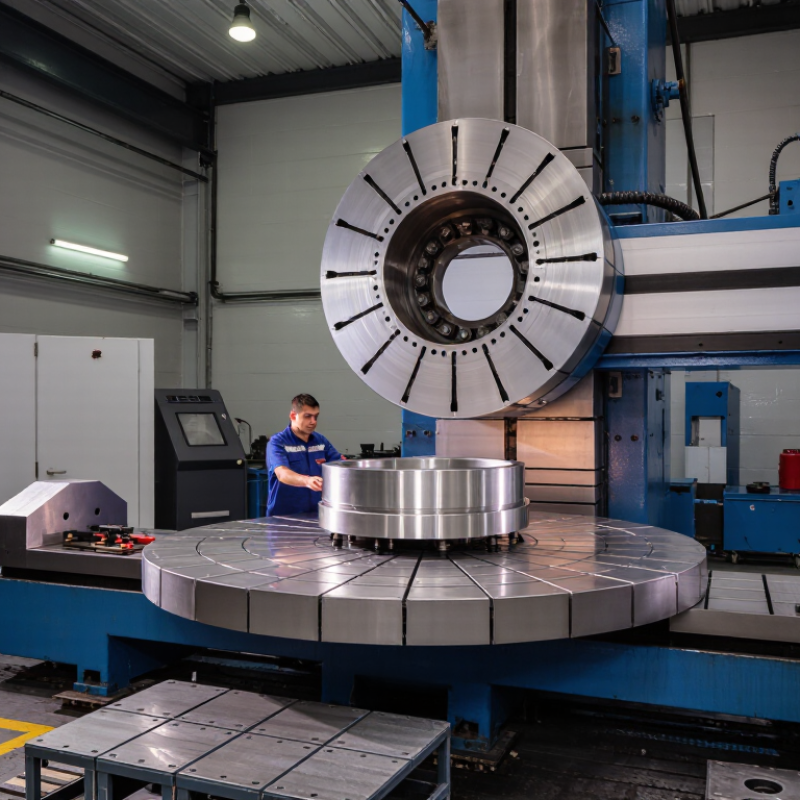
A vertical boring machine holds a workpiece on a horizontal rotating table. The cutting tool moves across its face and around its diameter. This arrangement suits large, heavy parts that are difficult to turn horizontally, such as turbine housings or broad flanges. Common designs include single-column and double-column machines. A single-column model needs less floor space. A double-column frame offers more support for wide, heavy workpieces. Some machines use a turret head; others use a ram for longer tool reach. These terms can overlap, so check the machine’s actual configuration.

Tips: Compare the maximum turning diameter, workpiece weight, and height with your largest parts. Ask about spindle speed and tool travel, too. A generous capacity is useful, but may raise costs and take up valuable shop space.

Choose based on the work you repeat, not only the biggest part you might machine someday. Check required tolerances and whether parts need facing, boring, or both. For interrupted cuts, frame rigidity matters; vibration can leave visible marks on a finished surface. A larger machine may seem like the safer choice, yet it can be inefficient for smaller batches. That trade-off is easy to underestimate. If possible, review a cutting demonstration using similar material and tooling before deciding.


Defining Workpiece Size, Material, and Machining Requirements

A vertical boring machine should fit the work, not just the shop floor. Measure the largest part’s diameter, height, and weight, including clamps and fixtures. Check table capacity and swing clearance; a casting that barely fits can block tool access. Leave room for chip removal and safe loading. Small details matter.

Material changes the decision. Cast iron often produces abrasive dust, while stainless steel can generate heat and long, stubborn chips. Hard alloys may need slower cutting, stronger tooling, and a rigid setup. Match spindle power, torque range, and tool system to the material and planned cuts. Ask for machining data on a comparable part, not only a maximum capacity figure. Brochure numbers rarely tell the whole story.

Define the result, too. Note bore diameter, depth, tolerance, surface finish, and whether the part needs facing or multiple bores in one setup. These requirements affect spindle accuracy, axis travel, measurement methods, and fixture design. For repeat work, consider setup time and how operators will check dimensions between passes. A trial cut on representative material can reveal vibration or chip problems early. It may still miss a production issue, so review the full process against your actual part.

Comparing Capacity, Accuracy, Speed, and Other Key Specifications

How to Choose the Best Vertical Boring Machine?

Compare capacity with the actual part, not the largest diameter in a brochure. Check table diameter, swing, maximum workpiece height, and load rating. A 900 mm ring may fit the table but still exceed the machine’s height or weight limit once its fixture is added. Leave room for clamping and tool clearance. Measure twice.

Accuracy needs measured evidence. ISO 230-2:2014 describes tests for positioning accuracy and repeatability on numerically controlled axes. Ask for the machine’s acceptance-test report, including measured deviations, rather than relying on a single “accuracy” figure. ISO 230-3:2020 addresses thermal effects, which matter during long cuts as the spindle and structure warm up. I would not trust a cold test alone. Match the results to your drawing tolerances and finishing process.

Speed is more than maximum spindle rpm. Review the usable speed range, table rotation, torque at low speed, feed rate, and tool-change time. Heavy roughing of a large casting may need steady torque more than a high top speed. For repeat production, compare cycle-time estimates against your real tool path and material. Ask for data from a representative cut, noting tool, workpiece material, and depth of cut; otherwise, the number is hard to compare. A small mismatch in assumptions can distort the estimate.

Assessing Controls, Tooling, Automation, and Shop Compatibility

How to Choose the Best Vertical Boring Machine?

Assess the control system with the operators who will use it daily. Can they set spindle speed, feed, and table movement without searching through confusing menus? Check how clearly the machine displays position and alarms. During a demonstration, ask to run a representative part, not just a polished sample. Keep it practical. A sophisticated control may add little value if your team needs only dependable, repeatable operations. Still, allow room for future jobs and skill development.

Match tooling to your parts’ diameters, materials, and required finishes. Confirm that the machine accepts the boring bars, fixtures, and workholding methods already used in your shop. Consider automation only where it solves a real bottleneck, such as repeated loading or long unattended cycles. A loading system can save labor, but it also needs floor space, guarding, and maintenance. Measure access around the machine, including room to move heavy workpieces and service components. A layout that looks workable on paper can feel cramped in practice.

Tips: Bring a sample-part drawing and a tooling list to the supplier discussion. Record setup time, operator steps, and clearance needs. The best fit may not be the most automated one; that trade-off deserves a second look.

How to Choose the Best Vertical Boring Machine? - Assessing Controls, Tooling, Automation, and Shop Compatibility

Use this screening guide to match machine capabilities to your work. Figures and configurations are typical planning references, not specifications for a particular machine; confirm all limits with the machine documentation and a test cut.

Decision Area What to Assess Good Fit for Lower-Volume or Varied Work Good Fit for Repeat Production Shop-Floor Verification
Workpiece capacity Maximum turning diameter, work height, table load, and clearance for fixtures. Choose capacity around the largest regular job, with practical room for chucking and tool access. Allow additional capacity for production fixtures, loading equipment, and occasional oversize parts. Compare the part’s finished and rough dimensions with the machine’s usable—not just advertised—working envelope.
Control system Axis count, conversational programming, shop-floor usability, probing support, and operator experience. Manual or simple CNC controls can suit one-off work when skilled operators are available. CNC controls with stored programs, tool offsets, and repeatable setup routines help reduce cycle-to-cycle variation. Run a representative program and check how easily operators can recover from tool changes, alarms, and interrupted cycles.
Accuracy and rigidity Required bore size, roundness, surface finish, thermal stability, and cutting forces. Prioritize a rigid machine in good condition; plan for measurement and finishing passes on critical features. Look for stable positioning, repeatable offsets, and sufficient stiffness for the intended material and cut. Inspect ways, bearings, spindle condition, backlash, and test-cut results; confirm acceptance criteria with measured parts.
Tooling and boring range Tool interface, boring-bar reach, holder availability, tool changes, and access to standard inserts. A flexible set of common boring bars and holders can cover a broad mix of jobs without excessive setup cost. Preset tools, repeatable tool positions, and duplicate tools for high-use operations can shorten changeovers. Check that holders, bars, inserts, and any special adapters are available and suitable for the machine’s interface.
Automation Part loading method, cycle consistency, unattended-running needs, and chip or coolant handling. Manual loading is often practical for small batches, heavy parts, and frequent job changes. Powered clamping, repeatable loading, probing, or material-handling integration may benefit stable, recurring work. Confirm part weight, lifting access, guarding, clamping sequence, and safe operator access before adding automation.
Setup and changeover Fixture changes, setup documentation, program storage, and time between different jobs. Favor accessible workholding and straightforward adjustments when jobs vary frequently. Dedicated fixtures and documented setups can improve repeatability on recurring parts. Estimate total setup time using a real job, including lifting, alignment, tool setting, proving out, and inspection.
Materials and chip control Material mix, chip form, coolant delivery, filtration, and chip removal. Confirm the machine can handle the shop’s materials with manageable chip clearing during operator-attended cutting. Reliable chip evacuation and coolant management are important for longer or repeated production cycles. Trial representative materials and cutting conditions; inspect chip flow, coolant coverage, and access for cleaning.
Utilities and floor space Machine footprint, foundation, power supply, access route, and service clearances. Check that the machine can be installed and serviced without disrupting nearby work areas. Include space for conveyors, loading equipment, guarding, and material staging where needed. Verify installation drawings, electrical requirements, floor loading, delivery access, and maintenance clearance.
Maintenance and support Parts availability, service access, manuals, lubrication systems, and technician coverage. Favor a machine with accessible service points and a maintenance plan suited to available staff. Assess planned maintenance intervals, spare-tool and spare-part strategy, and response arrangements for downtime. Review service records and manuals; inspect lubrication, guarding, safety devices, and the condition of critical components.
Overall selection Balance part requirements, operator capability, throughput, installation cost, and future work. Choose flexibility and manageable setup over unused capacity or automation. Choose repeatability and dependable cycle support when part mix and volume justify the investment. Score shortlisted machines against actual parts, a sample program, a test cut, and a site-installation review.

Evaluating Reliability, Service, and Total Cost of Ownership

How to Choose the Best Vertical Boring Machine?
Evaluating Reliability, Service, and Total Cost of Ownership

A vertical boring machine earns trust through steady results, not impressive specifications alone. During a cutting trial, watch spindle temperature, vibration, and surface finish across several workpieces. Ask for maintenance records from machines running similar materials and workloads. One clean demonstration proves little. Operators often notice early warning signs first, such as unusual noise or inconsistent clamping. Their feedback deserves attention. Check how quickly routine components can be inspected and replaced. A machine that is difficult to access may turn a simple adjustment into hours of downtime.

Service support affects ownership costs long after installation. Confirm technician availability, spare-parts lead times, and training options before comparing quotations. Ask what happens when a critical component fails on a busy shift. Downtime is expensive. Estimate costs over several years, including energy, tooling, maintenance, installation, and operator training. Compare realistic production rates, not just maximum capacity. A lower purchase price can hide higher service expenses or longer setup times. Still, forecasts are imperfect; actual tool wear and operator habits can differ from estimates. I would not treat any spreadsheet as a guarantee. Look for clear service commitments, practical machine tests, and a cost model you can update as operating data comes in.

How to Choose the Best Vertical Boring Machine?

Evaluating Reliability, Service, and Total Cost of Ownership

Use these practical criteria to compare machines: uptime and maintenance needs indicate reliability; response time and parts availability affect service; energy, tooling, and maintenance contribute to ownership cost. The 1–5 scores are illustrative example ratings, not measured industry data. Replace them with verified supplier information and your own operating records.

Start WhatsApp Chat Start WhatsApp Chat
Valves

Valves

Water Meters

MS Forged Pipe Fittings

Fittings

Water Meters

Valves

DI Grooved Fittings (UL/FM)

Water Meters

DI Screwed Fittings (UL/FM)

Fittings

Composite Pipes & Fittings

Site Credits : Seigospace