
How to Choose Abrasion Resistant Steel Plate?

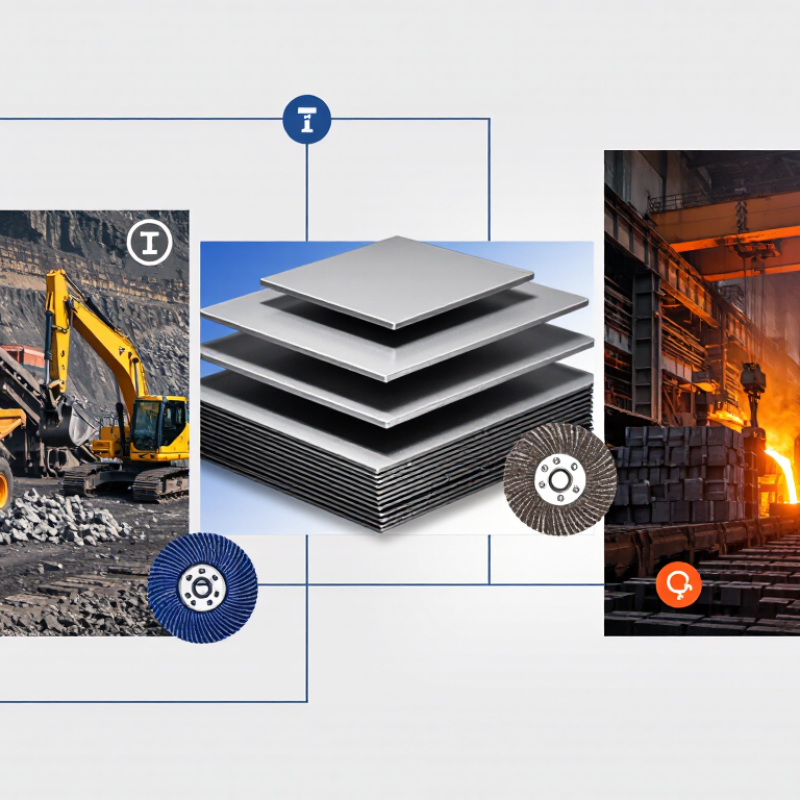
Choosing the right abrasion resistant steel plate begins with the operating environment, not a catalogue grade. Chutes, dump bodies, crushers, and mining buckets experience different wear patterns. Sliding ore removes surface material. Repeated impacts can crack an overly hard plate. Heat and corrosion complicate the decision further.

Industry scale makes this choice important. The World Steel Association reports approximately 1.89 billion tonnes of crude steel production in 2023. Meanwhile, the U.S. Geological Survey’s Mineral Commodity Summaries 2024 estimates global iron ore production at about 2.5 billion metric tons. These figures reflect the enormous volume of material moving through mines, ports, and processing plants. Every unnecessary shutdown can affect productivity, maintenance budgets, and delivery schedules.

A practical evaluation should compare nominal hardness, impact toughness, thickness, weldability, and expected service life. ASTM E10 Brinell testing can help verify hardness, while ASTM G65 offers a recognised dry-sand abrasion test. European buyers may also review EN-based documentation and mill certificates. However, laboratory wear results do not perfectly reproduce a wet crusher or a sharp rock impact. That limitation deserves attention.

No grade wins every application. A 500 HB plate may resist sliding wear effectively, yet create more demanding fabrication requirements. Lower hardness may simplify welding, but replacement intervals could shorten. This guide explains how to balance these trade-offs, inspect supplier evidence, and select an abrasion resistant steel plate with measurable performance rather than marketing language. The final choice should fit the material, geometry, temperature, impact level, and maintenance plan. Anything less is guesswork.
How to Choose Abrasion Resistant Steel Plate?

What Abrasion Resistant Steel Plate Is and How It Works

How to Choose Abrasion Resistant Steel Plate?

Abrasion resistant steel plate is engineered to withstand repeated contact with rocks, sand, scrap, or moving material. Its performance comes from a hardened microstructure, not from thickness alone. Carbon and alloying elements help form hard phases during controlled heating and cooling. These phases resist cutting, sliding, and repeated impact. The surface may look ordinary, but its internal structure does the difficult work.

Choosing the right plate starts with the actual wear pattern. Sliding sand needs different protection from large stones striking a loader bucket. Hardness matters, but excessive hardness can reduce weldability and toughness. A plate that survives abrasion may crack under sudden impact. That trade-off is easy to miss. Check hardness range, impact conditions, operating temperature, and required forming methods. If the plate must be bent, confirm its minimum bending radius before fabrication.

Real workshop experience also reveals less obvious factors. Poorly prepared welds can create weak zones beside an otherwise durable plate. Sharp corners often wear faster than broad surfaces. In one service check, uneven feeding caused localized grooves, even though the selected hardness was suitable. This suggests a practical lesson: inspect material flow, not just the steel certificate. Manufacturer test data should be traceable, current, and related to the intended application. Field measurements remain valuable because laboratory wear results cannot reproduce every conveyor, chute, or bucket.

How to Choose Abrasion Resistant Steel Plate? - What Abrasion Resistant Steel Plate Is and How It Works

Abrasion resistant steel plate is alloy steel heat-treated to provide higher resistance to wear caused by sliding, impact, gouging, or abrasive particles. The values below are typical industry ranges and may vary according to the applicable standard, plate thickness, heat treatment, and manufacturer.

Selection Dimension AR400 AR450 AR500 AR550 How It Affects Selection
Typical Brinell Hardness Approximately 360–440 HBW Approximately 410–490 HBW Approximately 460–540 HBW Approximately 500–600 HBW Higher hardness generally improves resistance to sliding abrasion, but it can reduce formability and make fabrication more demanding.
Typical Minimum Yield Strength About 1,000 MPa About 1,100 MPa About 1,250 MPa Often 1,300 MPa or higher Use yield strength when the plate must carry structural loads in addition to resisting wear.
Typical Tensile Strength About 1,200 MPa or higher About 1,300 MPa or higher About 1,450 MPa or higher Commonly above 1,600 MPa Tensile strength indicates the approximate stress level at which the material begins to fail in tension; it is not a direct measure of wear life.
Relative Wear Resistance Good Very good Excellent Very high under suitable conditions Choose the hardness level according to the abrasive material, impact energy, sliding speed, and required service life.
Impact Resistance Generally the most forgiving option Good balance of toughness and hardness Good, but less tolerant of severe forming and impact than lower-hardness grades More sensitive to severe impact, notching, and improper fabrication For large rocks, dropped material, or shock loading, toughness and plate support may be more important than maximum hardness.
Cold Formability Moderate to good with proper tooling Moderate Limited; requires larger bend radii Very limited; forming may require special procedures Confirm the manufacturer’s minimum inside bend radius before bending, rolling, or pressing the plate.
Weldability Generally the easiest among these grades Good with controlled heat input Requires qualified welding procedures and hydrogen control Requires strict preheating, interpass-temperature, consumable, and cooling control Higher hardness usually increases the risk of hydrogen-assisted cracking in the heat-affected zone.
Typical Applications Chutes, liners, hoppers, truck bodies, structural wear parts Conveyor liners, screens, buckets, feeders, transfer points Mining liners, crusher components, dump bodies, heavy-duty wear plates Severe sliding-abrasion liners, high-wear screens, specialized mining equipment Match the grade to the dominant wear mechanism rather than selecting the hardest plate automatically.
Best Suited Wear Mechanism Mixed abrasion and impact Moderate sliding abrasion with impact Severe sliding or three-body abrasion Very severe sliding abrasion with limited impact Impact, gouging, sliding, and grinding can produce different results even at the same nominal hardness.
Relative Fabrication Cost Usually lower Moderate Higher due to fabrication controls Highest because of specialized processing requirements Total cost should include cutting, drilling, bending, welding, downtime, and expected replacement frequency.
When to Choose This Grade When balanced toughness, fabrication, and wear resistance are required When wear resistance must increase without moving to a very hard grade When long wear life is more important than easy forming When abrasive wear is extreme and impact and fabrication requirements are limited The optimum grade is the lowest hardness that provides the required service life and operating reliability.
Important selection factors: Identify the abrasive material, particle size and shape, impact energy, sliding distance, operating temperature, plate thickness, support structure, and fabrication method. Always verify the exact chemical composition, hardness range, mechanical properties, welding instructions, and test requirements in the relevant material certificate and product standard.

Key Performance Grades and Their Wear Resistance Differences

How to Choose Abrasion Resistant Steel Plate?

Abrasion resistant steel is commonly classified by its approximate Brinell hardness. AR200 offers moderate wear resistance and better forming performance. AR400 is a practical choice for chutes, bins, and conveyor liners. Its balance of hardness and toughness suits many general applications. AR450 resists sliding abrasion more effectively, especially under heavier material flow. AR500 provides higher hardness for severe wear, but fabrication becomes less forgiving. AR550 can extend service life in extremely abrasive conditions. Hardness is one clue. Actual grades may vary between standards, so verify the certificate and testing method.

Wear resistance depends on more than a hardness number. Quartz-rich rock can wear a plate faster than softer bulk material. Impact loading also changes the decision. A very hard plate may crack when large stones strike it repeatedly. Tougher grades often perform better where impact and abrasion occur together. Field inspections should examine gouges, grooves, edge damage, and plate distortion. A small sample test can reveal more than a catalogue comparison.

Fabrication requirements deserve equal attention. Higher grades usually need controlled preheating, suitable consumables, and wider bend radii. Cutting heat can also affect nearby hardness. Choose the highest practical grade, not automatically the hardest one. I have seen maintenance teams select AR500, then lose time because repairs became difficult. Test the actual plate. A reliable choice combines wear data, impact conditions, thickness, and workshop capability.

How to Choose Abrasion Resistant Steel Plate?

Key Performance Grades and Their Wear Resistance Differences

Brinell hardness is commonly used as a practical indicator of abrasion resistance. Higher-hardness grades generally provide better resistance to sliding and impact wear, while lower-hardness grades usually offer better formability and toughness. The ranges shown are representative values for generic AR400, AR450, and AR500 plate grades; actual requirements depend on the applicable specification, heat treatment, plate thickness, impact conditions, and material type.

How to Match Plate Hardness with Operating Conditions

How to Choose Abrasion Resistant Steel Plate?

Plate hardness should match the actual operating conditions, not simply the highest available value. A very hard plate can resist sliding wear, yet it may crack under impact or during cold forming. Start by identifying the main wear pattern: sliding, impact, gouging, or a mixture. For example, a conveyor liner handling dry sand may need higher hardness than a bucket exposed to large rocks. Temperature matters too. Heat can reduce toughness and change performance. Moisture may add corrosion, which hardness alone cannot solve.

In field inspections, I compare worn plate sections with the original thickness. This reveals whether wear is steady or concentrated near loading points. A hardness range around 400 HBW may suit moderate abrasion, while harsher service can require a higher grade. These figures are only practical starting points. Actual results depend on plate thickness, support design, welding, and maintenance. I have seen overly hard plates last longer in one zone but fail earlier around poorly designed joints.

Tips: Record impact size, material flow, temperature, and replacement intervals. Ask for certified hardness test results and impact data. Check whether the plate can be cut, drilled, and welded safely. Do not select hardness from a catalog alone. A small site trial is often wiser. Recheck the decision after several weeks, because operating conditions are rarely as stable as expected.

Selecting Plate Thickness, Size, and Forming Requirements

Choosing abrasion-resistant steel plate starts with the duty, not the catalog. Measure impact, sliding wear, material weight, and operating temperature. A conveyor liner facing crushed stone may need a different grade than a dump body handling wet soil. Plate thickness must resist wear while supporting the structure. Extra thickness can extend service life, but it also increases weight, welding time, and transport load. Review actual wear history when available. A clean calculation is useful, yet field evidence often tells more.

Size selection affects cutting waste and installation effort. Record the required length, width, hole positions, and edge allowances before ordering. Larger plates can reduce joints, but they may exceed lifting equipment or create distortion risks. Check the available crane, cutting table, and storage space. A 2,000-millimeter panel is not automatically better than two smaller panels. Fit matters.

Forming requirements need attention before fabrication. Confirm whether the plate will be bent, rolled, or shaped around a tight corner. Harder grades usually require larger inside radii and controlled forming procedures. Use qualified operators, suitable tooling, and supplier test data. Avoid heating unless the technical documentation permits it, because uncontrolled heat can change hardness. Welding also needs a compatible procedure and preheat review. I have seen drawings ignore bend allowance. The finished part then missed alignment by several millimeters. That small error became expensive rework. Ask for cut plans, forming limits, tolerances, and inspection records. These details make the decision traceable.

Checking Quality, Standards, and Supplier Documentation

Choosing abrasion-resistant steel plate starts with traceable evidence, not hardness alone. In purchasing reviews, I check the heat number against the mill test certificate, plate marking, and packing list. They should agree exactly. A mismatch is small on paper, but costly in a quarry liner or chute wall. The World Steel Association’s World Steel in Figures 2024 reported 1.89 billion tonnes of crude steel production in 2023. That scale makes disciplined traceability essential, not optional.

Supplier documents should state grade, heat treatment, nominal thickness, chemical composition, hardness method, and test results. Ask whether hardness is Brinell, Vickers, or another method. Values are not interchangeable without context. ISO 6506-1 defines Brinell hardness testing, while EN 10029 addresses thickness and flatness tolerances for hot-rolled plate. ASTM A6/A6M provides general requirements for rolled steel products. Request the actual standard edition. “Compliant” alone is weak evidence. A certificate can still be incomplete.

For critical wear applications, compare chemistry and hardness with the purchase specification, then confirm independent inspection requirements. Check sampling location, calibration status, and nonconformance records. Photographs of markings help, but they cannot replace laboratory verification.

Ultrasonic testing may be appropriate when internal laminations could shorten service life. Write acceptance criteria before shipment. Higher hardness does not automatically mean longer service life. Impact, thickness, loading angle, and maintenance also matter. I would leave room for doubt. Dated, complete records are more reliable than confident claims.

Start WhatsApp Chat Start WhatsApp Chat
Valves

Valves

Water Meters

MS Forged Pipe Fittings

Fittings

Water Meters

Valves

DI Grooved Fittings (UL/FM)

Water Meters

DI Screwed Fittings (UL/FM)

Fittings

Composite Pipes & Fittings

Site Credits : Seigospace