How to Choose the Right Fiber Laser Diode?
Choosing the right Fiber Laser Diode begins with the application, not the product catalogue. A diode that performs well in laboratory testing may struggle inside a dusty factory enclosure. Cutting, welding, sensing, medical equipment, and telecommunications demand different optical outputs. Wavelength, power, linewidth, beam quality, coupling method, and cooling design must match the intended system.
Valentin Gapontsev, founder of IPG Photonics, once described the industry’s direction clearly: “The future of lasers is in fiber.” His view remains relevant, but it should not replace careful engineering judgment. A high-power Fiber Laser Diode may offer impressive efficiency, yet excessive thermal load can shorten its service life. A compact package may simplify installation, while limiting heat dissipation. Small trade-offs become expensive failures.
Look closely at the operating environment. Measure ambient temperature, vibration, available cooling, and expected duty cycle. Check whether the supplier provides real test data, not only attractive graphs. Ask about wavelength tolerance, lifetime testing, optical feedback protection, and replacement availability. These details reveal practical reliability.
Do not choose by price alone. That shortcut often fails.
Experience also matters. A diode integrated into a stable system may outperform a stronger component with poor thermal control. Still, no selection is perfect. Early specifications can miss field conditions, especially when prototypes behave differently after months of operation. This guide examines those decisions step by step, helping engineers compare performance, durability, compatibility, and total ownership cost with greater confidence.
Understanding Fiber Laser Diode Fundamentals
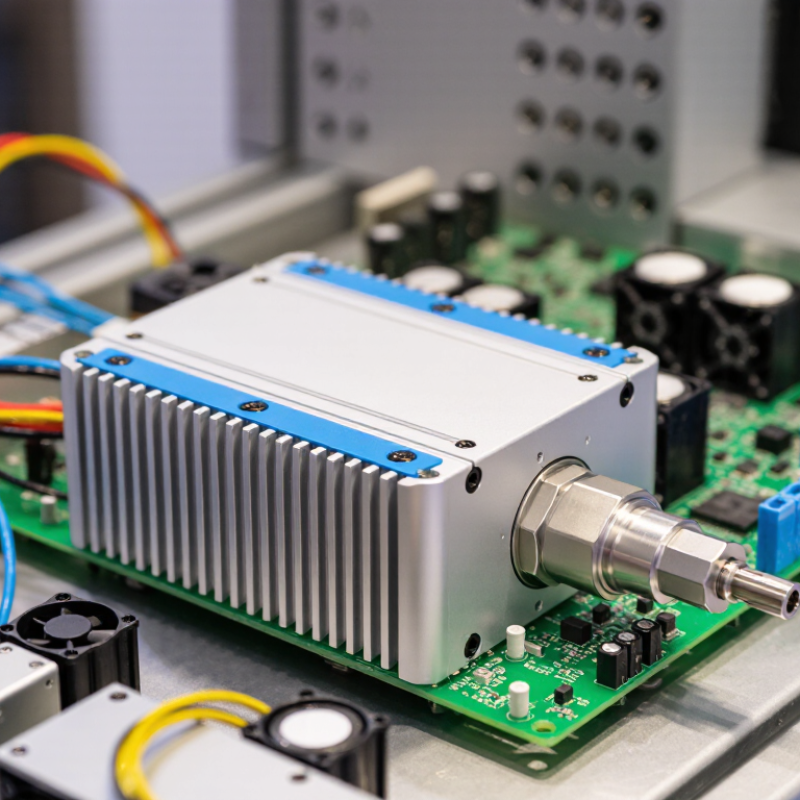
Choosing a fiber laser diode starts with understanding how it produces and delivers light. The diode converts electrical current into coherent optical energy inside a semiconductor cavity. That light then enters a fiber through a carefully aligned coupling interface. Wavelength must match the fiber, coating, and application. Small mismatches matter.
Check optical output power, threshold current, spectral width, and polarization behavior. A higher power rating does not automatically mean better performance. Excess power can increase heat, noise, and long-term drift. I once treated maximum power as the main selection point. That shortcut was wrong. Stable operation often matters more than peak output.
Thermal behavior deserves close attention. Heat sinks, package design, and operating temperature influence diode lifetime. Review the current-temperature curve, not just the headline specifications. Fiber coupling efficiency also affects the usable output at the fiber end. A small alignment error can create visible losses. For demanding systems, look for integrated monitoring photodiodes and feedback control. These features help detect output changes before they affect measurements.
Ask how the diode behaves after hours of continuous operation. Request test data, tolerance ranges, and environmental limits from a qualified supplier. Do not rely only on typical values. Real systems face vibration, dust, temperature changes, and imperfect assembly. A technically suitable diode can still fail when its connector, driver, or cooling method is poorly matched.
Defining Application and Performance Requirements
How to Choose the Right Fiber Laser Diode?
The correct fiber laser diode begins with the application, not the advertised output power. Define the working material, target wavelength, pulse format, and operating environment. A diode for precision marking may need stable short pulses. A diode for industrial cutting may require higher continuous power and stronger thermal control.
Measure the real performance target. Check output power, spectral width, coupling efficiency, beam quality, modulation speed, and electrical limits. If the system runs for long shifts, examine temperature drift and cooling capacity. Small wavelength changes can affect absorption, especially in reflective metals. Connector type and fiber core size also influence alignment and replacement work.
In practical testing, I record power after the delivery fiber, not only at the source. This exposes losses hidden in optimistic specifications. I have seen systems fail because engineers selected peak power without checking duty cycle. That was my mistake too. A laboratory result did not represent factory conditions. Require traceable test data, thermal curves, and lifetime estimates under comparable conditions. Ask whether the figures come from continuous operation or brief testing. Keep a margin for dust, vibration, voltage variation, and aging. More power is not always better. It can increase heat, cost, and process instability. The best choice fits the complete operating window.
Comparing Wavelength, Power, and Beam Characteristics
Choosing the right fiber laser diode starts with the wavelength, not the advertised power. Common bands serve different materials, detectors, and fiber types. A wavelength near 980 nm may suit pumping applications, while 1550 nm often supports safer optical communication systems. Verify absorption, transmission loss, and detector sensitivity in your actual setup.
Power ratings can mislead when operating conditions are unclear. Check continuous-wave or pulsed output, electrical efficiency, thermal resistance, and power stability. During testing, I compare the specified output with measurements taken after warm-up. A small drop may reveal poor cooling or unstable current control. More power is not always better. Excess output can damage coatings, saturate sensors, or create unnecessary heat.
Beam characteristics often decide whether the diode performs well in practice. Examine beam quality, divergence, astigmatism, polarization, and coupling efficiency. A narrow beam may still couple poorly if its fast and slow axes differ greatly. Fiber alignment becomes frustrating here. Use the manufacturer’s test conditions, but question whether they match your lens, connector, and operating temperature. I once focused too heavily on wavelength and power, then overlooked beam divergence; the resulting coupling loss changed the entire design. Recheck the real optical path before ordering.
Evaluating Reliability, Packaging, and Cooling Options
How to Choose the Right Fiber Laser Diode?
Choosing the right fiber laser diode begins with reliability, not peak output. A diode may look efficient on a specification sheet, yet unstable temperature can shorten its useful life. Check rated operating hours, output stability, wavelength tolerance, and electrostatic discharge protection. Ask for test conditions, not only impressive figures. In field installations, clean electrical control and consistent current often matter more than a small efficiency gain. I have seen systems fail early because connectors loosened during repeated thermal cycling. That detail is easy to miss.
Packaging determines how safely optical and electrical energy moves through the module. Hermetic sealing can protect sensitive components from moisture, dust, and oxygen. Confirm the package material, fiber alignment method, connector strength, and vibration performance. Compact packaging saves space, but it may limit heat dissipation or service access. That trade-off deserves honest review. Cooling should match the duty cycle. Passive heat sinks suit moderate, steady operation. Thermoelectric cooling offers tighter temperature control, but it adds power demand and another failure point. Water cooling handles higher heat loads, though pumps and seals require maintenance.
Tips: Compare operating data at your intended current, ambient temperature, and pulse pattern. Request thermal resistance values and long-duration test results. Leave airflow around the package. Poor installation can defeat good engineering. Inspect the diode after several hundred hours, checking power drift, connector temperature, and condensation. If the application runs near its limits, choose margin instead of a perfect-looking match. I would question vague lifetime claims; they need context.
How to Choose the Right Fiber Laser Diode?
Comparing representative package options by projected operating life and thermal resistance helps balance reliability, packaging needs, and cooling complexity.
The values shown are representative engineering ranges commonly used for preliminary design: projected operating life is expressed in hours at rated conditions, while thermal resistance is measured from the diode junction to the case in °C/W. Lower thermal resistance generally indicates easier heat removal and lower junction-temperature rise. Actual performance depends on drive current, optical power, mounting, ambient temperature, and cooling design.
Selecting the Best Diode for Your System and Budget
Choosing a fiber laser diode starts with the system, not the catalog price. Define the required wavelength, optical power, modulation speed, and coupling method. A diode for sensing may need excellent wavelength stability, while a processing system may prioritize power and thermal tolerance. Check the fiber core size and numerical aperture carefully. A mismatch can create coupling loss and unstable output.
Budget for the complete operating setup. The diode is only one part of the cost. You may also need a compatible driver, heat sink, temperature controller, monitoring photodiode, and protective housing. A cheaper diode can become expensive when it requires complex cooling or produces frequent alignment problems. Look for published data on efficiency, lifetime, operating temperature, and power stability. Ask for test conditions, not only headline specifications.
Avoid choosing the highest power automatically. More power often means more heat, larger cooling hardware, and stricter safety controls. That choice matters. In practical testing, small thermal changes can shift performance more than expected. I have also seen designs overpay for specifications they never use. Recheck the real duty cycle and output margin before ordering. Leave reasonable headroom, but keep the design financially disciplined. A reliable diode is the one that matches your actual workload, support capability, and long-term maintenance plan.