10 Essential Tips for Choosing the Right Valves Products for Your Needs?
When selecting valves products for your specific needs, understanding the options available is crucial. Valves are essential components in many systems, such as plumbing, industrial applications, and HVAC. Choosing the right valves can affect performance and efficiency.
Consider your project’s requirements carefully. Not all valves operate the same way. Some may be suitable for high pressure, while others function better in low-pressure systems. Evaluate materials and sizes. Are they compatible with your existing infrastructure? This detail can make or break the functionality of your setup.
It’s also important to research brands and manufacturers. Some might claim superiority but lack reliability. Reviews can provide insight, but remember, experiences can vary widely. You must ask questions and seek clarity. This approach helps ensure you don't make a hasty decision that could lead to complications. So, reflect on what matters most when choosing valves products, and proceed with thoughtful consideration.
Understanding Different Types of Valves and Their Applications
When selecting valve products, understanding their types and applications is crucial. Valves come in various forms, such as globe, ball, and butterfly valves. Each type serves a distinct purpose and is designed for specific conditions. According to a report by the Global Valve Market, the demand for ball valves is expected to grow by 5% annually. This growth highlights their efficiency in fluid control and tight sealing capabilities.
Globe valves are known for regulating flow well. They are particularly effective in applications like throttling. A study indicates that about 30% of industrial facilities favor globe valves for their reliability in high-pressure systems. However, they may not be the best choice for rapid on-off operations. Misapplication can lead to poor performance and unnecessary wear.
Butterfly valves are lightweight and compact. They excel in large volume applications, like water treatment plants. However, some users report challenges with tight sealing under certain conditions. Data shows that nearly 25% of maintenance issues arise from improper valve selection. It's essential to reflect on these factors when choosing the right valve. A careful assessment can lead to better operational efficiency.
10 Essential Tips for Choosing the Right Valves Products for Your Needs
| Valve Type |
Application |
Material |
Temperature Range |
Pressure Rating |
| Ball Valve |
Water, Oil, Gas |
Brass, Stainless Steel |
-20°C to 100°C |
150 PSI |
| Gate Valve |
Flow Regulation |
Cast Iron, Stainless Steel |
-10°C to 300°C |
200 PSI |
| Check Valve |
Backflow Prevention |
Plastic, Brass |
-40°C to 60°C |
100 PSI |
| Globe Valve |
Flow Regulation |
Forged Steel, Bronze |
-20°C to 250°C |
150 PSI |
| Butterfly Valve |
Large Flow Applications |
PVC, Stainless Steel |
-20°C to 80°C |
150 PSI |
Evaluating Material Compatibility for Valve Products
When selecting valve products, material compatibility is crucial. Each application has specific requirements. Using the wrong material can lead to failures. Consider the fluid type in your system. Is it corrosive? Does it contain solids? These factors directly influence your choice.
For example, stainless steel is widely used for its strength and corrosion resistance. However, it may not be suitable for acidic environments. You might need alternatives like titanium or special alloys. It’s important to check compatibility charts and conduct tests. Sometimes, even reputable materials can underperform under certain conditions.
Ignoring these aspects could lead to leaks or system failures. It’s worth reflecting on past mistakes in material selection. Have you experienced issues due to incompatible materials? Learning from these situations can enhance your future decisions. Assess the needs of your system carefully before making a choice. This approach can save time and resources in the long run.
Determining the Right Valve Size for Optimal Performance
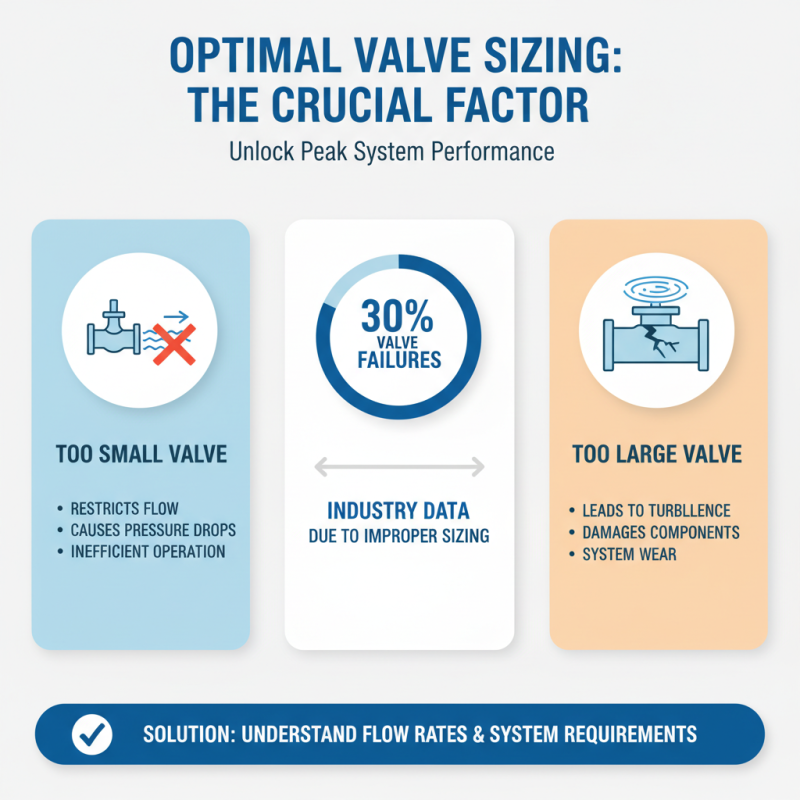
Choosing the right valve size is crucial for achieving optimal performance in various applications. According to industry data, nearly 30% of valve-related failures are due to improper sizing. A valve that is too small can restrict flow, causing pressure drops and inefficient operation. Conversely, an oversized valve may lead to turbulence, which can damage system components. Therefore, understanding flow rates and system requirements is key.
When selecting valve size, consider factors like pipe diameter and fluid properties. For example, a fluid's viscosity can impact flow rates significantly. The American Society of Mechanical Engineers published a report indicating that miscalculating the valve size can increase energy consumption by up to 25%. This inefficiency can be costly in the long run, showing how critical proper sizing is. Many users overlook these details and face operational challenges as a result.
Additionally, evaluating the service conditions is vital. Temperature and pressure fluctuations can impact valve performance. Data from industry surveys reveal that about 40% of users do not adequately assess these factors before their purchases. Failing to do so can result in premature failure or even unsafe operating conditions. Users must reflect on their specific needs and regularly revisit their choices to ensure reliability.
Assessing Pressure and Temperature Ratings for Valve Selection
Choosing the right valves for your systems hinges on understanding pressure and temperature ratings. These factors dictate the valve’s performance and longevity. For instance, a valve rated for high pressure may not perform well under extreme temperatures. Consider the operational environment carefully. Each application demands specific ratings to ensure safe and efficient operation.
Pressure ratings are crucial. A valve that cannot withstand system pressure may fail. This failure can lead to leaks, costly repairs, and safety hazards. Similarly, temperature ratings should align with your process conditions. Incorporating margins for unexpected fluctuations is wise. However, many overlook these details. They focus solely on the valve type rather than its ratings. This oversight could have serious consequences.
Also, reflect on the materials used in valve construction. Different materials handle pressure and temperature differently. For example, metals with high tensile strength perform better at elevated temperatures. Yet, they can be more brittle under pressure. Assess all variables carefully. It is easy to make assumptions, but a little research can prevent costly mistakes. Aim for clarity, as understanding these ratings can make or break your system's success.
Pressure and Temperature Ratings for Valve Selection
Recognizing Quality Standards and Certifications for Valves
When selecting valves, it’s critical to recognize quality standards and certifications that indicate reliability. The American National Standards Institute (ANSI) outlines specific ratings that reflect a valve's performance. Valves are often tested under stringent conditions to meet these standards. For instance, a report by the Valve Manufacturers Association states that products meeting these certifications tend to last 20 to 30% longer than those that do not.
Moreover, industry reports suggest that uncertified valves pose risks. Uncertified products can lead to leaks or failures, impacting system integrity. A study revealed that nearly 30% of valve failures in industrial applications stem from using subpar components. It’s a wake-up call for operators to prioritize certified products for cost efficiency and safety.
Certifications like ISO 9001 and others focus on quality management. They ensure that manufacturers maintain rigorous quality control processes. Yet, there's often a temptation to cut corners for cost savings. Retrospectively, companies realize the hidden costs associated with poor-quality valves. Investing in certified valves could prevent future headaches and operational delays.