
What Is a Maize Mill Machine and How Does It Work?

Maize is a staple grain, but turning kernels into consistent meal takes more than a motor and a set of blades. The USDA Foreign Agricultural Service’s May 2025 World Agricultural Supply and Demand Estimates placed 2024/25 global corn production at about 1.22 billion metric tons. That scale helps explain why milling equipment matters to farms, food processors, and local businesses. A Maize Mill Machine processes dried kernels into products such as flour, grits, or meal. The final texture depends on the grain, the machine design, and the operator’s settings. Small differences matter.

In a typical dry-milling line, grain is cleaned to remove dust and foreign material, then fed into a mill. Rollers, plates, or hammers break the kernels; screens separate particles by size. Some systems also remove the outer layer before grinding. The exact sequence varies. A compact mill may combine several steps, while a larger plant uses separate equipment for cleaning, milling, and sifting. Operators monitor feed rate, moisture, screen size, and heat because these affect output and product consistency. A close look at the finished meal can reveal uneven grinding or excess fines. And no machine fixes poor grain. Understanding how a Maize Mill Machine works helps buyers compare capacity claims with real processing needs. Still, published specifications cannot predict every result; grain condition and maintenance deserve equal attention.
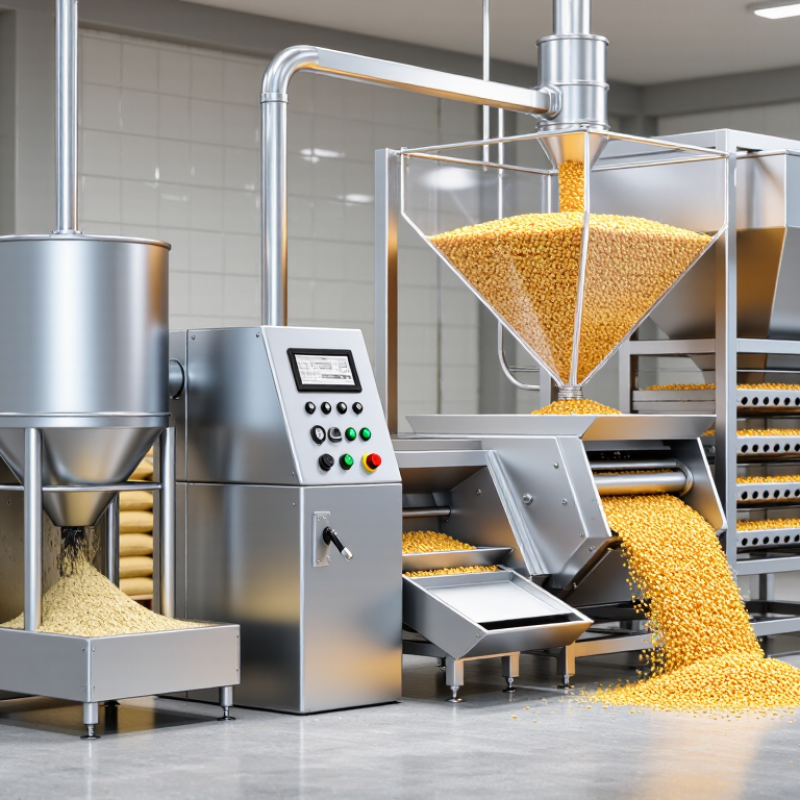
What Is a Maize Mill Machine and How Does It Work?

What a Maize Mill Machine Does: Turning Kernels into Meal and Flour

A maize mill machine turns dried maize kernels into meal or flour by breaking them into smaller particles. The process begins with cleaning, which removes dust, husks, and small stones. Clean grain then enters a grinding chamber, where rotating plates, rollers, or hammers crush it. The exact mechanism depends on the mill design. Grain becomes meal.

The ground maize may pass through a screen that separates finer flour from coarser meal. A smaller screen opening usually produces a finer texture, while a larger opening leaves more grit. Some mills allow a second pass for a smoother result. The output is not always perfectly even, and that is worth checking. Kernel dryness, mill settings, and wear can all affect texture and flow.

Tips: Feed kernels steadily rather than forcing them into the chamber. Keep the grain dry, and check the screen for blockages during use. Small details matter. If flour feels too coarse, adjust the setting or sift and regrind it. Avoid assuming every batch will look identical; maize variety and moisture can change the result.


Maize Kernel Anatomy: About 82% Endosperm, 11% Germ, and 7% Bran

A maize mill machine separates the kernel’s parts through cleaning, conditioning, grinding, and sifting. The proportions matter. FAO’s Maize in Human Nutrition reports that a typical kernel contains about 82% endosperm, 11% germ, and smaller outer fractions. In practical milling estimates, bran and the tip cap may be grouped near 7%. Exact figures vary with variety and how the outer layers are classified.

Endosperm is the pale, starchy center. It becomes meal or flour. The germ is oil-rich, so removing it can improve storage life, though it also removes nutrients. Bran forms the fibrous outer layer.

Screens and aspirators lift away lighter bran, while rollers crack the kernel and sieves sort particles by size. Small details matter: damp kernels can clog screens, and excessive pressure can leave coarse fragments.

USDA’s Grain Inspection Handbook addresses damaged kernels and foreign material as grading concerns, both relevant to clean mill intake.

The percentages are useful, not absolute. A diagram can look tidier than a real grain sample.

Receiving and Cleaning Maize to Meet the Codex 15.5% Moisture Limit

A maize mill’s first quality check begins at the receiving pit. Staff should sample kernels from several points in a truck, not just scoop from the dry-looking surface.

Codex Alimentarius standard CXS 153-1985 sets maize’s maximum moisture content at 15.5%.

That is a product limit, not a guarantee of safe storage in every climate. FAO grain-storage guidance also identifies moisture and temperature as key controls against mold and grain deterioration. Longer storage may require drier maize.

The sample is checked with a calibrated moisture meter before the grain enters the mill. Readings near or above 15.5% call for careful segregation and drying, rather than mixing the load with drier grain.

A screen removes cobs, stones, and other large debris; an aspirator draws away lighter dust and chaff. Magnets can capture stray ferrous metal.

Small details matter. A single grab sample can miss a damp pocket, so repeat readings across the delivery are worthwhile. Cleaning improves feed quality, but it does not remove moisture. That distinction is easy to overlook on a busy receiving shift.

Conditioning and Degerminating Kernels Before Size Reduction

Before a maize mill reduces kernel size, conditioning prepares the grain for clean separation. Dry-milling practice often tempers maize to about 20–22% moisture, then allows time for water to move through the kernel. The exact target depends on hardness, initial moisture, and equipment. A single target can mislead. FAO’s Maize: Post-harvest Operations places safe storage moisture near 13–14%; conditioning raises moisture temporarily, so the grain must not be treated as storage-ready afterward.

Rested kernels enter a degerminator, where controlled impact loosens the germ from the endosperm. Screens and air streams then separate lighter germ and bran fragments. The germ is oily and can smear across machinery if it breaks too early. Too little conditioning may leave brittle kernels and produce excess fines; too much can make separation uneven. Watch the discharge closely. Operators check moisture, kernel appearance, and the proportion of intact germ rather than relying on one setting. Technical descriptions of dry milling, including Corn Dry Milling: Processes and Products, explain why tempering and degermination precede finer grinding. The awkward part is real: kernels in one batch do not always absorb water at the same rate.

Grinding, Sieving, and Grading Meal and Flour by Particle Size

A maize mill machine turns dried kernels into meal or flour by reducing their size, then separating the ground material. Kernels pass through a hopper into a grinding chamber, where plates, rollers, or hammers break them apart. The grinding setting affects the result: a wider gap usually produces coarser meal, while a tighter setting creates finer particles. Heat and moisture matter, too. Damp kernels can clog screens or produce uneven flour.

After grinding, the material moves across sieves with different openings. Fine particles pass through, while larger pieces remain for another pass. This grading step helps create products with more consistent particle sizes for porridge, baking, or other uses. It is not always perfectly uniform. A few coarse grains may remain, and changing screens or feed rates can improve the batch. That takes checking.

Tips: Keep kernels dry and remove stones before milling. Choose a screen based on the texture you need, not just the finest option. Check the flour by rubbing a small pinch between your fingers; gritty particles suggest more grinding or finer sieving. Clean screens regularly, since trapped meal can slow output and distort grading. Start with a small batch. That makes adjustments easier.

What Is a Maize Mill Machine and How Does It Work? — Grinding, Sieving, and Grading Meal and Flour by Particle Size

A maize mill processes cleaned maize kernels into products such as flour, meal, and grits. The sequence and equipment vary with the desired product and whether the mill uses a whole-kernel or degerminating process.

Process Stage Typical Equipment What Happens Typical Output or Particle Size Why It Matters
Cleaning Screens, aspirator, and magnetic separator Removes dust, plant material, stones, and ferrous metal before the kernels enter the milling line. Whole kernels; no milled particle-size grade at this stage. Protects milling equipment and improves the cleanliness of the finished product.
Conditioning (when used) Water dosing system and tempering bin Adds a controlled amount of water and allows it to distribute through the kernels. Conditioning is commonly used in degerminating mills. Moisture is adjusted for the process; the kernels remain intact. Can help loosen the bran and germ from the starchy endosperm during subsequent processing.
Degerminating and breaking Degerminator or roller mill Breaks kernels and, in degerminating systems, separates some bran and germ from the endosperm. A mixture of bran, germ, and endosperm particles; size depends on the mill settings. Creates material that can be separated and milled into different product grades.
Grinding Hammer mill, plate mill, or roller mill Reduces the size of maize particles. Different mill types and settings produce different particle-size distributions. Ground material may range from coarse fragments of several millimetres to fine particles below 0.5 mm. Sets the initial texture and throughput before sieving and grading.
Sieving Vibrating sieve, plansifter, or rotary sifter Separates ground material by passage through screens with selected apertures. Oversize material may return for further grinding. Separated fractions commonly include fine flour below about 0.3 mm, medium meal around 0.3–1 mm, and coarse material above about 1 mm. Controls product consistency and enables the mill to make more than one grade.
Grading and blending Additional screens, collection bins, and blending equipment Collects or combines sieve fractions to meet a target texture and product specification. Fine flour, medium meal, or coarse grits; actual cut points depend on screen apertures and customer requirements. Produces a more uniform product for its intended use, such as baking, porridge, or grits.
Final inspection and packing Quality-control sampling and packing equipment Checks the finished product for attributes such as particle size, moisture, and cleanliness before packing. Finished product is packed according to its grade and specification. Helps maintain consistent quality during storage and distribution.

Particle-size note: The size ranges shown are practical examples, not universal standards. Actual grades vary by mill design, screen aperture, kernel characteristics, and product specification. Mesh or screen aperture defines the separation cut; it does not mean every particle in a fraction has exactly the same size.

Start WhatsApp Chat Start WhatsApp Chat
Valves

Valves

Water Meters

MS Forged Pipe Fittings

Fittings

Water Meters

Valves

DI Grooved Fittings (UL/FM)

Water Meters

DI Screwed Fittings (UL/FM)

Fittings

Composite Pipes & Fittings

Site Credits : Seigospace