Top 10 Steel Coil Suppliers for Global Buyers?
The global steel coil market is broad, competitive, and difficult to judge from price alone. World Steel Association data shows that global crude steel production reached about 1.89 billion tonnes in 2023. China, India, Japan, and the United States remained major producers, creating a complex supply network for international buyers.
A reliable Steel Coil Supplier must offer more than attractive quotations. Buyers should examine mill traceability, coating accuracy, dimensional tolerance, production capacity, export experience, and inspection procedures. The World Steel Association’s World Steel in Figures 2024 provides useful production context, while the OECD Steel Market Developments reports highlight changing demand, trade pressure, and capacity risks. These sources do not identify the best supplier directly. They help buyers ask better questions.
This guide reviews ten steel coil suppliers serving global markets. It considers product range, certifications, delivery performance, regional coverage, technical support, and communication quality. Practical details matter. A buyer may need galvanized coils for roofing, cold-rolled coils for appliances, or hot-rolled coils for structural fabrication. Each application demands different chemistry, surface quality, and documentation.
Rankings are never permanent. Prices change quickly. Freight disruptions can alter a supplier’s advantage within weeks. Some suppliers also communicate well but provide uneven documentation. That weakness deserves attention. The recommended companies should therefore be treated as strong candidates, not automatic choices. Buyers should verify current certificates, sample quality, inspection records, and contractual terms before placing an order.
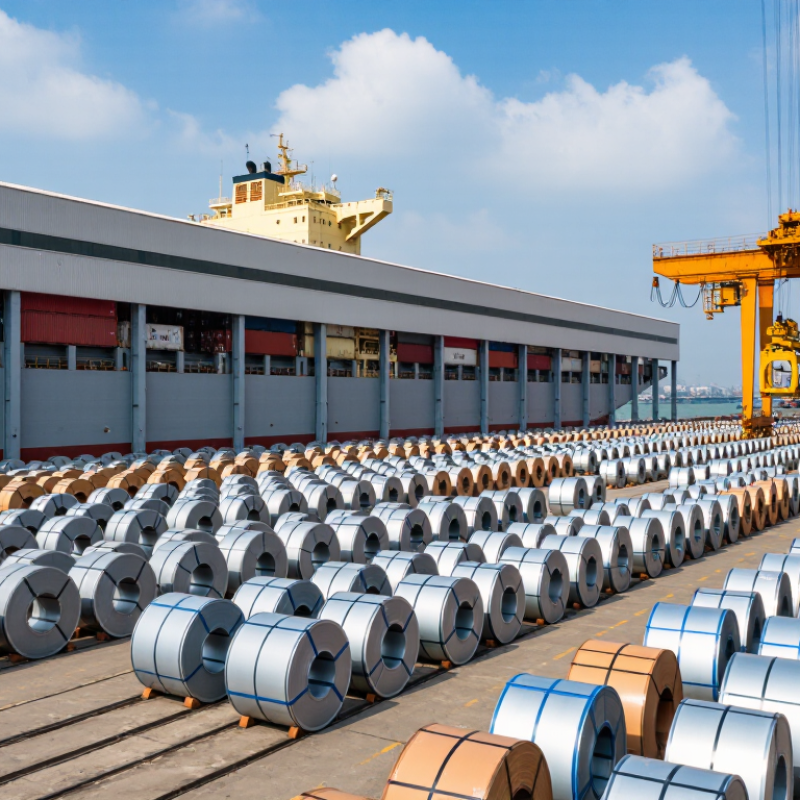
Steel Coil Types and Global Market Applications
Steel Coil Types and Global Market Applications
For global buyers comparing top steel coil suppliers, product type matters more than headline price. Hot-rolled coil is commonly used for beams, machinery, storage tanks, and heavy structural parts. Its rougher surface and wider thickness range suit fabrication, but it often needs further processing.
Cold-rolled coil offers tighter tolerances and a smoother finish. It appears in appliance panels, office equipment, and automotive components. Galvanized coil adds a zinc coating for corrosion protection, making it practical for roofing, HVAC ducts, and vehicle body parts. Electrical steel serves transformers and motors, while stainless coil supports food-processing equipment, medical facilities, and chemical plants. Different applications demand different performance.
Industry data shows the market’s scale. The World Steel Association reported global crude steel production of about 1.89 billion tonnes in 2023. That volume supports construction, transport, energy, and manufacturing supply chains across regions. The International Energy Agency also identifies steel as a major material in clean-energy infrastructure, including wind systems, grids, and electric vehicles. Yet demand is not uniform. Coastal projects may prioritize coating life, while appliance producers may focus on surface quality and forming performance.
A low-cost coil can become expensive after rejection, recoating, or delayed delivery. Buyers should verify thickness tolerance, coating mass, yield strength, mill test certificates, and packaging protection. Moisture stains still happen. Supplier rankings can help, but they never replace application-specific testing and realistic logistics planning.
How to Evaluate Steel Coil Suppliers Worldwide
When evaluating steel coil suppliers worldwide, start with measurable product requirements, not attractive catalogs. Confirm grade, thickness tolerance, width range, coating weight, coil weight, and edge condition. Ask for recent mill test certificates and heat numbers linked to packing lists. A reliable supplier explains deviations clearly. Vague answers deserve caution. Short sample orders can reveal surface scratches, telescoping, rust protection, and actual winding quality before larger commitments.
Supplier experience matters, but years alone prove little. Request production photos, inspection records, export references, and evidence of consistent delivery. Check whether certificates come from recognized laboratories and match the material shipped. If possible, arrange an independent pre-shipment inspection.
Review loading methods, moisture barriers, lifting points, and container plans. These details affect damage risk more than sales language. I once trusted a neat certificate too quickly; later, the packing photos showed weak corner protection. That mistake changed my checklist.
Compare quotations using total landed cost, including inland transport, insurance, duties, port charges, and possible storage. Clarify lead times, payment stages, claim procedures, and replacement rules in writing. A serious supplier should answer technical questions without pressure. Visit the facility when volume justifies the expense, or use a qualified local auditor. Cultural differences can slow communication, so record every agreed tolerance and delivery date. A low price still needs proof. Not every shipment needs the same audit depth, but high-risk specifications deserve closer review.
Top 10 Steel Coil Suppliers for Global Buyers
For global buyers, a useful top-ten comparison starts with the steel coil itself, not a supplier’s sales claims. Check the grade, thickness range, width tolerance, coil weight, and whether the material is hot-rolled, cold-rolled, or coated. Ask for a recent inspection report and mill test certificate that match the quoted product. Details matter. A coil that arrives with damaged edge protection or unclear labels can slow receiving and production.
Compare suppliers on more than price. Review production capacity, lead times, export packing, payment terms, and experience shipping to your destination. Request photos of coil wrapping and loading, then confirm who handles freight, insurance, and customs documents. These checks help reveal gaps before an order is placed. A low quote may exclude suitable packaging or rely on a delivery date that is not firm. No checklist catches everything. Buyers should also clarify how claims are documented if dimensions or surface condition fall outside the agreed specification. Ranking ten suppliers can be helpful, but the best fit depends on the buyer’s grade, volume, schedule, and tolerance for risk.
Top 10 Steel Coil Suppliers for Global Buyers
| Rank | Steel-Sourcing Market | 2023 Crude Steel Production | Buyer Consideration |
| 1 | China | 1,019.1 million metric tons | Confirm export availability, product specifications, and applicable trade measures. |
| 2 | India | 140.2 million metric tons | Check mill approvals, lead times, and the required coil grade and finish. |
| 3 | Japan | 87.0 million metric tons | Specify technical standards, tolerances, and inspection requirements in the purchase contract. |
| 4 | United States | 81.4 million metric tons | Evaluate domestic delivery options, import duties, and the final delivered cost. |
| 5 | Russia | 75.8 million metric tons | Review current sanctions, payment, shipping, and insurance restrictions before sourcing. |
| 6 | South Korea | 66.7 million metric tons | Verify available dimensions, coating requirements, and destination-market compliance. |
| 7 | Germany | 35.4 million metric tons | Compare applicable European standards, certification documents, and transport costs. |
| 8 | Türkiye | 33.7 million metric tons | Assess route, freight terms, customs requirements, and product-specific availability. |
| 9 | Brazil | 31.9 million metric tons | Compare ocean freight, port handling, and delivery schedules to the destination. |
| 10 | Iran | 31.1 million metric tons | Check applicable sanctions, banking, logistics, and import rules before any transaction. |
Method: Markets are ranked by total crude steel production, not by steel coil exports or supplier count. Crude steel output is not the same as coil production or export availability; confirm product, grade, quantity, and current trade conditions directly before purchasing. Production figures: World Steel Association, World Steel in Figures 2024 (2023 data).
Supplier Comparison: Quality, Capacity, Pricing, and Delivery
When comparing ten steel coil suppliers, judge quality from evidence, not sales language. Request mill test certificates and confirm grade, thickness tolerance, width, coating, and surface finish. A sample inspection can reveal edge damage or uneven oiling. Check that coil labels match the paperwork.
Capacity needs context. Ask about monthly output, available gauges, and the production slot for your order. A large stated capacity may not mean your specification is ready this month.
Pricing also needs a like-for-like check: include coating, packing, inland transport, freight, and quote validity. Delivery records matter. Compare actual lead times, shipment updates, packaging, and how suppliers handle quality claims. Dates can slip.
Tips: Send every candidate the same specification sheet. Record confirmed lead times and costs in one table. Keep assumptions visible; comparisons are imperfect when quotes omit details.
A low price may suit a flexible schedule, while a tighter deadline can make dependable communication more valuable. Before committing to a large order, consider a smaller trial shipment. Inspect the coil on arrival and compare its documents with the purchase terms. One trial cannot prove long-term consistency, but it can expose gaps in packing, labeling, or coordination.
International Purchasing, Compliance, and Risk Considerations
International Purchasing, Compliance, and Risk Considerations
Choosing a steel coil supplier means checking more than price and production capacity. Confirm the coil’s grade, thickness tolerance, coating, and packaging in the purchase specification. Ask for a recent mill test certificate, then verify that its heat number matches the coil tags and shipping documents. Small mismatches can delay customs clearance or complicate quality claims.
For cross-border orders, clarify who arranges freight, insurance, and export documents. Check that product declarations and certificates meet the destination market’s current requirements; rules can change, so confirm details with a qualified customs professional. Inspect loading photos and agree on moisture protection, edge guards, and coil orientation before shipment. These steps help reduce transit damage, especially on long sea routes.
Tips: Request a pre-shipment inspection when order value or specification risk is high. Keep approved samples and written records of any tolerance exceptions. Payment terms deserve equal care: staged payments tied to documented milestones can limit exposure, though they do not remove risk. Even experienced buyers miss details under time pressure. Slow down where it matters.
Steel Supply Landscape: Top 10 Steel-Producing Countries (2023)
Crude steel production provides context for global sourcing, but it does not rank individual suppliers or guarantee export availability, product quality, or compliance.
Source: World Steel Association, World Steel in Figures 2024. Buyers should independently verify mill identity, material certifications, origin, applicable trade measures, and shipment documentation.