
Top Wood Drying Equipment Suppliers for Global Buyers

Choosing the right Wood Drying Equipment supplier can shape product quality, energy use, and delivery reliability. For global buyers, the decision reaches beyond a machine’s advertised capacity. Timber species, board thickness, starting moisture, local climate, and production schedules all affect drying performance. A kiln suited to thin pine may not handle dense hardwood with the same consistency. Small details matter.

Wood-drying specialist Dr. Eugene M. Wengert has emphasized a central practical principle: “Drying schedules must be matched to the species, thickness, and intended use of the lumber.” Buyers should confirm how suppliers develop and adjust those schedules, and whether their systems provide dependable temperature, humidity, and airflow control. Ask for commissioning support, operator training, spare-parts availability, and references from mills processing comparable timber. Clear answers are useful. Vague promises are not.

This guide compares suppliers through practical criteria, including equipment range, automation, energy options, service coverage, and customization. It also considers what buyers should verify before requesting quotations, especially when projects cross borders and technical support may be distant. No supplier is ideal for every mill. Even a well-designed kiln can underperform when loading patterns, sensors, or maintenance are overlooked. That deserves a closer look.
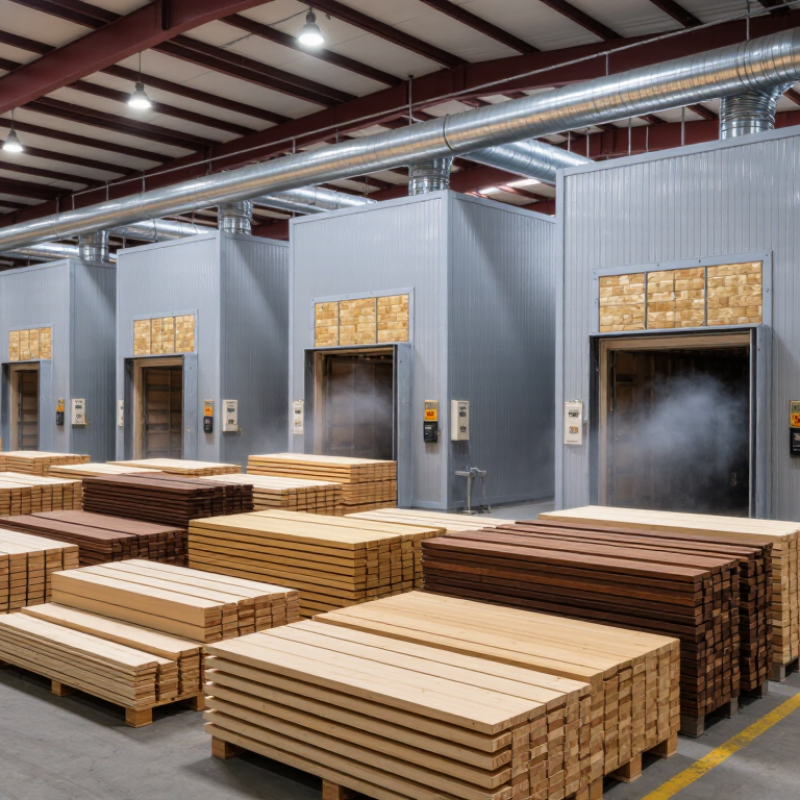
Top Wood Drying Equipment Suppliers for Global Buyers

Understanding Wood Drying Equipment and Its Role

Understanding Wood Drying Equipment and Its Role

Wood Drying Equipment controls how moisture leaves lumber before it is used in furniture, flooring, or construction. A kiln uses heat, airflow, and humidity control to bring boards toward a target moisture content. This matters because wet lumber can shrink, warp, or develop cracks after installation. The USDA Forest Products Laboratory’s Wood Handbook reports that wood at 70°F and 40% relative humidity reaches an equilibrium moisture content of about7.7%. That figure is a useful reference, not a universal kiln setting. Species, thickness, and local conditions change the drying schedule.

Details matter. A batch of thick oak boards dries differently from thin pine strips. Operators monitor temperature, humidity, and sample-board moisture, adjusting the schedule to limit surface checking and internal stress. The USDA handbook also explains that wood’s equilibrium moisture content shifts with surrounding humidity. Drying equipment therefore helps prepare material for its intended service environment, rather than simply making it “dry.”

Too aggressive a schedule can cause defects; too cautious a schedule can waste time and energy. Real-world schedules still need adjustment—sometimes the readings look right, while a board’s core tells another story.


Main Types of Wood Drying Systems on the Market

Main Types of Wood Drying Systems on the Market

Wood drying systems differ in speed, energy use, and suitability for specific species. Conventional hot-air or steam kilns circulate heated air through stacked lumber, making them practical for large, steady production runs. Dehumidification kilns remove moisture from circulating air and can operate at gentler temperatures. Vacuum kilns dry timber faster by lowering pressure, while solar kilns use sunlight but depend on weather and careful airflow. Radio-frequency systems heat wood internally, though equipment costs and load control can be challenging.

The USDA Forest Products Laboratory’s Wood Handbook (2021) places the average fiber saturation point near 30% moisture content, with variation among species. Below this point, drying affects wood dimensions, so schedules need to account for species, thickness, and intended use. A thick oak board will not behave like a thin pine plank. That detail is easy to underestimate. No system removes the need for moisture checks and controlled stacking.

Tips: Compare usable chamber capacity, not just advertised batch volume. Place calibrated moisture meters at several board locations, and record readings over time. For small operations, a solar kiln may reduce energy demand, but inconsistent sunshine can extend drying schedules. Always verify the supplier’s performance data with a representative test load.

Leading Supplier Profiles and Their Equipment Specialties

Global buyers should compare wood-drying suppliers by process specialty, not brochure claims. FAO’s Global Forest Products Facts and Figures 2022 reports worldwide sawnwood production of about 471 million cubic metres in 2022. That scale supports demand for equipment serving both high-throughput mills and smaller workshops. Yet capacity alone is a weak comparison. Species, board thickness, target moisture content, and local climate all affect drying schedules.

Continuous-kiln suppliers typically focus on steady feed rates and automated moisture control. Their systems suit mills processing similar dimensions daily. Batch-kiln specialists offer more flexibility for mixed species and changing orders; look closely at airflow design, sensor placement, and how operators verify core moisture. Dehumidification equipment can appeal to smaller facilities seeking lower-temperature operation, while vacuum systems target thick or valuable stock where shorter cycles matter. Each has trade-offs. No magic setting.

The USDA Forest Products Laboratory’s Wood Handbook explains that drying behavior varies with species and wood thickness, making process control central to product quality. Buyers should ask suppliers for test results on comparable timber, energy use per cubic metre, and evidence of uniform moisture across a load. Request a sample drying record, too. A polished dashboard is not proof. One often-missed detail is service access: fans, seals, and sensors need routine checks, and downtime can erase an attractive purchase price.

Top Wood Drying Equipment Suppliers for Global Buyers — Leading Supplier Profiles and Their Equipment Specialties
Supplier Profile Equipment Specialty Typical Wood Applications Key Operating Features Common Configuration Options Global Buyer Considerations
Conventional kiln specialist Batch lumber kilns using controlled heat, airflow, and humidity to reduce moisture content. Boards, dimensional lumber, and other sawn timber products. Programmable drying schedules; fans circulate heated air through stacked lumber; temperature and humidity are adjusted during the cycle. Steam, hot-water, or other compatible heat sources; side or end loading; optional heat recovery and automated controls. Confirm usable stack dimensions, local electrical and pressure-equipment requirements, insulation performance, and the availability of commissioning and spare parts.
Vacuum kiln specialist Vacuum drying systems that lower the boiling point of water, enabling moisture removal at reduced temperatures. Thick sections, valuable hardwood, and products that benefit from shorter or lower-temperature drying cycles. Sealed chamber operation; vacuum pumps remove air and water vapor; heat is supplied through an appropriate heating system. Batch chamber sizes; different heating methods; automated pressure, temperature, and cycle controls. Assess chamber capacity, vacuum-system maintenance, power requirements, loading method, and whether the supplier can demonstrate results for the buyer’s wood species and dimensions.
Dehumidification kiln specialist Heat-pump kilns that condense moisture from circulating air and return recovered heat to the drying process. Small- to medium-scale lumber operations and lower-temperature drying applications. Closed or managed air circulation; a refrigeration circuit removes moisture; generally operates at moderate temperatures. Standalone or modular units; different chamber capacities; optional supplemental heating and remote monitoring. Compare rated capacity with local ambient conditions, confirm operating temperature limits, and check refrigerant, electrical, and service requirements in the destination market.
Continuous dryer specialist Conveyor or belt dryers for continuous processing of small wood particles and residues. Sawdust, wood chips, flakes, and other prepared biomass feedstocks. Material moves through a heated drying zone; airflow and residence time are designed around feed size and target moisture. Single- or multi-pass layouts; direct or indirect heating arrangements; feed and discharge conveyors; dust-control connections. Specify feed moisture, particle-size range, throughput, and target outlet moisture. Review dust collection, fire protection, emissions, and site-specific fuel requirements.
Rotary dryer specialist Rotating drum dryers for bulk wood residues and prepared biomass materials. Wood chips, sawdust, and similar free-flowing or screened materials. A rotating drum lifts and tumbles material while heated gas or another heat-transfer arrangement removes moisture. Different drum lengths and diameters; direct or indirect heating; burner, cyclone, and exhaust-treatment interfaces. Check material size and contamination limits, design throughput, fuel availability, emissions obligations, and integration with dust collection and downstream processing.
Solar-assisted drying specialist Solar-heated drying structures and systems that use solar energy to supplement or provide process heat. Lumber and other wood products where longer, weather-dependent drying cycles are acceptable. Solar collectors or transparent enclosures provide heat; fans and vents help manage airflow and moisture removal. Passive or fan-assisted designs; optional auxiliary heat; configurable racks, vents, and monitoring instruments. Evaluate local solar conditions, seasonal production needs, humidity control, site orientation, and whether backup heat is needed for reliable year-round operation.

How Global Buyers Can Compare Supplier Capabilities

Global buyers should compare wood drying equipment suppliers by how well their systems match the wood species, board thickness, and production volume they handle. Ask for operating data from comparable installations, including drying time, moisture variation, energy use, and batch capacity. A kiln that performs well with thin softwood may not deliver the same results with thick hardwood. Request references and speak directly with operators when possible. Real production details matter.

Check the supplier’s technical support as carefully as the equipment. Confirm what commissioning includes, how staff training is delivered, and whether troubleshooting support is available across time zones. Review the control system, sensor placement, spare-parts lead times, and maintenance requirements. Ask for a sample layout showing loading space, airflow paths, and service access. Small details count. Specifications can look excellent on paper, yet unclear installation responsibilities can cause delays. I would also question any promise of uniform results without stated test conditions.

Tips: Compare written proposals using the same wood type, starting moisture content, target moisture, and batch size. Ask suppliers to explain how they verify moisture readings and manage drying defects. Note assumptions that remain untested; a site trial may reveal gaps before a full purchase.

Key Factors in Sourcing, Installation, and After-Sales Support

Choosing wood drying equipment begins with the timber, not the sales brochure. Ask suppliers to confirm capacity for your species, board thickness, starting moisture, and target moisture content. Request test data from comparable loads, plus details on temperature control, airflow, energy use, and batch timing. A quoted capacity may assume ideal conditions. Check the assumptions.

Installation planning deserves equal attention. Confirm floor loading, chamber access, drainage, ventilation, and electrical requirements before equipment ships. Leave room for doors to open and fans to be serviced. During commissioning, record sensor readings and compare them with independent moisture checks on sample boards. Small airflow problems can create uneven drying, even when the control panel looks normal. Site conditions matter.

After-sales support is easier to judge before a purchase. Ask how quickly technicians respond, which spare parts are stocked locally, and whether operating manuals and staff training are included. Get clear procedures for alarm faults and routine calibration. A supplier may promise fast support, but written response times are more useful. Keep maintenance records from the first run. They can reveal recurring issues, though paperwork alone will not fix a poorly planned installation.

Start WhatsApp Chat Start WhatsApp Chat
Valves

Valves

Water Meters

MS Forged Pipe Fittings

Fittings

Water Meters

Valves

DI Grooved Fittings (UL/FM)

Water Meters

DI Screwed Fittings (UL/FM)

Fittings

Composite Pipes & Fittings

Site Credits : Seigospace