
How to Use Ascophyllum Nodosum in Agriculture?

Ascophyllum nodosum is a brown seaweed harvested from coastal waters and processed into extracts used in crop production. Growers may apply these products as seed treatments, soil drenches, or foliar sprays, depending on the formulation and label. In Ascophyllum Nodosum Agriculture, the practical question is not simply whether seaweed helps, but when and how it may fit a crop program. Products can differ in extraction method, concentration, and recommended use. That matters.

This guide explores how to assess a product, choose an application method, and time use around crop growth and local conditions. It also considers practical details: water quality, spray coverage, tank-mix compatibility, and the directions on the product label. A leaf spray, for instance, needs even coverage; runoff from leaves may waste product. Results can vary. Seaweed extracts should not be treated as complete fertilizers or substitutes for soil testing, sound irrigation, and balanced crop nutrition. Research findings are not identical across crops, formulations, or growing environments, so broad promises deserve scrutiny. Growers can keep simple field notes or compare treated and untreated rows where practical. Small differences may be difficult to interpret. The goal is a measured, evidence-aware way to use Ascophyllum nodosum, not a guaranteed yield increase.
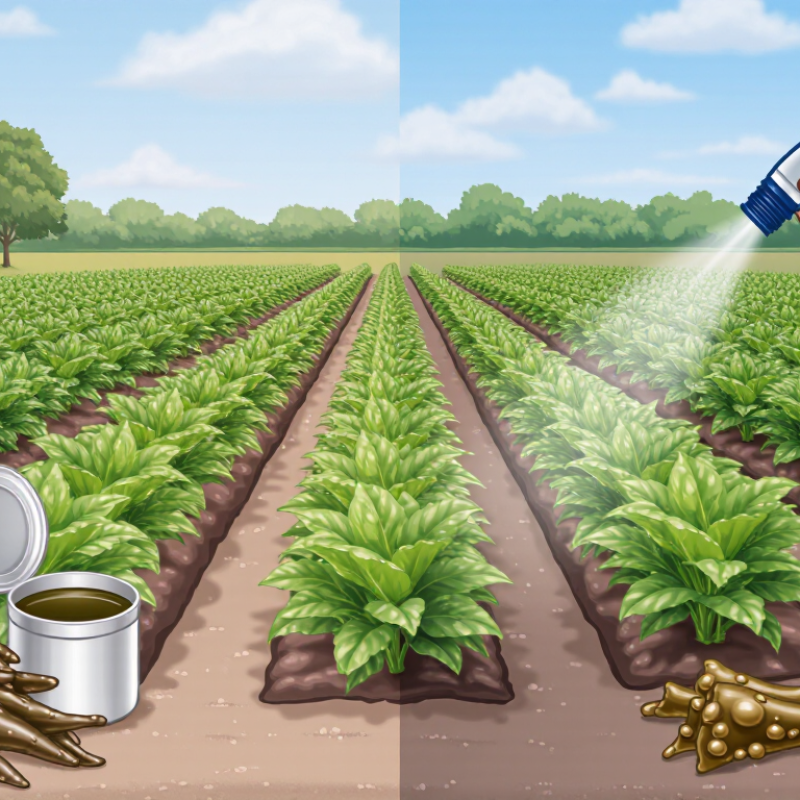
How to Use Ascophyllum Nodosum in Agriculture?

Understanding Ascophyllum Nodosum and Its Agricultural Uses

Ascophyllum nodosum is a brown seaweed that grows along cold, rocky North Atlantic shores. In agriculture, it is commonly processed into liquid extracts or soluble powders for use as a plant biostimulant. These products may contain natural compounds such as alginates, mannitol, minerals, and phenolic substances. Their composition can vary with seaweed maturity, harvest conditions, and processing. That variability matters.

Farmers use these extracts as seed treatments, soil applications, or foliar sprays. The aim is to support root growth, nutrient use, and crop resilience during stresses such as heat or limited water.

It is not a complete fertilizer. A seaweed extract cannot replace a soil test, balanced nutrition, or sound irrigation.

Results vary. For a practical comparison, a grower could spray a small section at the recommended growth stage and leave a similar section untreated. Record the rate, weather, crop stage, and visible changes, such as rooting or leaf condition.

Research findings are promising, but responses differ by crop and growing conditions; the evidence is useful, not perfectly tidy. Follow product directions, avoid mixing products without checking compatibility, and judge results across more than one field or season.


Selecting a Suitable Seaweed Product and Formulation

Selecting an Ascophyllum nodosum product starts with the crop and application route. A 2024 FAO report recorded 37.8 million tonnes of aquatic algae production in 2022, with 97% farmed. This scale signals a mature raw-material sector, but it does not prove that every extract performs alike. Extraction method, harvest location, and processing can affect composition.

Check whether the formulation suits your equipment. Liquid extracts are convenient for fertigation and foliar sprays, while soluble powders can reduce storage and transport volume. Confirm solubility, pH, salt content, and guaranteed analysis before purchase. Check the label. A sticky residue in a spray tank, or sediment in an irrigation filter, can turn a promising input into extra work. Avoid choosing by concentration alone; extraction solids and dilution rates vary.

Match the product’s directions to crop stage and intended use, then test it on a small block before wider application. Run a small trial. Record the rate, timing, weather, and crop response, and compare treated plants with untreated rows.

The FAO figure comes from The State of World Fisheries and Aquaculture 2024; it describes algae production, not field efficacy. That distinction matters. If results are inconsistent, review application conditions and product specifications before increasing rates.

Choosing Application Methods and Crop Timing

Choosing an application method starts with the crop, equipment, and purpose. Foliar sprays place Ascophyllum nodosum extract directly on leaves, where fine droplets can coat young growth. Apply during cool, calm hours. Avoid spraying wilted plants or leaves already wet from rain. Soil drenches or compatible irrigation systems deliver the extract near active roots, particularly after transplanting. Check the product directions and irrigation filters first; concentrated mixtures can clog nozzles or create uneven coverage. Test a small area.

Timing matters more than frequent use. Young seedlings and recently transplanted crops are common application points. Some growers also apply near flowering or fruit set, but responses vary by crop and formulation. Follow the stated rate, then observe new growth, soil moisture, and weather over several days. Seaweed extracts are biostimulant inputs, not replacements for balanced nutrition, irrigation, or pest management. Heat, dry soil, and salinity can all affect results. Records help, though they are easy to neglect. A visible change may be subtle, and one treated row proves little. Compare treated and untreated strips under similar conditions before repeating the schedule.

Preparing and Applying Ascophyllum Nodosum Products

Preparing and Applying Ascophyllum nodosum Products

Ascophyllum nodosum products come as liquids, powders, or granules, and preparation varies by formulation. Read the product label before mixing; concentration and application instructions are not interchangeable. Use clean water and a clean container. Add the measured product gradually, stirring until evenly dispersed. Some powders need more time to dissolve. Check for sediment before filling a sprayer.

Apply to soil or foliage only when the label allows it. For foliar use, aim for even coverage without runoff, and avoid spraying during strong sun or wind. For soil application, distribute the solution near the active root zone. Start with a small test area, then observe crop response over several days. Results can vary with crop, soil, weather, and product composition. I would keep simple notes on rate, timing, and conditions; it is easy to forget what changed.

Tips: Calibrate the sprayer with plain water first. Don’t guess the dose. Rinse equipment after use, and avoid mixing products unless compatibility is confirmed. A small trial may not predict every field condition, but it can reveal obvious problems early.

Monitoring Crop Response and Adjusting Use

Monitoring crop response is more useful than applying Ascophyllum nodosum extract by habit. Before treatment, record the crop stage, field conditions, and any visible stress. Leave a comparable untreated strip when practical. It gives you a reference, not a perfect experiment.

Check treated and untreated areas at consistent intervals. Note leaf color, canopy coverage, flowering, and crop uniformity. Measure yield or marketable quality at harvest when possible. Keep records of application rate, timing, irrigation, and weather. Small details matter. A greener patch alone does not prove the extract caused the change; soil variation or rainfall may explain it.

Adjust use cautiously, following the product directions and local agronomic advice. If no repeatable difference appears across comparable areas, reconsider the timing or whether another factor is limiting growth. Avoid increasing the rate simply because results seem weak. More is not automatically better. Test one change at a time, such as application timing, so the next comparison remains interpretable. Results can be uneven, and that is worth admitting. One season may offer clues, not a firm answer.

Start WhatsApp Chat Start WhatsApp Chat
Valves

Valves

Water Meters

MS Forged Pipe Fittings

Fittings

Water Meters

Valves

DI Grooved Fittings (UL/FM)

Water Meters

DI Screwed Fittings (UL/FM)

Fittings

Composite Pipes & Fittings

Site Credits : Seigospace