
Why Choose a Fuse Holder for Electrical Protection?
Electrical protection is not only about selecting the correct fuse. It also depends on how securely that fuse is installed, cooled, accessed, and replaced. A Fuse Holder provides a stable connection between the fuse and the circuit. It can reduce loose-contact risks, support safer maintenance, and help prevent heat from building around the terminals. Small details matter. A discolored clip or weak spring can signal trouble before failure becomes visible elsewhere.
Industry reports support the need for dependable circuit protection. Grand View Research’s Electrical Fuses Market analysis identifies sustained demand from automotive, industrial, renewable-energy, and electronics applications. MarketsandMarkets also reports continued growth in the wider circuit-protection market, driven by electrification and increasingly compact equipment. These trends create tighter thermal and space limits. They also make holder selection less forgiving.
Michael K. Schaefer, a Littelfuse application engineer, explains, “A fuse is only as effective as the holder that keeps it cool, connected, and serviceable.” That practical view deserves attention. A Fuse Holder should match the fuse type, rated current, voltage, interrupting conditions, and installation environment. UL 4248 and relevant IEC requirements provide useful evaluation points, but compliance alone does not guarantee a perfect installation. Real experience still matters. A holder may look robust, yet perform poorly under vibration, moisture, or repeated servicing. Choosing well means examining the entire protection path, not just the fuse label.
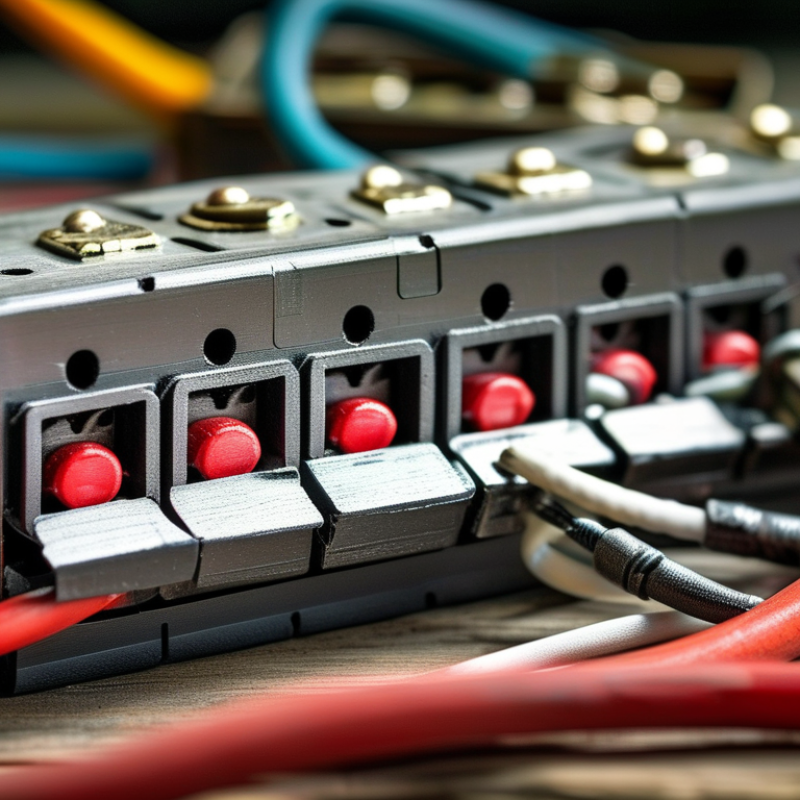
A fuse holder is the insulated device that supports a fuse and connects it to an electrical circuit. It keeps the fuse stable, protected, and replaceable. The holder does not limit current by itself. The fuse does that work. When current rises above the fuse rating, its metal element heats and melts. The circuit opens before excessive heat damages wiring or equipment.
This small component matters in real installations. The National Fire Protection Association reported an average of 32,680 U.S. home fires involving electrical distribution and lighting equipment each year from 2015 to 2019. A correctly selected fuse holder helps contain faults and supports safer maintenance. It must match the fuse type, voltage, current, interrupting rating, and operating temperature. A holder can be correctly rated yet poorly installed. That is where many practical problems begin.
Tips: Check terminal tightness during maintenance. Look for discoloration, cracked plastic, or heat marks. Use a holder designed for the exact fuse size. Never replace a blown fuse with a higher-rated one. IEC 60269 guidance also emphasizes coordination between fuse characteristics and circuit protection. Still, protection is not foolproof. Moisture, vibration, loose connections, and repeated overloads can reduce reliability. In my experience, the holder is often overlooked because it looks passive. It is not. Its contact pressure and insulation condition directly affect circuit safety.

A fuse holder provides more than a place to install a fuse. It creates a secure electrical connection and keeps the fuse aligned during operation. In practical panel work, this matters because vibration, heat, or loose wiring can increase resistance. That resistance creates heat.
A well-selected holder also helps contain fault energy. When a fuse opens during overcurrent, the holder supports safe separation and reduces accidental contact with live parts. Its rated voltage, current, interrupting capacity, and temperature range must match the circuit. Some holders include covers or indicators, which make inspection faster. I have found that clear visual access can prevent delayed maintenance. Still, a holder cannot correct poor circuit design. That part is often overlooked.
Tips: Check the fuse size before installation. Confirm the holder’s ratings from its technical documentation. Tighten terminals to the specified torque, not by guesswork. Inspect for discoloration, melted plastic, or loose clips. Replace damaged parts promptly. Keep spare fuses dry and clearly identified. Never substitute a fuse with wire or an unsuitable rating. Small shortcuts become expensive failures.
A fuse holder does more than keep a fuse in place. It creates a stable electrical connection and supports safer circuit protection. When a fuse opens during an overcurrent event, the holder helps contain heat and supports controlled replacement. A loose connection can create resistance, heat, and failure. Small detail. Large consequence.
NFPA reports that electrical distribution and lighting equipment were involved in about 35,150 U.S. home structure fires from 2015 to 2019. These fires caused approximately 470 civilian deaths, 1,100 injuries, and $1.3 billion in property damage. A correctly rated fuse holder cannot prevent every incident. However, it can improve contact security and make abnormal conditions easier to identify. Holders designed under applicable standards, such as IEC 60269-related requirements, also support consistent performance across electrical assemblies.
Maintenance becomes clearer with an accessible holder. Technicians can inspect discoloration, cracked insulation, loose terminals, or repeated fuse failures without disturbing unrelated wiring. Some holders include touch-safe covers or visual status indicators. These features reduce accidental contact during service. They also shorten diagnostic time. In real workplaces, inspections are sometimes rushed. That is a weakness worth admitting. A holder still needs correct fuse ratings, proper torque, clean terminals, and regular thermal checks. It is not a substitute for design review. Used carefully, it turns fuse replacement from guesswork into a more controlled maintenance task.
Fuse holders improve circuit safety by providing secure fuse mounting, touch protection, clear identification, and a controlled method for fuse replacement. These design functions also make inspection and maintenance more consistent than handling loose fuses.
Why Choose a Fuse Holder for Electrical Protection?
Fuse holders make fuse replacement safer and inspection easier. Their design also supports reliable electrical protection. The right type depends on current, voltage, space, and maintenance needs. Cartridge fuse holders suit control panels, appliances, and compact distribution equipment. They keep cylindrical fuses firmly aligned. Blade fuse holders are common in vehicles and low-voltage systems. Their visible contacts simplify troubleshooting. Open fuse blocks serve larger assemblies where quick access matters. Some holders include covers or indicators, which help reduce accidental contact.
Panel-mount holders work well on equipment enclosures and power supplies. Inline holders fit cables where space is limited, such as lighting circuits and battery leads. DIN-rail holders support organized installation inside control cabinets. Waterproof versions are useful near pumps, outdoor equipment, and damp service areas. Selection should include temperature rise, wire size, interrupting rating, and the fuse’s exact dimensions. A holder rated for the fuse alone may still be unsuitable for the enclosure. In field work, loose terminals and heat discoloration often reveal poor installation. I have found that an accessible location saves time later, although it may need extra protection from impact.
Tips: De-energize the circuit before inspection. Match fuse and holder ratings carefully. Tighten terminals to the stated torque. Leave room for heat to escape. Check markings after installation. Do not assume a familiar holder fits every fuse. A test with a qualified meter can expose hidden connection problems. Local electrical requirements should guide final selection.
| Fuse Holder Type | Compatible Fuse Format | Typical Mounting Method | Common Electrical Range | Common Applications | Main Protection and Design Benefits | Important Selection Factors |
|---|---|---|---|---|---|---|
| Panel-Mount Cartridge Fuse Holder | Cylindrical glass or ceramic cartridge fuses, commonly 5 × 20 mm or 6.3 × 32 mm | Mounted through a panel using a threaded body, nut, or snap-in mechanism | Commonly used in low-voltage circuits up to approximately 250–500 V AC, with current ratings often from 1 A to 20 A depending on the holder and fuse | Control panels, laboratory equipment, power supplies, appliances, and industrial instruments | Provides a secure enclosure, convenient fuse replacement, and protection against short circuits and overcurrent conditions | Check fuse dimensions, voltage rating, current rating, interrupting rating, panel thickness, terminal type, and touch protection |
| Inline Cartridge Fuse Holder | Small cylindrical cartridge fuses, commonly 5 × 20 mm or 6.3 × 32 mm | Installed directly in a cable or wire harness with crimp, solder, or screw terminals | Frequently used in low-voltage DC and AC circuits; typical versions range from a few amperes to approximately 30 A | Battery leads, LED lighting, electronic equipment, communication systems, and portable devices | Allows circuit protection to be added where there is no circuit board or control panel; compact and easy to retrofit | Verify wire gauge, insulation temperature, moisture resistance, enclosure rating, fuse access, and polarity requirements for DC systems |
| PCB Fuse Clip | Lead-type or cartridge fuses, including miniature cylindrical fuse formats | Soldered directly onto a printed circuit board through-hole pattern | Common in low-voltage electronic circuits; ratings vary widely according to the fuse, clip material, and PCB design | Consumer electronics, chargers, power supplies, measurement equipment, and industrial control boards | Low cost, small footprint, and straightforward assembly for fuses that are replaced infrequently | Consider creepage and clearance, PCB temperature rise, fuse accessibility, vibration resistance, soldering process, and contact pressure |
| PCB Enclosed Fuse Holder | Miniature cartridge fuses, commonly 5 × 20 mm or similar formats | Mounted to a printed circuit board using through-hole or board-mounted terminals | Commonly available for low-voltage electronic equipment and mains-connected power supplies, often up to 250 V AC | Power entry modules, office equipment, appliances, industrial electronics, and control circuits | Provides better contact protection and fuse retention than open clips while allowing field replacement | Check dielectric strength, touch safety, thermal derating, board spacing, fuse replacement access, and approved fuse dimensions |
| Blade Fuse Holder | Automotive blade fuses such as low-profile, mini, standard, or larger blade formats | Mounted inline, on a panel, or in a fuse distribution block | Typically used in low-voltage DC systems, commonly 12 V or 24 V, with current ratings from a few amperes to approximately 100 A depending on the format | Vehicles, recreational equipment, marine electrical systems, battery-powered tools, and mobile machinery | Fast visual inspection, simple fuse replacement, compact distribution, and strong suitability for DC branch-circuit protection | Match the blade-fuse profile, continuous current, cable size, ambient temperature, sealing level, terminal quality, and DC voltage rating |
| DIN-Rail Fuse Holder | Cartridge, cylindrical, or miniature fuse links designed for modular installations | Clipped onto a standard DIN rail inside an electrical enclosure | Commonly used in industrial low-voltage distribution, with voltage and current ratings determined by the specific holder and fuse system | Machine control cabinets, automation panels, building services, instrumentation, and distribution boards | Supports organized panel layouts, quick installation, clear circuit identification, and easier maintenance | Verify rail compatibility, terminal capacity, touch protection, short-circuit rating, spacing, heat dissipation, and indicator options |
| High-Current Bolt-Down Fuse Holder | Bolted strip, MIDI-style, MEGA-style, or other high-current fuse links | Secured to busbars, brackets, cables, or a dedicated mounting base with bolts or studs | Commonly used in low-voltage DC systems from approximately 30 A to several hundred amperes, depending on the fuse and holder design | Battery banks, uninterruptible power systems, electric vehicles, renewable-energy systems, and heavy equipment | Provides low-resistance connections, high mechanical strength, and reliable protection for large conductors and battery circuits | Check torque requirements, cable lug size, fault current, heat dissipation, insulation barriers, DC interrupting rating, and service clearance |
| Screw-Type Fuse Holder | Threaded or screw-contact miniature and cartridge fuses | Installed in a panel, terminal block, or equipment enclosure using screw terminals or a threaded cap | Commonly used in low-voltage control and electronic circuits, with ratings depending on the fuse system and terminal design | Control equipment, test instruments, alarm systems, lighting controls, and older electrical assemblies | Provides firm mechanical retention and can simplify fuse replacement in compact assemblies | Inspect thread compatibility, contact resistance, tightening torque, vibration resistance, touch protection, and available replacement space |
Why Choose a Fuse Holder for Electrical Protection?
How to Select the Right Fuse Holder for Your System
Selecting a fuse holder starts with the circuit, not the enclosure. Check the fuse type, rated current, voltage, and interrupting capacity. The holder must safely handle the fuse during a fault. A mismatch can create heat, arcing, or difficult maintenance. Confirm whether the circuit uses AC or DC. Their interruption behavior can differ significantly. I always compare the holder’s ratings with the complete system, rather than the fuse alone.
Physical conditions matter just as much. Measure the available panel space and check terminal orientation before ordering. A compact holder may save room but restrict tool access. Choose terminals that suit the conductor size and connection method. In vibrating equipment, secure mounting and strong contact pressure deserve extra attention. For outdoor or humid locations, examine sealing and corrosion resistance. Temperature also changes performance. High ambient heat can reduce the safe current capacity of both fuse and holder. This detail is easy to miss.
Maintenance should influence the decision too. A visible indicator can speed up fault checks, while a covered design can reduce accidental contact. Verify applicable electrical standards and review the manufacturer’s test data. I recheck the datasheet after installation because wiring assumptions are often wrong. That habit may feel excessive. It prevents expensive surprises. Select a holder that supports safe replacement, clear identification, and reliable contact over its expected service life.