Choosing a dependable valves company in 2026 requires more than comparing prices, catalogs, or polished websites. A reliable supplier should understand pressure, temperature, media, corrosion, actuation, and maintenance conditions. James B. Rishel, a respected valve engineer and author, advises: “A valve must be selected for the service, not merely for the line size.” That principle remains practical today.
Look for evidence, not promises. A credible valves company should provide material certificates, pressure-test records, product traceability, and clear quality procedures. Certifications such as ISO 9001 can support confidence, but they do not replace technical judgment. Check whether the supplier follows relevant API, ASME, EN, or project-specific requirements. Ask how each valve is tested before shipment. Ask who handles failures after installation.
Field experience matters.
A strong supplier will discuss real operating conditions. They may ask about fluid velocity, cycling frequency, ambient temperature, and emergency isolation needs. Their engineers should explain why a ball valve, butterfly valve, gate valve, or control valve fits your system. Vague answers deserve caution.
Even careful buyers make mistakes. A familiar brand may still offer the wrong trim, actuator, or seal material. A low quotation can hide weak documentation, delayed spares, or poor technical support. No checklist is perfect. However, comparing manufacturing capability, inspection discipline, delivery history, warranty terms, and customer references creates a more reliable decision.
This guide explains how to evaluate a valves company with practical evidence. It focuses on performance, accountability, and long-term operating value rather than attractive claims alone.
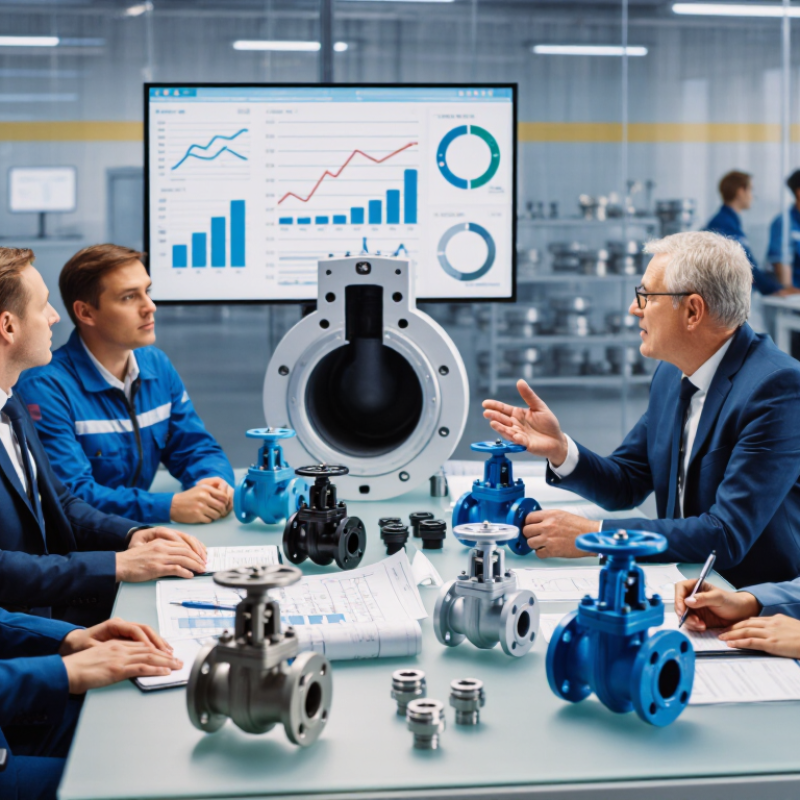
Choosing a reliable valves company begins with evidence, not polished promises. A capable supplier should explain its design process, material selection, and pressure-testing methods clearly. Ask for inspection records, dimensional reports, and traceability from raw material to finished valve. These documents show whether quality is repeatable or merely advertised.
Look closely. An experienced company also understands real service conditions. It should ask about fluid type, temperature, pressure, corrosion risk, installation position, and operating frequency. A technically correct valve can still fail when application details are incomplete. Reliable companies do not hide limitations. They state tolerances, maintenance needs, delivery risks, and testing boundaries before an agreement. Certifications may support credibility, but certificates alone cannot prove dependable performance. Check whether they cover the actual factory, product range, and current production period. Speak with engineers and service staff, not only a salesperson. Request drawings, test procedures, spare-parts guidance, and a realistic response time for faults. A supplier that documents corrective actions after failure may deserve more trust than one claiming a perfect record. No operation is perfect. I would still ask how lessons are recorded and shared.
| Evaluation Dimension | Reliable Performance Benchmark | Evidence to Request and Verify | Suggested Weight |
|---|---|---|---|
| Quality Management System | A documented and independently certified quality management system, with controlled procedures for design, purchasing, production, inspection, nonconformity handling, and corrective action. | Current ISO 9001 certificate, certificate scope, issuing-body verification, recent audit findings, corrective-action records, and quality objectives. | 15% |
| Applicable Product Standards | Products are designed and tested against standards appropriate to the valve type and service. Examples include API 6D for pipeline valves, API 598 for valve inspection and testing, ASME B16.34 for pressure-containing valves, and IEC 60534 for control valves. | Technical data sheets, design calculations, applicable standard editions, compliance statements, test procedures, and third-party certification where required by the project. | 15% |
| Pressure and Functional Testing | Each applicable valve receives documented shell, seat, and functional testing in accordance with the approved standard and purchase specification. Test pressure, duration, acceptance criteria, and medium are clearly defined. | Signed test reports, calibrated-gauge records, test-bench identification, traceable valve serial numbers, and nonconformance reports for failed tests. | 15% |
| Material Traceability | Pressure-retaining and critical components remain traceable from incoming material through machining, assembly, inspection, and final shipment. | Heat numbers, material certificates compliant with EN 10204 Type 3.1 where specified, positive material identification records, and a component traceability matrix. | 12% |
| Design and Engineering Capability | The supplier can demonstrate controlled design review, application engineering, material selection, actuator sizing, pressure-temperature evaluation, and documented change control. | Approved drawings, design review records, bill of materials, pressure-temperature ratings, torque calculations, finite-element or other engineering analyses when relevant, and revision histories. | 10% |
| Leakage and Emissions Control | The valve design and packing system are suitable for the specified leakage class and environmental requirements. Fugitive-emission performance is verified when required by the service. | Applicable seat-leakage test results, fugitive-emission test reports to standards such as ISO 15848-1, packing specifications, and service-temperature limitations. | 10% |
| Manufacturing and Process Control | Critical processes such as casting or forging, heat treatment, machining, welding, coating, assembly, and cleaning are controlled and consistently documented. | Process flow charts, inspection and test plans, heat-treatment charts, welding procedure qualifications where applicable, coating records, and in-process inspection results. | 8% |
| After-Sales Service and Spare Parts | The supplier provides clear maintenance instructions, spare-parts identification, technical support, warranty terms, and a defined process for handling field failures. | Recommended-spares list, maintenance manuals, warranty policy, service response procedure, failure-analysis reports, and documented escalation contacts. | 6% |
| Delivery and Supply-Chain Reliability | Production capacity, approved subcontractors, procurement controls, and delivery planning are transparent enough to support the required project schedule. | Capacity statement, realistic lead-time schedule, on-time delivery history, critical-subcontractor controls, material availability plan, and inspection hold-point schedule. | 5% |
| Health, Safety, Environment, and Ethics | The supplier maintains documented controls for worker safety, environmental compliance, responsible sourcing, anti-bribery, and conflict-of-interest risks. | Relevant management-system certificates, safety statistics, environmental permits where applicable, supplier code of conduct, anti-bribery policy, and audit results. | 4% |