How to Choose PVC Parts for Your Project in 2026?

Choosing PVC parts for a 2026 project starts with the job they must do, not the label on the package. A fitting beside a warm pump faces different demands from a trim piece in a dry cabinet. Check the part’s dimensions, pressure or load requirements, temperature range, and exposure to sunlight or cleaning chemicals. Small details matter. A few millimeters of mismatch can cause leaks, rattling, or a rushed redesign.

Industrial designer Dieter Rams was not a PVC specialist, but his principle, “Good design is as little design as possible,” offers a useful test: choose only the features your project needs. For PVC parts, that means balancing durability, compatibility, ease of installation, and cost without assuming one grade suits every application. Ask suppliers for material specifications and test data, then confirm that the part matches nearby components and the intended service conditions. A catalog image cannot show whether a thread will seal properly. And even a well-documented choice deserves a fit check before installation. This guide explores the questions that help you compare parts with care. Some projects will still involve trade-offs; naming those limits is better than pretending every choice is perfect.
How to Choose PVC Parts for Your Project in 2026?

Define Your Project’s Requirements and Operating Conditions

Start with the job, not the catalog. Record the fluid, expected flow, pressure range, and whether the line runs continuously or in short cycles. Note minimum and maximum temperatures, including brief cleaning or shutdown periods. PVC pressure capacity can decrease as temperature rises, so a room-temperature rating may not reflect actual service. Check chemical compatibility against the fluid’s concentration and exposure time; broad labels such as “chemical resistant” are not enough. Small details matter.

Map the physical conditions as well. A pipe exposed to sunlight, vibration, impact, or changing loads may need different support and protection than one inside a stable room. Measure connection sizes and available space, then confirm tolerances and joint requirements on the part drawings. A fitting that looks close can still create a leak or force a poor alignment. Think about installation access. Can a worker tighten or inspect the connection later? It is easy to overlook that question when reviewing dimensions on a screen. I would also verify pressure and temperature together, rather than treating each rating in isolation. If the operating conditions are uncertain, write down the assumption and have it checked before selecting parts.
How to Choose PVC Parts for Your Project in 2026?

Define Your Project’s Requirements and Operating Conditions

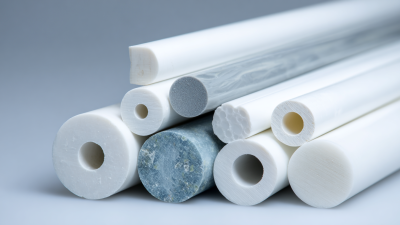
Temperature is one important factor when selecting plastic parts. These values are approximate typical continuous-service limits, not design ratings. Actual limits depend on the material grade, pressure, chemical exposure, and part design. Confirm suitability with the part supplier for your operating conditions.

Identify the PVC Part Types Your Project Needs

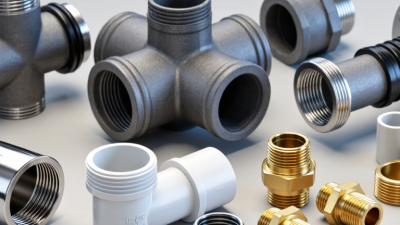
Identify the PVC part types your project needs before comparing prices. Rigid PVC pipe suits many drainage and water-routing tasks, while pressure-rated pipe is designed for specified operating conditions. Fittings such as elbows, tees, and reducers control direction and branch connections. Valves manage flow; panels and molded components serve different structural or enclosure needs. A poor fit causes trouble.

Match each part to the actual job. Check pipe diameter, wall thickness, pressure rating, temperature range, and fluid compatibility in the product specifications. Confirm that fittings use compatible dimensions and connection methods, such as socket or threaded ends. For outdoor projects, consider sunlight exposure and installation conditions. I have to remind myself not to assume that parts with similar dimensions are interchangeable.

Tips: Sketch the layout and label each connection before ordering. Note required sizes, flow direction, and access for maintenance. If one detail is unclear, pause and verify it against the manufacturer’s technical data. It may feel slower, but guessing can leave you with a mismatched valve or a fitting that does not seal.

Compare PVC Grades, Dimensions, and Performance Properties

PVC parts can look similar, yet their grades behave differently under heat, impact, and chemical exposure. Rigid PVC-U suits many cool-water and drainage applications. PVC-C generally tolerates higher temperatures, while flexible PVC bends around vibration or tight routing. Check the manufacturer’s technical data for service limits. “Heavy-duty” sounds reassuring, but means little without specific test values.

Dimensions need equal care. Compare outside diameter, inside diameter, wall thickness, and stated tolerances—not just the nominal size. A pipe with a 25-millimeter outside diameter may still have a different bore if its wall is thicker. That difference can affect flow, pressure capacity, and how fittings seat. Measure the mating part when possible. Small mismatches matter.

Then match performance properties to the actual job. Review operating temperature, pressure rating, chemical compatibility, impact resistance, and UV exposure. For an outdoor line, sunlight protection may matter; for a warm process line, temperature limits come first. Use the rating at the expected temperature, not a room-temperature figure. I would also check installation notes and test methods, because data sheets can leave practical questions unanswered. A quick fit test helps. So does a second look.

Check Compatibility, Standards, and 2026 Supply Options

A PVC part is not compatible just because its diameter matches. Check the resin type, pressure rating, temperature range, and fluid exposure. A fitting beside a clear sample bottle may look right, yet soften or crack in service. The awkward part: labels rarely tell the whole story.

Match the specification to the job. ASTM D1784 classifies rigid PVC compounds, while ASTM D2466 covers Schedule 40 PVC fittings. For water systems, ISO 1452 addresses PVC-U pipes and fittings. These standards are not interchangeable; confirm the relevant edition and application with your engineer. PlasticsEurope’s Plastics – the Fast Facts 2024 reports 413.8 million tonnes of global plastics production in 2023. That figure covers plastics broadly, not PVC alone, but it shows the scale of the materials market.

For 2026 purchasing, compare local stock, regional distributors, and made-to-order supply. Ask for batch traceability, conformity documents, current lead times, and notice of formulation changes. Where recycled content is considered, verify that the grade meets the part’s performance requirements. Keep a second qualified source for critical components, but check that its dimensions and compound match your approved design. I still find small specification gaps easy to overlook.

Verify Fit and Quality Before Making Your Final Selection

Before ordering PVC parts, verify how each piece fits the actual assembly, not just the drawing. Measure mating diameters, wall thickness, thread pitch, and insertion depth with suitable tools. A small mismatch can leave a joint loose or force parts together unevenly. Dry-fit samples when possible, without adhesive, and check alignment from several angles. No guesswork here. Compare dimensions with the project’s temperature, pressure, and fluid requirements; PVC grades and fittings are not interchangeable in every setting. Request a current datasheet and confirm tolerances, not merely nominal sizes.

Quality checks should include smooth surfaces, clean edges, consistent color, and no cracks, voids, or warping. Inspect several pieces from the same batch, since one sample may hide variation. If parts face sunlight, chemicals, vibration, or repeated handling, check their documented suitability. A quick hand inspection helps, but it cannot replace material records or a fit test. Leave time for a trial assembly before ordering the full quantity. That can feel slow. It is often cheaper than reworking a complete build. A neat-looking part is reassuring, but appearance alone cannot confirm its dimensions or consistency.

How to Choose PVC Parts for Your Project in 2026? - Verify Fit and Quality Before Making Your Final Selection

Selection Check Useful Data or Reference What to Verify Before Purchase Why It Matters
Pipe size and actual outside diameter For ASTM D1785 Schedule 40 PVC pipe, nominal ½ in, 1 in, and 2 in sizes have outside diameters of 0.840 in (21.34 mm), 1.315 in (33.40 mm), and 2.375 in (60.33 mm), respectively. Match the fitting’s size designation and connection standard to the pipe. Check the pipe’s actual outside diameter rather than treating its nominal size as a measured diameter. Nominal pipe size is a designation, not the pipe’s exact outside measurement. A size or standard mismatch can prevent a proper joint.
Fitting schedule and compatibility ASTM D2466 covers PVC Schedule 40 socket-type pressure fittings; ASTM D2467 covers PVC Schedule 80 socket-type pressure fittings. ASTM D1785 covers PVC Schedule 40, 80, and 120 pipe. Confirm the pipe and fitting are intended to be joined, and verify the fitting’s schedule, socket dimensions, and applicable standard in the product documentation. Parts with similar nominal sizes may not have compatible wall thicknesses, socket geometry, or pressure ratings.
Connection type Common PVC connections include solvent-cement socket joints and threaded joints. A socket connection and a threaded connection are not interchangeable without the appropriate transition fitting. Identify whether each connection is socket, female-threaded, or male-threaded. Check thread type and size, and use cement or thread sealant specified for the application. Correct connection type and assembly materials help prevent leaks and damaged threads or sockets.
Pressure and temperature rating Pressure capacity varies with pipe or fitting size, schedule, material formulation, and operating temperature. Pressure ratings commonly decrease as operating temperature rises. Check the manufacturer’s published pressure-temperature data for every component. The system rating should not exceed the rating of its lowest-rated component. A nominal size or schedule alone does not establish a safe working pressure for every operating condition.
Material and intended service PVC-U systems are covered by standards such as ASTM D1785 for specified PVC pipe and ISO 1452 for PVC-U piping systems for water supply and related applications. Confirm the material designation and the standard’s scope match the fluid, installation location, and local code requirements. Check chemical-compatibility data for non-water service. Not every PVC part or formulation is suitable for every fluid, temperature, or application.
Physical condition and workmanship Before installation, inspect the part’s socket, threads, sealing surfaces, and body for cracks, chips, deformation, contamination, or visible manufacturing defects. Reject damaged parts. Check that mating surfaces are clean and that the fitting seats as intended without forcing or cross-threading. Defects and poor fit can compromise joint integrity, even when the size marking appears correct.
Solvent-cement assembly Solvent-cement joint preparation, application, and cure time depend on the pipe size, cement instructions, temperature, humidity, and installation conditions. Use cement and primer, where required, that are specified for the PVC system and applicable standard. Follow the product instructions for handling, assembly, and cure time before testing or pressurizing. There is no single cure time suitable for every joint and working condition.
Final system verification Applicable plumbing, building, and pressure-test requirements depend on the project location and system type. Review the complete assembly against local requirements and the component documentation. Test the system using the procedure and limits specified for that application. Verifying the assembled system helps catch incompatibilities that are not apparent when parts are inspected individually.

Note: Dimensions and standards listed are references for specified PVC products, not universal values for every PVC part. Always confirm the current product documentation and applicable local requirements before selection and installation.

Start WhatsApp Chat Start WhatsApp Chat
Valves

Valves

Water Meters

MS Forged Pipe Fittings

Fittings

Water Meters

Valves

DI Grooved Fittings (UL/FM)

Water Meters

DI Screwed Fittings (UL/FM)

Fittings

Composite Pipes & Fittings

Site Credits : Seigospace