How to Source Forged Fittings Globally in 2026?
How to Source Forged Fittings Globally in 2026? The question now involves more than comparing unit prices. Buyers must verify metallurgy, pressure ratings, traceability, production capacity, and delivery reliability. A fitting may look perfect in a catalog. Its heat number tells a deeper story.
Dr. John Campbell, a respected metal manufacturing specialist, has stated, “Quality is made in the process, not found at inspection.” This principle applies directly to forged fittings. Reliable sourcing begins with qualified manufacturers, controlled forging temperatures, documented heat treatment, and trained inspectors. Ask for material test reports, dimensional records, and clear evidence of compliance with ASME B16.11, ASTM A182, or relevant EN standards. Requirements vary by application.
Details matter. Check threads under proper lighting. Review marking depth. Confirm whether the supplier performs hardness testing and non-destructive examination. Request sample reports before placing a large order. Then compare them with the delivered batch.
Do not trust polished promises.
In 2026, resilient sourcing may require approved suppliers in more than one region. However, adding suppliers without auditing them can create new risks. Evaluate factory experience, forging equipment, inspection systems, export history, and communication speed. Verify certificates independently where practical. A low quotation can hide weak traceability, inconsistent tolerances, or expensive delays.
The strongest sourcing process is practical and slightly uncomfortable. It asks what could fail. It records corrective actions. It also accepts that no supplier relationship is perfect. With disciplined qualification and transparent documentation, forged fittings can be sourced globally with greater confidence, safety, and long-term value.
Defining Forged Fittings and Their Global Applications
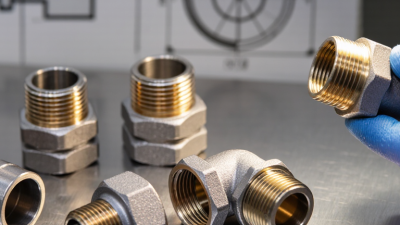
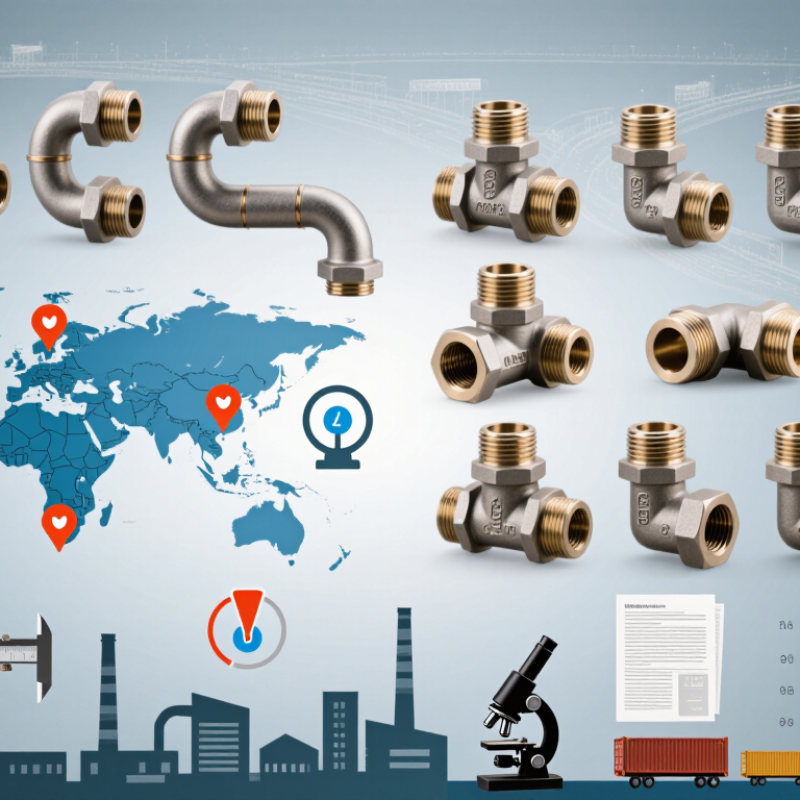
Forged fittings are connection components shaped from heated metal under controlled pressure. This process improves strength, density, and resistance to demanding service conditions. Common forms include elbows, tees, couplings, unions, and threaded or socket-weld fittings. They are often selected for compact, high-pressure piping systems.
Their applications span many industries. Chemical plants use them around corrosive process lines. Power facilities install them in steam, water, and fuel systems. Hydraulic equipment depends on small forged fittings for reliable pressure control. Offshore and industrial projects also use them where vibration, heat, and limited installation space create practical challenges. Material choice matters. Carbon steel, stainless steel, and alloy steel each suit different temperatures and fluids.
Tips: When sourcing globally in 2026, request heat numbers, material certificates, pressure ratings, and dimensional inspection records. Confirm the applicable technical standard before comparing prices. Review thread quality and surface finish through samples, not photographs alone. Ask how the supplier controls heat treatment and traceability. A factory audit can reveal more than a polished website. Digital records help, but they are not perfect. I would still verify critical data independently. Small documentation gaps can become expensive delays. Consider production capacity, packaging, lead time, and inspection access before placing an order. Local technical support may also matter when installation conditions change unexpectedly.
Identifying Standards, Materials, Sizes, and Required Specifications
Global sourcing of forged fittings begins with the governing standard. Common references include ASTM material requirements, ASME dimensions, and EN or ISO specifications. Do not combine them casually. A fitting may meet one standard while failing the project specification. Request the exact edition and acceptance criteria. For pressure systems, confirm design pressure, operating temperature, and service fluid. These details influence pressure class, wall thickness, and testing requirements.
Specify the material grade, not only “carbon steel” or “stainless steel.” Carbon steel may require impact testing at low temperatures. Stainless grades need careful review when chloride exposure is expected. That choice is often missed. State NPS or DN, schedule, fitting type, angle, branch size, and reducer orientation. Include end connections, such as threaded, socket-weld, or butt-weld. Each connection needs different dimensional and inspection controls. Check drawings instead of relying only on size tables.
A reliable inquiry should request heat numbers, material test reports, dimensional records, and surface condition requirements. For critical service, consider positive material identification, hardness testing, and hydrostatic testing. Ask who performs each test and which results require approval. Photographs of markings can support traceability, but they do not replace inspection records. I have seen orders delayed because a small marking requirement was omitted. That was not a dramatic failure, but it exposed a weak specification. Leave room for correction. Review every deviation before production starts. A supplier quotation is useful only when each assumption is visible.
Finding and Evaluating International Forged Fitting Suppliers
Finding and Evaluating International Forged Fitting Suppliers
Global sourcing starts with evidence, not attractive quotations. UN Comtrade trade data can reveal export patterns under HS code 7307, including shipment value and volume. Use it to identify active supplying countries. Then compare suppliers against ASME B16.11, ASTM A105, or the project’s required standards. A low price means little if dimensions, pressure ratings, or material chemistry remain unclear.
Request recent mill certificates, heat-treatment records, dimensional reports, and pressure-test results. Verify whether certificates match heat numbers stamped on the fittings. Independent inspection is valuable before shipment, especially for large orders. The World Bank’s Logistics Performance Index 2023 compares logistics quality across 139 economies. Its findings remind buyers that customs, tracking, and delivery reliability differ widely. UNCTAD’s Review of Maritime Transport 2024 also reports that maritime shipping carries over 80% of global merchandise trade. Delays can therefore affect total cost, not just arrival dates.
Tips: Build a two-stage shortlist. Ask for three comparable quotations. Check audit dates. Contact two recent customers, if possible. Keep one supplier under review. That sounds cautious, but supplier evaluations can become outdated after equipment, ownership, or management changes. I would not rely on certificates alone. Even experienced buyers miss small inconsistencies. A second review often finds them.
How to Source Forged Fittings Globally in 2026?
Finding and Evaluating International Forged Fitting Suppliers
This 100-point supplier evaluation framework prioritizes the factors most relevant to forged fittings: material traceability, dimensional and pressure compliance, quality management, corrosion-service qualification, delivery reliability, and export documentation. The criteria reference widely used requirements such as ASTM A105/A182, ASME B16.11, ISO 9001, ISO 15156/NACE MR0175, and Incoterms 2020.