Top Types of Forged Fittings for Global Buyers

Choosing the right forged fittings can influence safety, installation time, and long-term maintenance across international projects. These components connect pipes under demanding pressure, temperature, and vibration conditions. Their compact shape often hides critical differences in strength, dimensions, and application suitability.

Global buyers commonly evaluate forged elbows, tees, couplings, unions, and socket-weld or threaded connections. Each type serves a different installation need. An elbow redirects flow, while a tee creates a branch connection. A coupling joins pipe sections, and a union supports easier future maintenance. Small details matter. A poorly selected fitting may create leakage risks, alignment problems, or unnecessary replacement costs.

That sounds simple. It is not.

Experienced purchasing teams usually compare material grades, pressure classes, wall thickness, end connections, and applicable standards. They also review heat numbers, inspection reports, dimensional records, and surface-finish requirements. Reliable manufacturers should provide traceable documentation rather than broad promises. Independent inspection can add confidence, especially when fittings will enter oil, gas, chemical, power, or industrial water systems.

Yet no catalog can replace engineering judgment. Some buyers focus heavily on unit price and overlook machining quality or delivery consistency. Others assume one standard fits every market, which can cause avoidable delays. This guide examines the top types of forged fittings for global buyers, with practical attention to selection, verification, and supplier reliability. The discussion is not perfect, because project conditions vary. That limitation deserves recognition. Good decisions come from matching the fitting to the actual service, not merely choosing the most familiar product.
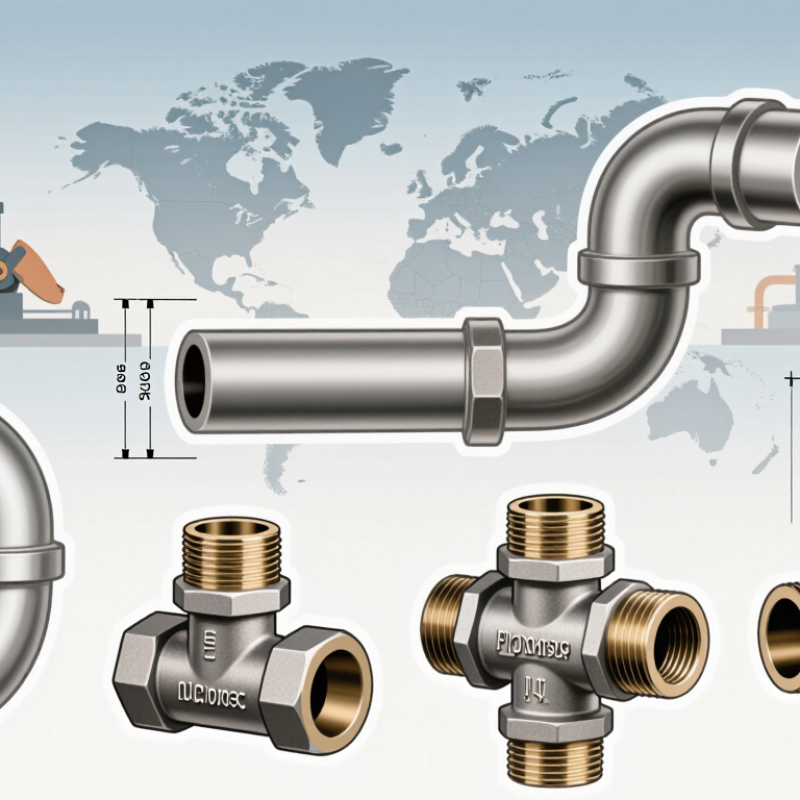
Top Types of Forged Fittings for Global Buyers

What Forged Fittings Are and Why Global Buyers Use Them

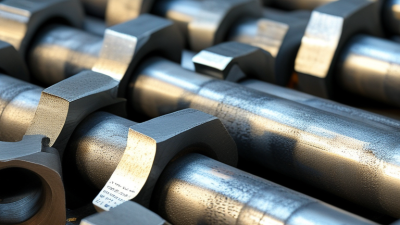
Forged fittings are compact, pressure-bearing connectors made by shaping heated steel under force. Common types include socket-weld elbows, threaded tees, couplings, unions, and reducers. Their dense structure helps resist leakage, vibration, and repeated pressure changes. That matters in process plants, power systems, and high-pressure piping.

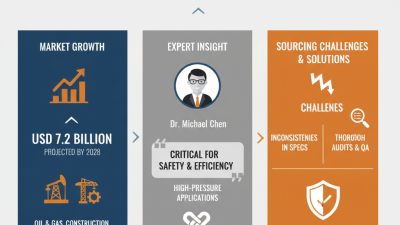
Fortune Business Insights reported that the global pipe fittings market reached about $13.74 billion in 2023. Its 2024 report projects growth to approximately $19.31 billion by 2032. Forged fittings serve a smaller segment, but their role is critical where failure carries high operational costs. Global buyers often choose them for precise dimensions, compact installation, and reliable performance across carbon steel, stainless steel, and alloy steel systems. Socket-weld designs suit smaller, high-pressure lines. Threaded fittings can simplify maintenance, although thread quality and sealing practice remain decisive.

The material alone does not guarantee safety. It is easy to overvalue a polished surface. Experienced buyers check pressure class, wall thickness, heat numbers, chemical composition, and test records. Standards such as ASME B16.11 and ASTM A105 provide useful technical benchmarks, but specifications still require project-specific review. Manufacturing tolerances can vary between suppliers. That uncomfortable detail deserves attention. Inspection may include dimensional checks, hardness testing, and non-destructive examination when risk justifies the cost. According to the United Nations Comtrade system, fittings are widely traded under HS heading 7307, reflecting an established international supply chain. Yet paperwork errors, mismatched standards, and unclear origin records can still delay installation.
How Forged Fittings Are Classified by Design and Connection

Top Types of Forged Fittings for Global Buyers

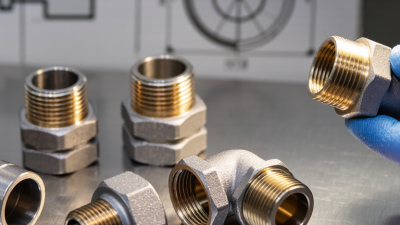
Forged fittings are classified mainly by design, pressure function, and connection method. Common designs include elbows, tees, crosses, couplings, unions, bushings, caps, and plugs. Each shape manages a different piping task. An elbow changes flow direction, while a tee creates a branch. A coupling joins two pipes with matching ends.

Connection design often determines installation speed and service reliability. Socket-weld fittings receive the pipe inside a machined socket, creating a compact joint after welding. Threaded fittings use internal or external threads and suit smaller lines where welding access is limited. Some fittings combine designs, such as a threaded reducing bushing or a socket-weld branch outlet. The choice depends on pressure, temperature, pipe size, vibration, and maintenance needs.

Check the details carefully. A fitting that looks correct may still have the wrong pressure class or bore size. Buyers should review material certificates, heat numbers, dimensions, wall thickness, and inspection records. Forged steel usually offers strong grain structure and dependable performance, but manufacturing quality still matters. Surface marks can be harmless, yet cracks, deep laps, or poor threads require rejection. In field work, I have seen small connection errors create costly delays. That lesson is easy to overlook. For global procurement, confirm the applicable standard, connection specification, testing method, and document language before shipment.

Top Types of Forged Fittings for Global Buyers - How Forged Fittings Are Classified by Design and Connection

Design Family Forged Fitting Type Design and Flow Function Typical Connection Common NPS Size Range Common Standards and Materials Typical Applications
Direction Change 90° Elbow Changes pipeline direction by 90 degrees. Forged construction provides a compact fitting body for high-pressure piping. Socket weld or female threaded ends Commonly NPS 1/8 to 4 under ASME B16.11 ASME B16.11; ASTM A105 carbon steel, ASTM A182 stainless and alloy steels High-pressure instrument, process, steam, hydraulic and utility lines
Direction Change 45° Elbow Provides a 45-degree directional change with less abrupt routing than a 90-degree elbow. Socket weld or female threaded ends Commonly NPS 1/8 to 4 under ASME B16.11 ASME B16.11; carbon steel, stainless steel and nickel-alloy grades may be specified by service Compact piping layouts, chemical lines, gas systems and process skids
Branching Equal Tee Creates a 90-degree branch with three openings of the same nominal size. Socket weld or threaded connections Commonly NPS 1/8 to 4 under ASME B16.11 ASME B16.11; ASTM A105, A182 F304/F316 and other compatible grades Splitting flow into equal-size branches in high-pressure piping systems
Branching Reducing Tee Provides a branch connection smaller than the run, allowing a controlled change in line size. Socket weld or threaded connections Main and branch sizes are selected within the applicable standard range ASME B16.11; carbon, stainless and alloy steel forged grades Instrument take-offs, process branches and utility distribution networks
Multiple Branching Cross Provides four openings arranged on two intersecting axes for combining or distributing flow. Socket weld or threaded connections Commonly available in small-bore sizes covered by ASME B16.11 ASME B16.11; forged carbon steel, stainless steel and alloy steel Manifolds, compact distribution systems and specialized process piping
Straight Connection Full Coupling Joins two pipes or components with the same nominal connection size. Socket weld × socket weld or female thread × female thread Commonly NPS 1/8 to 4 under ASME B16.11 ASME B16.11; ASTM A105 and ASTM A182 material families are widely specified Pipe extensions, maintenance sections and compact high-pressure connections
Straight Connection Half Coupling A branch-style coupling designed to connect a smaller pipe or instrument line to a larger header or vessel. Socket weld or threaded branch end; attachment end may be prepared for welding Size depends on header and branch design; commonly used in small-bore systems ASME B16.11 for applicable forged ends; material selected for pressure and corrosion service Instrument connections, drain points, vent lines and vessel nozzles
Size Transition Hex Bushing Reduces a female threaded opening to a smaller male threaded connection; the hex head allows wrench installation. Male thread × female thread Small-bore threaded sizes, commonly within ASME B16.11 coverage ASME B16.11; forged carbon steel, stainless steel and alloy steel options Instrumentation, pneumatic lines, hydraulic systems and threaded process piping
Removable Connection Threaded Union Uses a union nut and mating ends to permit disconnection without rotating the connected pipes. Female threaded ends, usually with a metal-to-metal or gasketed union seal Generally used in small-bore threaded piping Applicable threaded-piping specifications; material and pressure class must match the service Equipment connections, maintenance points, instrument tubing and removable assemblies
Line Closure Forged Cap Closes the end of a pipe or fitting and provides a compact pressure-containing termination. Socket weld or female threaded connection Commonly NPS 1/8 to 4 under ASME B16.11 ASME B16.11; ASTM A105, ASTM A182 and other service-compatible forged grades Dead-end piping, temporary isolation, pressure testing and future line extensions
Line Closure Threaded Plug Closes a female threaded port and can be removed for inspection, draining or maintenance. Male tapered or parallel thread, depending on the piping specification Small-bore threaded sizes; exact range depends on the applicable standard ASME B16.11 and relevant thread standards; forged carbon, stainless or alloy steel Drain and vent ports, unused outlets, pressure-test points and instrument connections
Reinforced Branch Socket-Weld Outlet Integrally reinforced branch fitting designed to connect a smaller branch to a run pipe while managing local stresses. Socket-weld branch end with a welded run connection Selected according to run-pipe outside diameter and branch size MSS SP-97; commonly manufactured from ASTM A105 or ASTM A182 materials High-pressure branch connections, process headers, steam systems and critical piping
Reinforced Branch Threaded Outlet Integrally reinforced branch fitting with a threaded outlet for smaller-bore connections. Female threaded branch end with a welded run connection Selected according to header outside diameter and branch thread size MSS SP-97; material grades are selected according to temperature, pressure and corrosion requirements Instrument take-offs, drains, vents and small-bore process branches

Note: Actual pressure-temperature ratings, wall thickness, thread form, dimensions and material requirements must be verified against the applicable product standard, material specification, design code and service conditions.

Threaded Forged Fittings for Flexible Installation and Maintenance

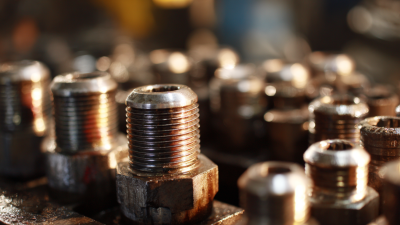
Threaded forged fittings suit projects where installation access is limited or layouts may change. Their compact bodies fit crowded valve stations, utility skids, and instrument connections. A wrench, approved sealant, and careful alignment are usually enough. No welding crew is required.

Grand View Research’s 2024 Pipe Fittings Market report projects a 4.8% compound annual growth rate through 2030. This growth reflects continuing demand for reliable connections in process, energy, and water systems. Threaded fittings support that demand through practical maintenance. Technicians can isolate a line, remove a damaged fitting, and install a replacement with limited disruption. ASME B16.11 provides dimensional and pressure-rating requirements for forged socket-welding and threaded fittings. Material verification should also follow applicable specifications, such as ASTM A105 for carbon-steel components.

Small details matter. Clean male and female threads before assembly. Use a sealant compatible with the fluid, temperature, and metallurgy. Avoid excessive torque, which can distort threads or crack a fitting. Field experience shows that misalignment often creates more trouble than pressure alone.

“easy installation” is not permission to skip inspection.

UNEP’s 2024 Global Resources Outlook projects global material extraction could rise 60% by 2060 from 2020 levels. Longer service life therefore matters. Document thread condition, torque practice, and replacement dates. The record may seem imperfect, but it helps maintenance teams identify recurring failures before they become costly.

Socket-Weld Forged Fittings for High-Pressure Piping Systems

Top Types of Forged Fittings for Global Buyers

Socket-Weld Forged Fittings for High-Pressure Piping Systems

For global buyers, socket-weld forged fittings remain a practical choice for compact, high-pressure piping systems. They connect pipes inside machined sockets, creating strong joints where threaded connections may be unsuitable. Common forms include elbows, tees, couplings, and reducing inserts. Forged construction supports consistent strength under pressure and repeated service conditions. Yet geometry matters. A small socket gap can affect thermal expansion, fatigue, and weld quality. Experienced engineers check pressure class, wall thickness, temperature, fluid chemistry, and installation access before ordering. ASME B16.11 dimensions are widely referenced, while materials may follow ASTM A105 or A182 requirements. Buyers should confirm the exact edition and project standard.

In field work, fit-up often reveals issues missed on a drawing. Poor alignment creates stress near the weld toe. Clean, square pipe ends help prevent this. Qualified weld procedures, controlled preheating, and suitable inspection improve joint reliability. For critical lines, radiography, dye penetrant testing, or ultrasonic examination may be required. Traceable heat numbers and material certificates support dependable receiving inspection. Some fittings look identical. That can mislead inexperienced buyers. A previous assumption that “higher class is always better” deserves review. The correct fitting must match the complete piping system, not one impressive number. Before shipment, verify dimensions, pressure ratings, test records, markings, and corrosion protection.

How Global Buyers Should Select Materials, Ratings, and Suppliers

Global buyers should select forged fittings by service conditions, not catalog labels. Carbon steel, low-alloy steel, and stainless steel each respond differently to temperature, corrosion, and sour environments. ASTM A105 suits many carbon-steel piping systems, while ASTM A182 grades support alloy and stainless applications. Material certificates should show chemistry, mechanical results, heat numbers, and traceability. No certificate should be accepted blindly.

Pressure class also needs careful reading. ASME B16.11 identifies Class 2000, 3000, 6000, and 9000 fittings, but class does not equal usable pressure at every temperature. The buyer must check material-specific pressure-temperature tables, wall thickness, connection type, and design code. The 2024 World Steel Association report recorded about 1.89 billion tonnes of crude steel production in 2023. This scale creates broad sourcing options, but also uneven process control. Supplier reviews should examine forging records, heat treatment charts, dimensional inspection, marking, and nonconformance history. Independent audits help. They do not replace technical judgment.

A lower quotation can look efficient. It may hide poor traceability. Ask for sample inspection reports, PMI results, and realistic lead times. Confirm whether testing is performed in-house or subcontracted. Verify calibration records and personnel competence. I would also compare packing methods for long-distance shipment, especially where coastal humidity is expected. Check every heat number. Small errors matter. No checklist is perfect, and even a clean document can contain the wrong grade or an unverified test result.

Start WhatsApp Chat Start WhatsApp Chat
Valves

Valves

Water Meters

MS Forged Pipe Fittings

Fittings

Water Meters

Valves

DI Grooved Fittings (UL/FM)

Water Meters

DI Screwed Fittings (UL/FM)

Fittings

Composite Pipes & Fittings

Site Credits : Seigospace