What Are the Top China Water Pipe Fittings Suppliers?
Choosing reliable China water pipe fittings suppliers requires more than comparing prices and product photos. A strong supplier should demonstrate manufacturing experience, material control, testing procedures, and dependable export support. This guide introduces leading suppliers and explains how their capabilities may fit different project requirements.
The evaluation focuses on stainless steel, brass, PPR, PVC, and other common water pipe fittings. It considers factory scale, production equipment, certifications, pressure testing, dimensional accuracy, and quality inspection records. Clear product documentation also matters. Buyers should review thread standards, connection methods, temperature ratings, and compatibility before placing an order.
Real purchasing experience shows that communication can influence project results as much as product quality. A responsive supplier can clarify drawings, adjust packaging, and manage replacement requests more effectively. Still, no supplier list is perfect. Performance may vary between factories, product lines, and production batches. Some companies present impressive facilities but provide limited evidence of consistent quality.
For that reason, this overview encourages practical verification. Request samples. Check certificates. Confirm factory details. Ask about lead times and warranty terms. Independent inspection may also be useful for larger projects. The aim is not to label one company as universally best. It is to help importers, contractors, and distributors compare China water pipe fittings suppliers with greater confidence and fewer assumptions. Reliable decisions often begin with small details, such as a clean thread, an accurate dimension, or packaging that prevents damage during transport.
What Defines China Water Pipe Fitting Suppliers Across PPR, HDPE, PVC, and Brass?
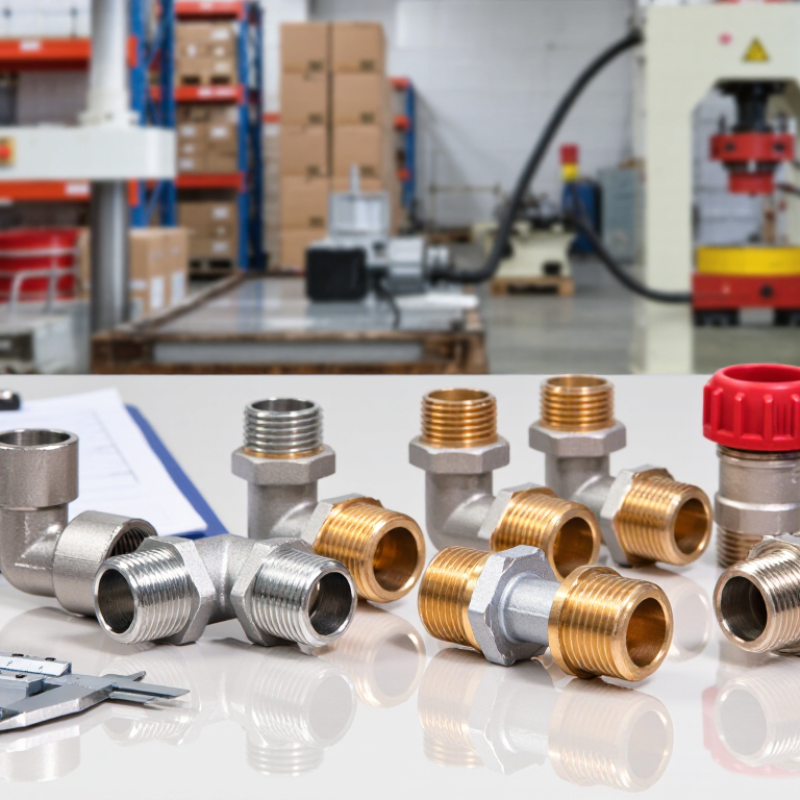
China water pipe fitting suppliers are best defined by material discipline, not export volume. PPR fittings need stable heat fusion and controlled wall thickness. HDPE demands verified resin grades, butt-fusion accuracy, and resistance to slow crack growth. PVC requires dimensional stability and impact testing. Brass needs lead-control documentation, dezincification resistance, and clean machining. Each material fails differently.
The 2023 WHO and UNICEF Joint Monitoring Programme reported that 2.2 billion people lacked safely managed drinking water in 2022. That gap increases pressure on reliable distribution systems. Grand View Research estimates that the global plastic pipes market will continue expanding through 2030, supported by water infrastructure investment. These figures matter, but market growth does not prove supplier quality. A serious supplier should provide batch records, third-party test results, pressure ratings, and production traceability.
A practical factory review should inspect injection-moulding controls, storage conditions, calibration records, and leak-testing procedures. Samples should be tested after transport, not only before shipment. Small details matter: a scratched socket, an uneven brass thread, or a missing seal can create field failures. No supplier is perfect. A polished catalogue may still hide weak after-sales support. Buyers should compare certification scope with the exact fitting, material, and application. That step is often missed. Suppliers serving potable water projects also need clear compliance evidence for the destination market, because a general certificate may not cover every formulation or component.
Which Supplier Metrics Matter: ISO 9001, ISO 14001, MOQ, and Lead Time?
When evaluating China water pipe fittings suppliers, certificates are useful evidence, not automatic proof of quality. The ISO Survey 2022 recorded more than 1.2 million ISO 9001 certificates worldwide. It also reported over 500,000 ISO 14001 certificates. These figures show broad adoption, but they do not confirm a supplier’s actual process control. Ask for the certificate number, issuing body, scope, and expiry date. The scope should cover fittings, not only general trading activities.
ISO 9001 indicates documented quality procedures, while ISO 14001 addresses environmental management. Neither standard guarantees leak-free products. Request recent pressure-test records, material certificates, dimensional reports, and sample approval results. A factory should explain how it controls threads, seals, surface treatment, and batch traceability. Small details matter. I would inspect this evidence before trusting a polished certificate.
MOQ and lead time reveal commercial reliability. Request separate timelines for sampling, tooling, production, inspection, and shipment. The World Bank’s 2023 Logistics Performance Index assessed 139 economies and included timeliness among its six logistics measures. Freight conditions can still change quickly. A supplier quoting “15 days” without defining the production trigger creates uncertainty. MOQ also affects cash flow and inventory risk. Negotiate a trial order with a manageable quantity, but accept that lower MOQ may increase unit cost. My own caution is simple: a fast quotation can hide slow approvals. Ask for a dated production schedule and written responses to delay scenarios.
Who Are the Top China Suppliers for PN10–PN25 Water Pipe Systems?
Choosing reliable China suppliers for PN10–PN25 water pipe systems requires more than comparing catalog prices. The right supplier should understand pressure ratings, material behavior, joint design, and local installation conditions. Experienced manufacturers usually provide ductile iron, steel, PVC, or PE fittings with clear dimensional data and traceable production records.
Ask for pressure test reports, material certificates, wall-thickness records, and samples from current production. A serious supplier can explain how fittings perform under repeated pressure changes, cold weather, and rough handling during transport. Factory audits also matter. Check machining areas, coating lines, storage conditions, and quality inspection procedures. Photos alone are not enough.
Look closely at sealing surfaces and flange accuracy. Small defects can cause expensive leaks. Suppliers serving PN10–PN25 projects should also confirm compatible gaskets, bolts, valves, and connection standards. Their technical team should review drawings before quotation, not after installation problems appear. Communication speed is useful, but technical accuracy matters more.
No supplier is perfect. I would still request an independent inspection before shipment, especially for large orders. One overlooked tolerance can delay an entire pipeline section. A trial order may reveal packaging weaknesses, inconsistent coatings, or unclear markings. Reliable suppliers accept these checks and correct issues with documented actions. That behavior often says more than a polished website.
PN10–PN25 Water Pipe System Pressure Classes
Nominal pressure ratings commonly used to compare water pipe and fitting system requirements.
PN ratings indicate nominal pressure in bar under reference conditions. PN10, PN16, PN20 and PN25 correspond approximately to 1.0, 1.6, 2.0 and 2.5 MPa respectively. Actual allowable working pressure depends on material, temperature, standards, dimensions and application conditions.
How Do Suppliers Meet ISO 15874, ISO 4427, ASTM, and GB Standards?
What Are the Top China Water Pipe Fittings Suppliers?
Reliable suppliers prove compliance through repeatable production, not attractive catalogs. For polypropylene fittings, ISO 15874 checks dimensions, pressure performance, and suitability for hot and cold water systems. Suppliers should control raw material batches, molding temperatures, socket depth, and wall thickness. A small dimensional error can affect an entire installation.
For polyethylene water fittings, ISO 4427 focuses on pressure pipes and fitting performance. Experienced factories use traceable resin, controlled fusion surfaces, and documented pressure tests. They also inspect ovality, appearance, and joint strength. ASTM requirements may add testing for impact resistance, hydrostatic pressure, chemical stability, and material classification. Test reports should identify sample numbers, equipment, dates, and acceptance results.
GB standards matter for products sold into the Chinese market. Strong suppliers compare GB requirements with ISO and ASTM methods before production begins. They may use calibrated gauges, automated inspection tools, and independent laboratories. Factory audits can reveal storage problems, mixed resin batches, or incomplete records. The weak point is often paperwork. A supplier may pass one test yet lack consistent production evidence. Buyers should request recent reports, batch certificates, and installation guidance. I would also inspect sample fittings personally, because clean edges and accurate threads reveal more than photographs. Standards do not remove every risk. They make risks easier to measure.
What Quality Data Should Buyers Verify: SDR, Pressure Tests, and Warranty Terms?
When comparing China water pipe fittings suppliers, buyers should verify data rather than trust polished catalogs.
SDR is a useful starting point.
Under ISO 4427, PE100 has a minimum required strength of 10 MPa at 20°C over 50 years. For common PE100 pipes, SDR11 is often rated around PN16, while SDR17 is often around PN10. These values change with temperature, design coefficients, and the fitting’s actual wall thickness.
A lower SDR means a thicker wall.
Ask for dimensional inspection records, not only a printed SDR label.
Pressure-test evidence should show the method, duration, temperature, and failure result.
ISO 1167-1 provides a recognized method for testing thermoplastic pipes under internal pressure. A serious supplier should provide batch-linked hydrostatic test reports, material certificates, and laboratory calibration records. Check whether the fitting was tested as a complete assembly.
Pipe performance alone is not enough.
Some suppliers share impressive numbers, yet omit test temperatures or sample sizes. That omission deserves attention.
Warranty terms require equal scrutiny.
Confirm whether coverage includes cracking, leakage, joint failure, replacement labor, and transport costs. The document should state installation limits, water temperature, storage requirements, and claim procedures. Technical guidance from the Plastics Pipe Institute also emphasizes design conditions and temperature effects when assigning pressure ratings.
Ten years may sound strong, but a warranty without traceable production batches is weak evidence.
In practice, I would request three recent reports and compare them line by line.
Mistakes still happen. A second review can expose them.