2026 Top Forged Fittings Manufacturers for Global Buyers?

Global buyers are reassessing forged fittings as energy, chemical, and infrastructure projects demand safer connections. These components may look small, but one flawed socket weld can interrupt an entire process line.

Fortune Business Insights estimates the global metal forging market at approximately USD 40.79 billion in 2023. Its report projects continued growth through 2032. The report does not isolate forged fittings, however. That limitation matters. Buyers should avoid treating broad forging data as a direct fittings forecast. Grand View Research also identifies industrial expansion and transportation demand as important forging-market drivers. These trends support stronger purchasing activity across carbon steel, stainless steel, and alloy steel fittings.

Dr. J. R. Davis, an ASM International author and materials specialist, describes forging as “the working of metal by plastic deformation under forces applied with dies.” His definition explains why grain flow, heat control, and die accuracy deserve close attention. They affect pressure performance, dimensional consistency, and service life.

This guide reviews the 2026 top forged fittings manufacturers for global buyers. It considers manufacturing experience, ASTM and ASME compliance, ISO 9001 systems, heat-number traceability, inspection records, and export capability. Factory scale alone proves little. A polished website proves even less.

Reliable suppliers should provide mill certificates, positive material identification, dimensional reports, and clear marking photographs. Buyers should also confirm ASTM A105, A182, or applicable regional specifications before ordering. Some manufacturers publish impressive claims but offer limited evidence. That gap deserves scrutiny. Procurement decisions should combine technical audits, sample evaluation, and verified customer references. Availability can change quickly, so this ranking should support careful judgment rather than replace it.
2026 Top Forged Fittings Manufacturers for Global Buyers?

What Are Forged Fittings and Why Do Global Buyers Need Them?

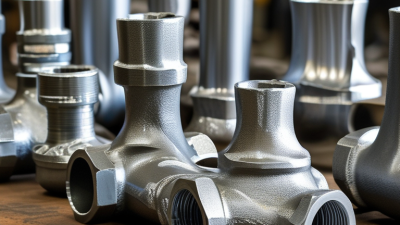
Forged fittings are compact pipe connectors shaped under controlled pressure, usually from heated steel or stainless steel. Unlike cast fittings, forging refines the metal grain structure and can improve resistance to pressure, impact, and fatigue. Common designs include socket-weld elbows, threaded tees, couplings, and unions. They are widely used in refineries, power plants, chemical facilities, and high-pressure water systems.

Global buyers need them because small-bore piping often faces severe service conditions. According to the International Energy Agency’s Oil 2024 report, global oil demand is expected to reach about 105.4 million barrels per day by 2029. This continued demand supports investment in reliable piping systems. The World Steel Association reported approximately 1.89 billion tonnes of crude steel production in 2023, giving buyers a broad material supply base. However, volume does not guarantee quality. Each fitting still requires correct dimensions, heat treatment, and traceability.

ASME B16.11 provides important dimensional and pressure-related requirements for forged fittings. ASTM A105 is commonly referenced for forged carbon-steel components. Experienced buyers should verify mill certificates, chemical analysis, tensile results, hardness, and inspection records. A polished surface can be misleading. It may hide poor heat treatment or incomplete documentation. Certificates help, but they are not absolute proof. Independent inspection, sample testing, and supplier audits remain sensible, especially when fittings will operate near people, heat, or hazardous pressure.


How to Evaluate Forged Fittings Manufacturers in 2026

Choosing forged fittings manufacturers in 2026 requires more than comparing unit prices. Global buyers should examine manufacturing experience, material control, and delivery consistency. Ask how the factory manages alloy steel, stainless steel, and carbon steel grades. Request heat-number traceability from raw material to finished fitting. A reliable manufacturer should provide mill certificates, dimensional reports, pressure-test records, and inspection photographs.

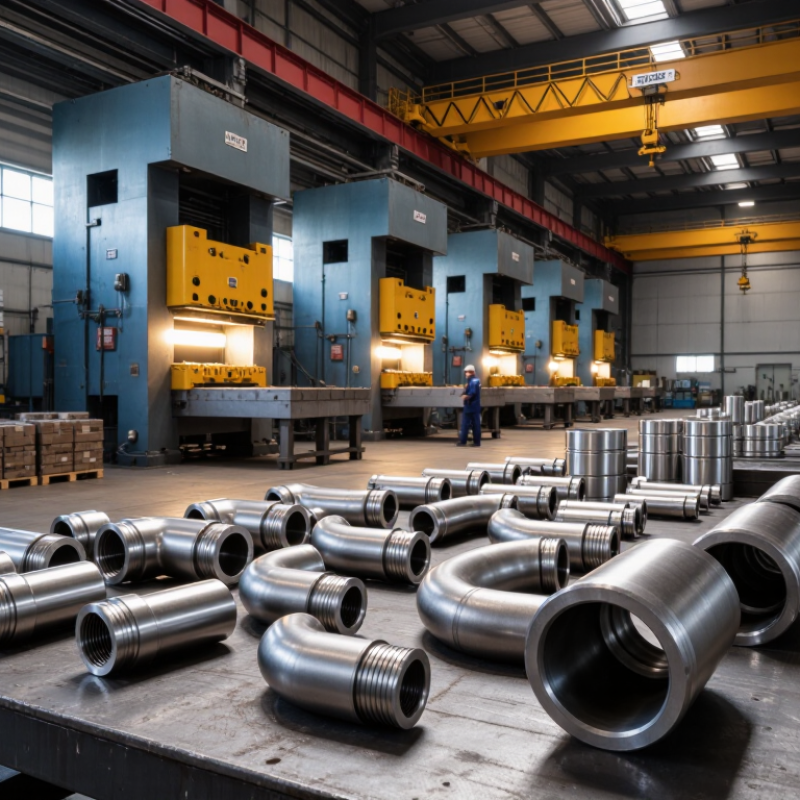
Visit the production site when possible. Observe forging presses, heat-treatment furnaces, machining areas, and storage conditions. Clean identification labels matter. So do calibrated testing instruments. Confirm whether the supplier follows recognized standards and can support third-party inspections. Review several recent orders, not only one successful project. A polished sample may hide inconsistent batch control. That risk deserves attention.

Tips: Send a detailed drawing with pressure class, connection type, dimensions, material grade, and surface requirements. Request a sample before placing a large order. Compare actual wall thickness and thread quality. Check packaging, especially for long-distance sea transport. Ask about production capacity during peak seasons. Fast answers are useful, but documented answers are safer. No evaluation is perfect. Even experienced buyers can overlook communication gaps, revised standards, or delayed test reports. Build a small trial order into the purchasing plan, then measure quality, timing, and response after delivery.

Leading Forged Fittings Manufacturers for International Projects

International projects need forged fittings that perform beyond factory testing. Buyers should assess dimensional control, heat treatment, traceability, and delivery discipline. ASME B16.11 remains a key reference for socket-welding and threaded fittings. ASTM A105 and A182 grades are widely specified for carbon and stainless steel applications. The World Steel Association reported about 1.88 billion tonnes of crude steel production in 2024. This figure shows the scale of the supply chain, but not every mill offers equal consistency.

Tips: Request material test reports, heat numbers, hardness results, and third-party inspection records. Confirm pressure classes, end connections, corrosion allowances, and packaging details before ordering. A clear purchase specification prevents expensive revisions.

Leading manufacturers for international projects should maintain controlled forging temperatures and stable machining tolerances. They should also understand project documentation, inspection points, and destination-country requirements. The IEA’s World Energy Investment 2024 report expected global energy investment to exceed 3 trillion dollars. Such spending supports demand across pipelines, power facilities, chemical plants, and water infrastructure. Yet demand alone does not prove manufacturing quality.

In practice, buyers often focus too heavily on unit price. That is a weakness. A cheaper fitting may create delays through missing certificates, inconsistent markings, or poor protective packaging. Factory audits, sample approval, and independent inspection provide stronger evidence. No supplier is perfect. Even experienced procurement teams should review nonconformance history and question optimistic delivery promises.

Key Standards, Materials, and Certifications Buyers Should Check

Choosing a top forged fittings manufacturer in 2026 requires more than comparing prices. Buyers should verify ASME B16.11 dimensions, pressure classes, and applicable MSS standards. ASTM A105 suits many carbon steel applications, while ASTM A182 F304 or F316 supports corrosion-sensitive service. For low-temperature systems, ASTM A350 LF2 may be more suitable. Material certificates should state the heat number, chemical composition, mechanical results, and EN 10204 3.1 inspection status.

Traceability is often where supplier claims become less clear. I would request heat-by-heat records, PMI results, hardness readings, and non-destructive testing procedures. Magnetic particle or ultrasonic testing may be necessary for critical orders. Thread quality also matters; a clean-looking fitting can still fail dimensional inspection. ASME B16.11 compliance should be checked against actual drawings, not only catalog statements. Small details cause expensive delays.

Certifications need careful review. ISO Survey 2023 recorded more than one million ISO 9001 certificates worldwide, but certification alone does not prove product quality. Buyers should confirm the certificate scope, issuing body, expiry date, and manufacturing site. For European pressure equipment, applicable PED requirements must be evaluated with the product category. The World Steel Association’s October 2024 outlook projected global steel demand near 1.77 billion tonnes in 2025, showing the scale of material supply pressure. Yet a large supply chain does not guarantee consistent forging control. I would also audit packing, marking, and corrosion protection before shipment.

2026 Top Forged Fittings Manufacturers for Global Buyers? - Key Standards, Materials, and Certifications Buyers Should Check

Buyer Checkpoint Common Requirement or Data Applicable Standard / Reference Why It Matters Documents or Evidence to Request
Product scope Socket-welding and threaded forged fittings, including elbows, tees, couplings, half couplings, unions, crosses, caps and reducers ASME B16.11 Confirms dimensional, rating, material and marking requirements for forged socket-weld and threaded fittings Product catalogue, dimensional drawings, applicable size and pressure-rating tables
Pressure classes Class 150, 300, 600, 900, 1500 and 2500 are commonly specified for forged fittings ASME B16.11; pressure-temperature ratings also depend on material and design conditions The pressure class must match the piping design, temperature and material grade Pressure-rating chart, design-temperature declaration and engineering calculation where required
Carbon steel ASTM A105/A105M forged carbon steel for pressure-piping components at moderate and elevated temperatures ASTM A105/A105M; ASME B16.11 A widely used material for oil, gas, petrochemical, power and general industrial piping Material test certificate, heat number, chemical analysis, tensile results and hardness results
Low-temperature carbon steel ASTM A350 LF2, normally supplied with impact-testing requirements for low-temperature service ASTM A350/A350M; ASTM A370 for mechanical and impact testing Helps reduce brittle-fracture risk in cold climates and low-temperature process service Charpy V-notch impact results at the specified test temperature, MTC and heat-treatment record
Austenitic stainless steel ASTM A182 F304/F304L and F316/F316L forged stainless-steel fittings ASTM A182/A182M; ASME B16.11 Provides corrosion resistance for chemical, food, pharmaceutical, water and general process applications MTC, corrosion-resistant alloy chemistry, solution-annealing record and PMI report when specified
Duplex stainless steel ASTM A182 F51/F60 or equivalent project-approved duplex grades ASTM A182/A182M; ASTM A923 where specified; project corrosion requirements Offers higher strength and improved resistance to chloride stress-corrosion cracking compared with many austenitic grades Chemical analysis, ferrite measurement, solution-annealing record, mechanical tests and corrosion tests when required
Dimensional compliance Outside diameter, wall thickness, center-to-end dimensions, socket dimensions and thread details ASME B16.11; ASME B1.20.1 for NPT threads where specified Ensures installation compatibility and proper fit-up with the connected piping system Approved drawings, inspection reports, thread-gauge records and dimensional inspection results
Manufacturing process Closed-die or open-die forging, followed by heat treatment, machining, marking and inspection Applicable ASTM material specification and purchaser-approved quality plan Controlled forging and heat treatment help achieve the required grain flow, strength and toughness Process flow chart, forging records, heat-treatment charts, calibration certificates and inspection plan
Heat treatment Normalizing, quenching and tempering, solution annealing or other grade-specific treatment Relevant ASTM material specification and approved purchase specification Controls hardness, tensile properties, toughness, corrosion resistance and dimensional stability Time-temperature charts, furnace calibration, batch identification and heat-treatment certificates
Nondestructive examination Visual examination; magnetic-particle or liquid-penetrant testing; ultrasonic or radiographic testing when specified ASME BPVC Section V; ASTM E165/E165M; ASTM E709; ASTM E213 or project specification Detects surface or internal discontinuities that may affect pressure integrity NDE procedures, operator qualifications, equipment calibration and signed inspection reports
Sour-service suitability Material selection and hardness control for environments containing hydrogen sulfide ISO 15156 / NACE MR0175 Addresses sulfide stress cracking and related material risks in oil and gas production service Sour-service compliance statement, hardness results, material chemistry and heat-treatment records
Quality-management system Documented quality controls covering purchasing, production, inspection, nonconformity and traceability ISO 9001:2015 Provides evidence of a structured and independently audited quality-management system Valid certificate, certification scope, issuing body and certificate-verification details
European pressure-equipment compliance Conformity assessment based on the equipment category, fluid group and maximum allowable pressure Pressure Equipment Directive 2014/68/EU, where applicable May be required for pressure equipment placed on the European Economic Area market Declaration of Conformity, CE documentation where applicable, notified-body details and technical file references
Traceability Permanent marking linked to heat number, material grade, size, pressure class and manufacturer’s identification code ASME B16.11; applicable ASTM material specification; purchase order requirements Allows each fitting to be connected to its raw material and inspection records Marking photographs, traceability matrix, material certificates and packing-list cross-reference
Final documentation package MTCs, inspection reports, dimensional records, NDE results, heat-treatment records and certificate of conformity EN 10204:2004, typically Type 3.1; Type 3.2 when third-party or purchaser inspection is required Creates a verifiable quality record for commissioning, audits and future maintenance Indexed electronic dossier with signed and traceable documents before shipment
Packing and export readiness Rust prevention, end protection, seaworthy packing, moisture control and clear package identification Purchaser logistics specification; ISPM 15 for regulated solid-wood packaging where applicable Protects machined surfaces and markings during international transport and storage Packing specification, photos before dispatch, weight list, package dimensions and shipping marks
Buyer note: Final requirements should be confirmed against the project piping class, design pressure, temperature, fluid service, governing jurisdiction and purchaser specification.

How to Compare Prices, Quality, Lead Times, and Export Support

For 2026 sourcing, forged fittings buyers should compare landed cost, not only the unit price. Request a line-by-line quotation with material grade, size range, pressure class, machining, packaging, and delivery terms. Confirm whether testing, marking, inspection, and export documents are included. A low quote may hide extra charges. Ask for a sample commercial invoice and packing list before placing an order.

Quality needs evidence, not confident promises. Review material certificates, heat numbers, dimensional reports, and traceability procedures. Check thread accuracy, wall thickness, surface finish, and hardness where applicable. A practical supplier should explain inspection equipment and sampling frequency clearly. Request recent production records with sensitive details removed. Do not rely on polished photographs. They can mislead.

Lead time depends on raw material availability, production capacity, and inspection queues. Ask for a manufacturing schedule with approval points and shipment milestones. Export support should cover secure packaging, document accuracy, freight coordination, and prompt responses to customs questions. Confirm who handles corrections when paperwork contains errors. Small delays become expensive. I have found that supplier comparison is rarely perfect; forecasts change, and promised dates deserve written evidence. A trial order can reveal more than a long presentation.

This anonymous planning benchmark compares the factors global buyers commonly assess when sourcing forged fittings. The price index uses the market median as 100; quality and export-support scores are rated from 1 to 10, while lead time is shown in calendar days. Actual results vary by material grade, pressure class, order volume, inspection scope, and destination.

Start WhatsApp Chat Start WhatsApp Chat
Valves

Valves

Water Meters

MS Forged Pipe Fittings

Fittings

Water Meters

Valves

DI Grooved Fittings (UL/FM)

Water Meters

DI Screwed Fittings (UL/FM)

Fittings

Composite Pipes & Fittings

Site Credits : Seigospace