What Are the Best Fittings and Valves Suppliers in 2026?
Choosing a fittings and valves supplier in 2026 is not just a price comparison. A stainless-steel elbow may look identical to another, yet differ in material grade, wall thickness, or pressure rating. Those details matter in a plant room, food-processing line, or outdoor pipeline exposed to corrosion and temperature changes. Small differences can cause costly delays.
This guide examines suppliers through practical criteria: product range, documented specifications, quality controls, stock availability, and technical support. Buyers should check whether certificates match the delivered parts, whether connection types suit existing equipment, and how clearly a supplier explains lead times. Strong vendors make these answers easy to verify. That is a useful sign.
No supplier is the best choice for every project. A local distributor may deliver standard components quickly, while a specialist manufacturer may offer better support for unusual sizes or demanding service conditions. Online catalogs can help narrow the field, but photographs rarely tell the full story. I would treat broad claims about quality with some caution; documentation and consistent delivery are more persuasive. The following overview helps engineers, contractors, and procurement teams compare options with a clearer basis—and ask better questions before placing an order.
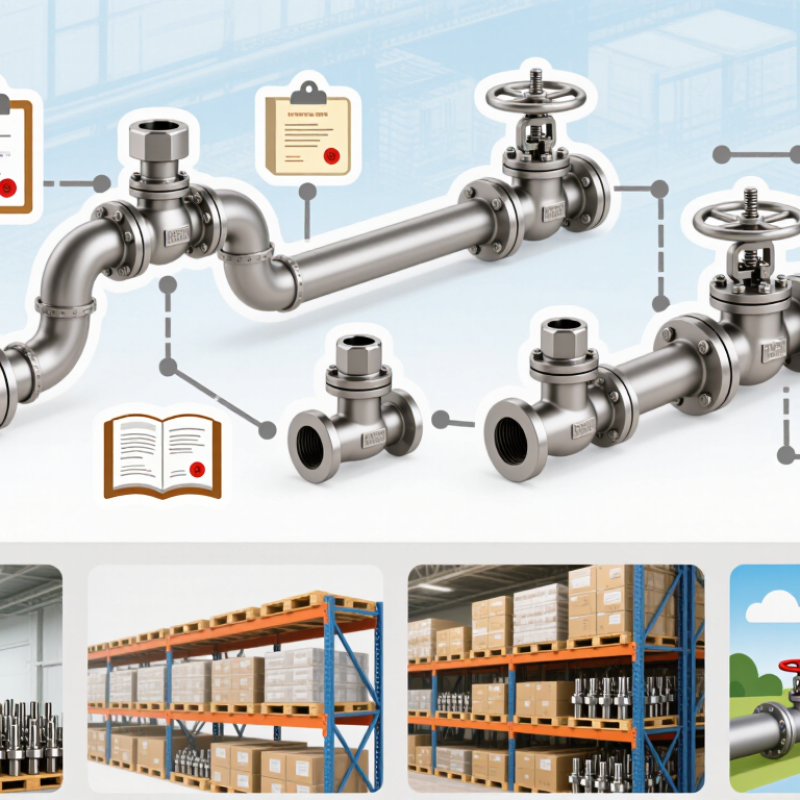
What Fittings and Valves Suppliers Provide
Fittings and valves suppliers provide more than components. They help buyers match materials, pressure ratings, connection types, and operating conditions. A useful supplier can provide dimensional drawings, material certificates, traceability records, and clear guidance on installation and maintenance. For a plant engineer, that may mean checking whether a stainless-steel valve can tolerate the process fluid and temperature, not simply comparing prices. Small details matter. A wrong thread or seal can delay a whole line.
Suppliers also support water, energy, and industrial infrastructure projects. The International Energy Agency’s World Energy Investment 2024 report estimated that global grid investment would reach about $400 billion in 2024, with annual spending needing to rise above $600 billion by 2030. That expansion increases demand for reliable flow-control equipment and documented supply chains. Buyers should ask about stock availability, delivery schedules, testing procedures, and after-sales support. A polished catalogue is not proof of dependable service. I have seen specifications look complete, yet leave an unclear point about replacement seals. That deserves a second look. A supplier’s response to such practical questions can reveal as much as its product range.
How to Evaluate Suppliers in 2026
How to Evaluate Suppliers in 2026
Choosing fittings and valves suppliers takes more than comparing quotes. Check whether each supplier can provide material certificates, pressure-test records, and traceability for the products you actually need. Ask how they manage dimensional tolerances and production changes. A polished brochure is not evidence.
McKinsey reported in 2020 that 93% of surveyed supply-chain leaders planned to increase supply-chain resilience. That finding supports checking backup capacity, lead times, and inventory visibility—not just unit price. Request recent delivery performance data and clarify how delays are reported. Small details matter.
Tips
Ask for a sample documentation pack before placing an order. Verify the applicable quality-system certificate with its issuing body, and confirm that its scope covers the relevant manufacturing site. For critical service, review test methods, inspection frequency, and nonconformance procedures with a qualified engineer. A supplier’s answer should be specific, not merely “we comply.” Compare like with like: alloy grade, pressure class, end connection, test standard, and warranty terms. Then speak with a technical contact. It can feel slow, but prevents avoidable surprises.
Supplier evaluation is not a one-time task. Recheck performance after major process or ownership changes, and record corrective actions when shipments arrive late or documentation is incomplete. Keep the scorecard practical: quality, delivery, responsiveness, traceability, and total cost. No scorecard captures everything; site audits and engineering judgment still matter.
Which Industries Depend on Fittings and Valves Suppliers
Which Industries Depend on Fittings and Valves Suppliers
Fittings and valves keep fluids moving safely through energy, water, food, and manufacturing systems. In oil and gas, operators use them to connect pipelines, isolate sections, and control pressure. Power plants depend on valves in steam and cooling circuits; a small leak can disrupt a large system. The International Energy Agency estimated global energy investment would reach about 3 trillion US dollars in 2024, with roughly 2 trillion directed to clean energy. That shift also creates demand for reliable flow-control equipment in new power and infrastructure projects. The connection is practical, though not always obvious.
Water and agriculture are equally dependent. The UN World Water Development Report 2024 says agriculture accounts for about 70 percent of global freshwater withdrawals. Irrigation networks need fittings that resist corrosion and valves that regulate flow across changing field conditions. Municipal water systems use them at treatment plants, pumping stations, and household connections. Food and beverage factories need sanitary fittings and valves to move liquids while supporting hygienic production. Details matter. A poorly matched seal or material can mean downtime, wasted water, or product loss.
Chemical, pharmaceutical, mining, and construction industries also rely on these components. Their operating conditions vary: corrosive fluids, abrasive slurries, high temperatures, or frequent cleaning. Supplier selection should therefore consider material compatibility, pressure ratings, traceable testing, and technical support, not price alone. The World Health Organization and UNICEF reported that 2.2 billion people lacked safely managed drinking water in 2022, underscoring the scale of water infrastructure needs. Still, figures do not reveal every local constraint. Buyers should verify specifications against actual site conditions.
Which Industries Depend on Fittings and Valves?
Global freshwater withdrawals by sector show the scale of water systems that rely on flow-control equipment such as pipes, fittings and valves.
Agriculture, industry and municipal water systems all depend on fittings and valves to convey, isolate and regulate fluids. Shares are rounded global estimates; industrial definitions and figures vary by source and year. Source: FAO AQUASTAT / UN-Water.
How to Choose a Supplier for Your Project
Choosing a fittings and valves supplier starts with the project, not the catalogue. List the fluid, pressure, temperature, connection type, and operating conditions. A valve used for clean water may not suit a hot process line. Small details matter. Ask suppliers to confirm material grades, pressure ratings, and compatibility in writing. If your drawings are incomplete, say so; a careful supplier should identify what remains uncertain rather than guess.
Check how the supplier handles quality and traceability. Request current product data sheets, inspection records, and relevant certifications for the exact items being quoted. Compare lead times, minimum order quantities, and replacement-part availability, not just unit prices. A low quote can become costly if a critical valve arrives late or dimensions do not match the pipework. Ask how changes to specifications are documented. Keep the answer.
Communication is a practical test. Send one real example, such as a stainless-steel fitting for a specified pressure and temperature, and see whether the response addresses those conditions. Clear answers beat polished sales language. I have learned that even a thorough checklist can miss a site constraint, such as limited clearance around a handwheel. Leave room for a technical review before ordering, and verify dimensions against the latest drawings. No supplier can remove every project risk, but transparent records and prompt, specific answers make that risk easier to manage.