Global buyers are purchasing more than a metal tube. They are managing safety, delivery risk, compliance, and long-term operating costs. This is why selecting the right ms pipe requires evidence, not attractive quotations alone.
The World Steel Association’s October 2024 Short Range Outlook projected global steel demand at approximately 1.75 billion tonnes in 2024. It also forecast modest growth for 2025. The OECD’s steel market reports continue to highlight excess capacity, trade pressure, and uneven regional demand. These conditions can affect prices, lead times, coating availability, and mill reliability. Small details matter. A missing test certificate can delay an entire shipment.
John J. Ferriola, former Nucor President and CEO, described steel as “the backbone of the American economy.” His observation explains the material’s importance, but it does not remove purchasing risks. Buyers still need to verify grade, outside diameter, wall thickness, length tolerance, hydrostatic testing, and surface condition. ASTM, API, EN, and ISO requirements may differ. Confirm the applicable standard before signing a purchase order.
This guide presents seven practical buying tips for international procurement teams. It covers supplier audits, technical specifications, inspection documents, packaging, logistics, and total cost. Not every recommendation fits every project. That is the uncomfortable part. A cheaper ms pipe may become expensive after rework, corrosion, or customs delays. Better decisions come from comparing traceable data, checking assumptions, and leaving room for independent inspection.
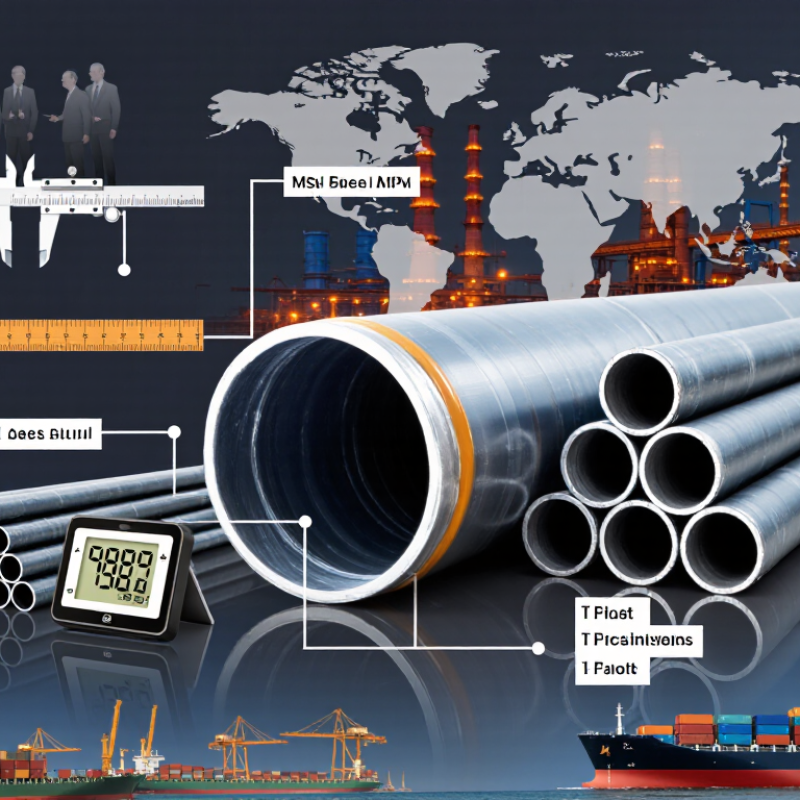
Confirm NPS and schedule in writing. NPS is a nominal size, not the exact outside diameter. Schedule identifies the wall thickness range. A 2-inch pipe, for example, may have different thicknesses under different schedules. Ask for NPS, outside diameter, schedule, length, and end type on the purchase order. Measure sample pieces when they arrive. Paperwork can be correct while the bundle is wrong.
Treat the 12.5% wall tolerance carefully. If the nominal wall is 10 mm, a 12.5% negative tolerance could allow a minimum of 8.75 mm, where the governing standard permits it. Do not assume every market uses the same rule. Confirm the standard, measurement method, and acceptance point with your inspector. Record readings at several positions around each pipe, not only at the end. That extra check takes time, but skipping it may be the expensive mistake.
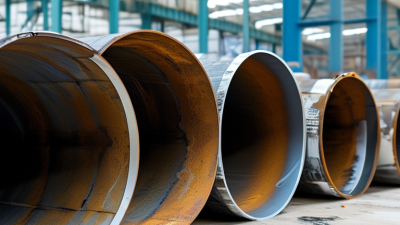
Global buyers should match the pipe standard to service conditions, not price alone. ASTM A53 suits many general-purpose water, air, and low-pressure mechanical applications. It may be welded or seamless, depending on the specified grade and size. Do not guess. Check design pressure, operating temperature, fluid, and joining method before requesting quotations. A low-cost pipe can become expensive after replacement.
ASTM A106 is commonly selected for seamless carbon steel service at elevated temperatures. Confirm the grade, wall thickness, and temperature range with the design engineer. Higher heat can reduce allowable stress, even when nominal pressure stays unchanged. API 5L targets line-pipe service for transporting oil, gas, and other fluids. Its grade, PSL level, toughness, and testing requirements must match the pipeline specification. Temperature changes everything.
Ask suppliers for mill certificates, chemical results, tensile data, hydrostatic or nondestructive test records, and traceable markings. Compare outside diameter, schedule, length, end finish, coating, and tolerances. I have seen buyers focus on standard names while missing brittle-service risks or corrosion allowance. That shortcut needs reflection. Standards define a baseline; they do not replace a complete engineering review. When conditions remain uncertain, request written confirmation from a qualified engineer and verify the latest applicable edition. Small details matter.
7 MS Pipe Buying Tips for Global Buyers?
Verify Chemical Limits, Tensile Strength, and Hydrostatic Test Results
Buying mild steel pipe across borders requires more than comparing prices. The certificate should identify the heat number, grade, wall thickness, and manufacturing method. Match these details with the purchase order. A missing heat number weakens traceability. Do not accept a generic compliance statement without supporting test data.
Check carbon, manganese, sulfur, phosphorus, and silicon against the specified limits. Chemistry affects weldability, strength, and long-term performance. Then review tensile strength, yield strength, and elongation values. These figures should match the applicable specification, not simply appear within a broad range. Ask whether samples came from the pipe or from a separate test coupon.
Hydrostatic results deserve equal attention. Confirm the test pressure, holding time, test method, and visible leakage record. A pipe may pass a strength test yet fail during handling because of poor surface quality or uneven wall thickness. Inspect several bundles, especially near the ends. I once treated a neat certificate as sufficient evidence. That was careless. Paperwork cannot reveal every production flaw.
Use an independent inspector when quantities are large or delivery routes are complex. Request dated photographs, calibrated gauge records, and randomly selected test samples. Keep every revision of the documents. Small discrepancies can become expensive delays. A second technical review may feel excessive, but it often exposes unclear units, altered values, or overlooked acceptance criteria.
7 MS Pipe Buying Tips for Global Buyers
Audit MTCs, Third-Party Inspection, Coatings, and Export Documents
Global steel demand reached about 1.75 billion tonnes in 2024, according to the World Steel Association. That scale does not guarantee reliable pipe quality. Audit each material test certificate against the purchase order. Check the heat number, chemical composition, yield strength, tensile strength, elongation, hydrostatic test, and dimensions. The heat number must match the pipe markings and packing list. A clean-looking scan is not proof.
Use an independent inspector before loading. Request visual checks, wall-thickness measurements, random dimensional sampling, and positive material identification when alloy confusion is possible. Witness hydrostatic testing where required. For painted or galvanized pipe, record coating type, surface preparation, dry-film thickness, and holiday-test results. ISO 12944 connects coating selection with corrosivity and service life. AMPP’s IMPACT study estimated global corrosion costs at 3.4% of GDP, so coating details deserve more than a checkbox.
Export documents also need practical review. Match the commercial invoice, packing list, certificate of origin, bill of lading, MTC, inspection report, and HS classification. Destination requirements can differ. One missing signature may delay clearance. I have seen buyers focus on price and overlook document consistency. That mistake is expensive. Keep photos of heat markings, bundle labels, and sealed containers. Seven tips sound simple. Execution is not.
Weight comes first. Calculate each pipe using kg/m = 0.02466 × wall thickness × (outside diameter − wall thickness). Add coating, end caps, and packing weight. Small errors multiply. The World Steel Association reported 1.892 billion tonnes of crude steel production in 2023, showing the scale of supply, but not consistent product quality. Request a dimensional inspection report, heat number, and actual bundle weight. Nominal weight alone can mislead.
MOQ should match your project schedule, not only the mill’s preference. A lower unit price may create slow-moving stock, storage fees, and damaged edges. Compare the full offer under Incoterms 2020. Under FOB, the buyer usually controls ocean freight after loading. Under CIF, the seller arranges freight and insurance, but destination charges may remain yours. Confirm risk transfer, documents, and unloading responsibilities in writing. I would challenge any quotation that explains only the pipe price. It is incomplete.
Freight depends on chargeable weight, bundle dimensions, container limits, port handling, customs processing, inspection, and inland delivery. UNCTAD’s Review of Maritime Transport 2024 notes that maritime shipping carries over 80% of global merchandise trade by volume, while disruptions can increase transit costs and delays. Build a landed-cost sheet with material, freight, insurance, duty, port fees, and local transport. Use current freight quotations, not last quarter’s estimate. A useful formula is landed cost per tonne = total delivered cost ÷ accepted tonnes. That denominator matters. Rejects, shortages, and moisture damage can quietly change the result.