China Top Pipe Fittings and Valves Manufacturers?

China is home to a broad range of manufacturers supplying pipe fittings valves for water systems, energy projects, construction, and industrial plants. Their catalogs may include elbows, tees, flanges, ball valves, gate valves, and custom components. Yet a large product range alone does not prove that a supplier is right for a specific project. Details matter.

This guide looks at notable Chinese manufacturers and the practical evidence buyers can use to assess them. It considers material grades, pressure and temperature ratings, machining quality, inspection procedures, production capacity, and export experience. These factors help distinguish a capable factory from a polished catalog. Ask for current technical data, relevant certificates, inspection records, and product samples where appropriate. Check that any standard or certificate applies to the exact product and intended use; names on a website are not enough.

A careful comparison also considers communication, lead times, traceability, and how a supplier handles changes or quality concerns. Site visits can offer useful context, but independent checks and clear purchase specifications still matter. No shortlist is perfect. Some public information may be incomplete, and manufacturer capabilities can change over time. The companies discussed should therefore be treated as candidates for further verification, not as an automatic endorsement. With focused questions and project-specific checks, buyers can make a more informed choice among China’s pipe and valve suppliers.
China Top Pipe Fittings and Valves Manufacturers?

China’s Pipe Fittings and Valves Manufacturing Industry

China’s pipe fittings and valves manufacturing industry serves construction, water treatment, energy, and process plants. Its supply base includes small workshops and large integrated factories, with capabilities that vary widely. Some producers focus on standard elbows, tees, and flanges; others handle custom dimensions or specialized materials. Production may involve casting or forging, machining, heat treatment, and surface finishing. Each step can affect fit, corrosion resistance, and service life.

Buyers should assess more than catalog range and quoted price. Ask how the manufacturer controls material identification, dimensional tolerances, and pressure testing. Review sample inspection records and confirm that stated standards match the intended application. A fitting that looks correct on a drawing may still create installation problems if its wall thickness or end connection differs. Catalogs can be polished; process evidence matters more. Factory capabilities also change, so verify the details for the specific order.

Tips: Share working pressure, temperature, fluid, connection type, and required material grade before requesting a quote. Ask for drawings and inspection criteria early. Check a sample or production report when practical. One point worth revisiting: a low price is not automatically poor quality, but it deserves clear explanations of material, testing, and delivery scope.
Common Types of Pipe Fittings and Industrial Valves

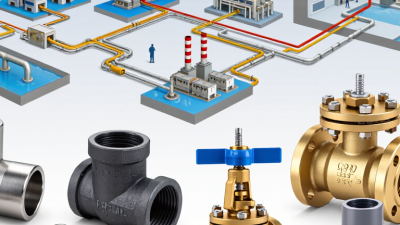
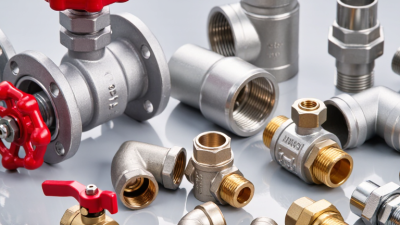
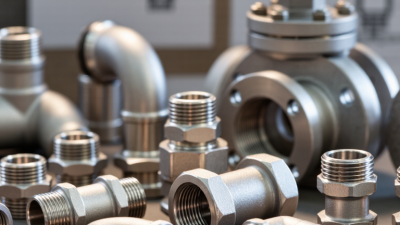
Pipe fittings guide flow, connect equipment, and help crews route lines around walls or machinery. Elbows change direction; tees split a flow; reducers join pipes of different diameters. Couplings connect straight sections, while flanges allow equipment to be removed for inspection. Small parts matter. A slight mismatch in diameter or thread type can cause leaks and costly rework.

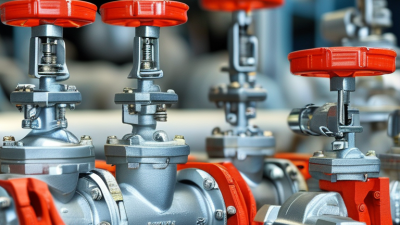
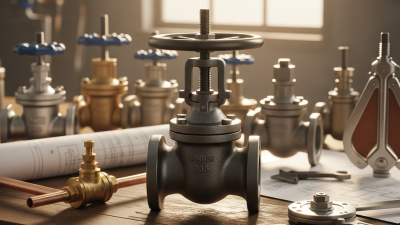
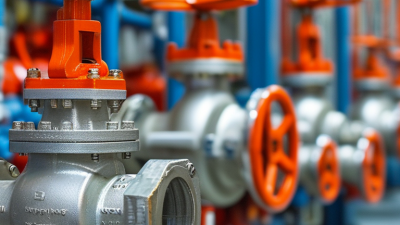
Industrial valves control, isolate, or redirect fluids. Gate valves suit on-off service, while globe valves allow more precise flow adjustment. Ball valves open or close quickly with a quarter-turn handle. Butterfly valves are compact for larger lines, and check valves help prevent reverse flow. Selection depends on the fluid, operating pressure, temperature, and connection style. A valve that looks suitable may not match the service conditions; checking its technical data is essential.

Tips: Confirm pipe size, material compatibility, pressure rating, and end connections before ordering. Check the flow direction marked on check valves. Keep a sample fitting nearby when dimensions are uncertain. Even experienced teams sometimes overlook one detail.

China Top Pipe Fittings and Valves Manufacturers? - Common Types of Pipe Fittings and Industrial Valves

Category Common Type Primary Function Common Materials Typical Connections Typical Applications
Pipe Fitting Elbow Changes the direction of a pipeline, commonly by 45° or 90°. Carbon steel, stainless steel, alloy steel, PVC Butt weld, socket weld, threaded, solvent cement Process piping, water systems, and building services
Pipe Fitting Tee Creates a branch connection or combines flow paths. Carbon steel, stainless steel, alloy steel, PVC Butt weld, socket weld, threaded, solvent cement Branch lines in industrial, utility, and plumbing networks
Pipe Fitting Reducer Connects pipes of different diameters; available in concentric and eccentric forms. Carbon steel, stainless steel, alloy steel, PVC Butt weld, socket weld, threaded, flanged Pump connections and changes in pipeline size
Pipe Fitting Coupling Joins two pipe ends, usually in a straight run. Stainless steel, carbon steel, brass, PVC Threaded, socket, compression, solvent cement Repairs, extensions, and small-bore piping
Pipe Fitting Union Joins two pipe sections while allowing easier disconnection for maintenance. Brass, stainless steel, carbon steel, PVC Threaded, socket, compression Equipment connections and serviceable pipe assemblies
Pipe Fitting Flange Provides a bolted connection between pipes, equipment, or valves. Carbon steel, stainless steel, alloy steel, ductile iron Bolted flange faces; pipe attachment may be weld-neck, slip-on, or threaded Pipelines requiring inspection, maintenance, or equipment removal
Pipe Fitting Cap or Plug Closes the end of a pipe or fitting. Carbon steel, stainless steel, brass, PVC Butt weld, threaded, socket, solvent cement Dead ends, temporary closures, and system isolation points
Industrial Valve Gate Valve Provides on/off isolation; generally intended to operate fully open or fully closed. Cast iron, ductile iron, carbon steel, stainless steel Flanged, threaded, socket weld, butt weld Water distribution and general industrial isolation
Industrial Valve Globe Valve Controls or throttles flow; its flow path typically creates more pressure drop than a straight-through valve. Cast iron, carbon steel, stainless steel, bronze Flanged, threaded, socket weld, butt weld Flow regulation in steam, water, and process services
Industrial Valve Ball Valve Uses a rotating ball for quick shutoff; many designs provide a quarter-turn operation. Brass, carbon steel, stainless steel, PVC Threaded, flanged, socket weld, butt weld Utility lines and process services requiring frequent shutoff
Industrial Valve Butterfly Valve Controls or isolates flow using a rotating disc; its compact design suits larger pipe sizes. Ductile iron, cast iron, stainless steel, aluminum bronze Wafer, lug, or flanged Water treatment, HVAC, and general process lines
Industrial Valve Check Valve Allows flow in one direction and helps prevent reverse flow. Cast iron, ductile iron, carbon steel, stainless steel, bronze Flanged, threaded, wafer, socket weld Pump discharge lines and systems where backflow prevention is needed

Material selection, connection type, pressure rating, temperature limits, and applicable standards depend on the fluid, operating conditions, and project specifications.

How Chinese Manufacturers Design and Produce These Products

Chinese pipe fittings and valve production begins with operating conditions: pressure, temperature, fluid chemistry, flow, and connection type. Engineers translate these requirements into drawings, material specifications, and machining tolerances. The World Stainless Association’s Stainless Steel in Figures 2024 reports 36.7 million tonnes of stainless steel production in China in 2023, out of 58.4 million tonnes worldwide. This indicates a substantial material base, not guaranteed product quality. Not automatically. Manufacturers still need to verify each heat’s composition and match the selected grade to the service environment.

Production routes vary by design. Bodies may be cast or forged, then machined; stems, seats, and threads require close dimensional control. Heat treatment, welding, and surface finishing follow where the design calls for them. On a shop floor, a small burr inside a valve seat can affect sealing, so inspection matters. The World Steel Association’s World Steel in Figures 2025 reports 1,005.1 million tonnes of crude steel production in China in 2024. That figure describes the wider steel supply base, not valve output. Pressure tests, leak checks, dimensional records, and traceable heat numbers help connect a finished component to its production batch. The weak point can be handoffs: a sound drawing does not prevent a rushed inspection.

Quality Standards and Certifications in the Chinese Market

China’s pipe fittings and valve manufacturers operate within a layered quality framework. ISO 9001 supports consistent production controls, while product requirements depend on the application and destination market. For steel valves, buyers may check GB/T 12224 for general requirements and GB/T 13927 for pressure testing. The exact standard matters. A certificate alone does not prove that every shipment meets the required specification.

The ISO Survey of Management System Standard Certifications 2022 recorded 397,857 ISO 9001 certificates in China, out of 1,265,216 worldwide. This shows broad adoption, not automatic product quality. Certificates cover management systems, and their scope should match the factory and product being purchased. Ask for the issuing body, validity dates, and audited site. Then compare material certificates, test records, and traceability details against the order.

Look closely at the physical evidence. A pressure-test report should identify the tested item, pressure, duration, and result. Heat numbers on components should connect to material records. For export projects, confirm whether additional requirements, such as API or regional approvals, apply to the specific product. Paperwork can look complete. It can still leave gaps. I would also verify that sample inspection and production inspection use the same acceptance criteria; this step is easy to overlook, and sometimes is.

How to Evaluate and Select a Chinese Manufacturer

How to Evaluate and Select a Chinese Manufacturer

Start with the product’s actual service conditions: fluid, temperature, pressure, connection type, and required materials. Ask shortlisted factories for current certificates, material test reports, and inspection procedures. Then verify that documents match the exact production site and product range. ISO’s 2022 Survey counted about 1.26 million ISO 9001 certificates worldwide. That makes certification a useful screening signal, not proof that a particular valve or fitting will perform well.

Request traceability from raw material to finished item. For a sample order, compare heat numbers on material certificates with markings on the parts. Review pressure-test records, dimensional checks, and nonconformance reports. Standards such as ISO 5208 and API 598 define valve testing requirements; confirm which edition and acceptance criteria the factory uses. A video call can show equipment, but an independent audit offers stronger evidence. Details matter.

Check export planning too. The World Bank’s 2023 Logistics Performance Index placed China 19th globally, but national logistics performance cannot guarantee a factory’s delivery schedule. Ask for recent on-time shipment records, realistic lead times, and a written process for handling defects. Compare the answers with a small pilot order before committing to larger volumes. A checklist still misses things. I would also revisit assumptions after the first shipment, because paperwork and production practice do not always align.

Start WhatsApp Chat Start WhatsApp Chat
Valves

Valves

Water Meters

MS Forged Pipe Fittings

Fittings

Water Meters

Valves

DI Grooved Fittings (UL/FM)

Water Meters

DI Screwed Fittings (UL/FM)

Fittings

Composite Pipes & Fittings

Site Credits : Seigospace